


Posts by Dejusticia
3 challenges to the human rights agenda in 2024: a Global South perspective
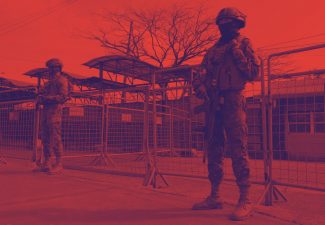
We present El Sur Global, an international newsletter to discuss international situations and trends from a human rights perspective.
Read MoreThe challenges of Colombia’s foreign policy towards Venezuela
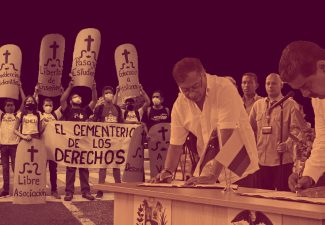
The relationship between these two countries affects regional stability. Less migration, conflict, and injustice will generate greater peace and democratic and economic growth for Latin America.
Read MoreUnbearable Heat: Climate Displacement and Hardened Borders in the Americas

Instead of restrictive policies that further endanger people seeking asylum or refuge due to climate change and the violence unleashed by this phenomenon, governments in the Americas must establish pathways for displaced individuals, who often belong to marginalized communities, to find safety.
Read MoreCivil society strategies for resistance in El Salvador
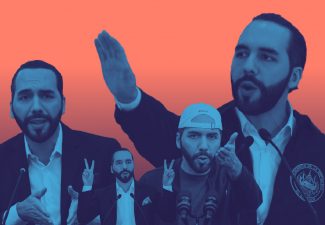
What is the cost of Bukele’s policies and why are there so many doubts about them? We spoke with activists from three civil society organizations to learn about their strategies for resistance in the face of massive violations of fundamental rights.
Read MoreJustice Is Setting Them Free: Women, Drug Policies and Incarceration in Latin America
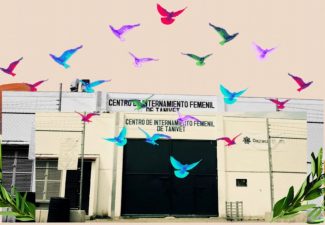
“Justice condemns women with a double penalty for being a woman… especially as a low-income woman, you’re invisible in the system until you commit a crime. Then, they finally see you.” —Nora Laura Calandra, co-founder of La Rama de Libertadxs y Familiares.
Read MoreOpen call for Global North fellowships 2024

This opportunity, for the second semester of 2024, allows for the exchange of tools and research-action strategies developed at Dejusticia, as well as the contributions of interns and fellows with their own experiences and those of their organizations.
Read MoreDo you want to be part of Dejusticia? We extend the deadline for you to apply for our Global South fellowships 2024
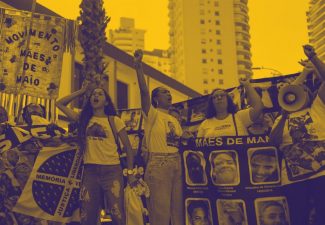
This opportunity, for the second semester of 2024, allows human rights defenders in a country of the Global South – in emergency or high-risk situations – to develop their projects and participate in an academic and cultural exchange in a safe space. Apply before February 16.
Read MoreDefending the Colombian Peace Agreement through strategic litigation

Dejusticia’s legal support for the upholding of the peace agreement illustrates the vital role of an organized and alert civil society in ensuring the implementation of policy. This oversight role is among the most important functions of civil society in a democratic system.
Read MoreResolution for inclusive tax cooperation will have its most important discussion at the UN today

Civil society is calling for building a fairer, more inclusive and effective tax system that allows countries, as a whole, to fight tax abuses that take away funds needed to promote human rights and address climate crises.
Read MorePolice abuse with less lethal weapons in protests: our complaint before the Inter-American Commission on Human Rights

Dejusticia, along with 22 international organizations, presented a report at a hearing in Washington, D.C., before the Inter-American Commission on Human Rights, addressing the excessive use of force and human rights violations in social protests.
Read MoreThe State of Disunion
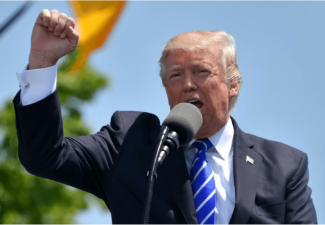
Last Tuesday, President Donald Trump delivered his first State of the Union address. Instead of uniting the nation, as it is expected in these occasions, his words deepened division.
Read MoreSexual violence in the municipalities prioritized for peace

It is a priority to establish public policies that demilitarize everyday life and dismantle practices that promote sexual violence in post-conflict scenarios.
Read MoreThey keep killing them
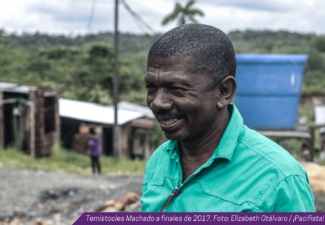
It is time for civil society to finish the task and solve the problem. That is why it is a moral duty to write about the murder of Afro-Colombian leader Temístocles Machado in Buenaventura.
Read MoreVictims and press after the war: said and unsaid lessons
In countries transitioning from war to peace, the search and exhumation of bodies create a tension between the victims’ right to privacy and the public interest of reconstructing the collective memory. Given this, how can events related to armed conflict and the transition to peace be narrated without violating the right to privacy of victims?
Read MoreSilences

Women who have the courage to denounce sexual harassment are often revictimized when faced with numerous obstacles to access justice. In addition, their versions of the events are rarely trusted, when they are not publicly threatened and denigrated. In light of these situation, no one has the right to question the silence of women who have been raped.
Read MoreLas heridas de la mente

La mentira siempre ha estado presente en las relaciones sociales y ha sido parte fundamental del ejercicio del poder, sea este político, religioso, económico u otro. Necesitamos un manual de defensa intelectual; un manual para aliviar el desatino y la sinrazón que vemos en las redes sociales, en las elecciones y en los debates públicos.
Read MoreMaduro’s dictatorship
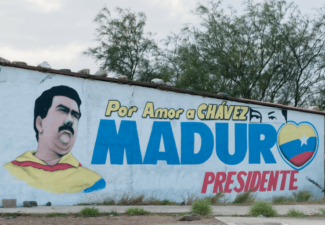
The sudden call for elections by Nicolás Maduro’s government could aggravate the humanitarian situation in Venezuela. In addition, it is another sign that in some countries democracy is weakening, with alarming results.
Read MoreReasonable management for the Special Jurisdiction for Peace
The legitimacy and future of the JEP depend, to a large extent, on the definition of its internal management and organization model. A good organizational design promotes its effectiveness; the internal regulation should establish the central guidelines of these issues and that is why its promulgation is a priority.
Read MoreCongress elections will be men’s business
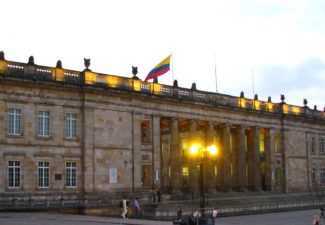
A pesar de haber sido un aspecto clave del Acuerdo de paz firmado entre el Gobierno y las FARC, Colombia enfrenta un déficit frente a la participación política de las mujeres. Solo en la inscripción de candidatos al Senado, el 32.9% corresponden a mujeres.
Read MoreLa Suprema and its fight for water
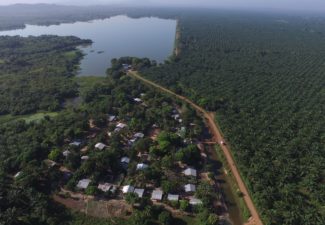
The Supreme is a village surrounded by oil palm cultivation. This population, which for years resisted paramilitary violence, faces monocultures that not only threaten its way of life, but also its health and subsistence.
.
Read MoreNational Survey of Legal Needs

Commissioned by the Ministry of Justice and the World Bank, this survey assesses the state of access to justice in urban Colombia, identifies obstacles, and offers recommendations to improve access to justice and facilitate conflict resolution.
Read MoreInstitutions and Drug-trafficking: the Judicial Geography of Drug-Related Crimes in Colombia
This text shows how, in addition to being disproportionately punitive, the way the government implements its drug laws is discriminatory. Drug laws are applied in certain geographic regions more than others, and some crimes are prosecuted more than others.
Read MoreOutrageous Penalties: Disproportionality in the penalization of drugs crimes in Colombia
This study supports with solid empirical evidence that drug policies in Colombia that resort to the use of criminal law do not respect the principle of proportionality and therefore are not justifiable from the constitutional point of view.
Addicted to punishment: The disproportionality of drug laws in Latin America
This document analyzes the proportionality of drug related crimes in seven Latin American countries through the study of the evolution of their criminal legislations from 1950 until 2012.
Read MoreAddicted to Punishment: The disproportionality of drug laws in Latin America

This document describes the disproportionality of the drug-related crimes in seven Latin American countries. Even though they are punishable behavior that does not directly or indirectly harm third parties, studies of drug crime related laws show a regional tendency to increase the use of criminal law
Read MoreGoodbye river: The Dispute over Land, Water and the Rights of the Indigenous living near the Urrá dam
This books tell the story of the dam of Urrá through the central themes of violence and the dispute for land and the natural resources in Colombia.
Read MoreEthnicity.gov: Natural resources, Indigenous Peoples and the Right to Prior Consultation

This book analyzes the origins, practice, and effects of the right to prior consultation for indigenous peoples.
Read MorePrior Consultation: Dilemmas and Solutions
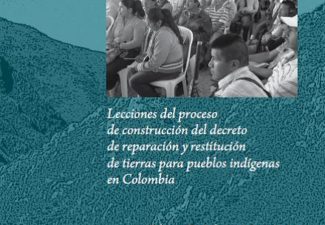
The book provides lessons from the drafting process of the Reparations and Restoration of Land to Indigenous Peoples decree in Colombia.
Read More13th Discussion Document: Quota Law in Colombia: Progress and Challenges. Ten Years of Law 581 of 2000
In 2000 the Colombian legislature approved a law aimed at promoting equal participation of women in high-level state offices through the adoption of a quota system that orders that at least 30% of public offices are occupied by women.
Read MoreResponsible and Transparent Budgetary Autonomy
This paper provides some evidence for the discussion of the budget of the judicial authorities in Colombia and propose an alternative to reform its budget system.
Read MoreIntervention in request for protection measures for the land rights of internally displaced persons
Dejusticia intervened in a tutela in which the plaintiff sought the lifting of protective measures that affected his property in order to freely dispose of it.
Read MoreRequest for annulment of appointment of judges of the National Electoral Council
Dejusticia challenged the appointment of judges of the National Electoral Council by Congress. The challenge presents a unique argument according to which the election is invalid because it was done by secret ballot and not through public voting as provided by the Constitution.
Read MoreCitizen Intervention: protecting participation of minority parties in the General Committee of Congress
Dejusticia challenges the constitutionality of Article 40 of Law No. 5 of 1992 (Congress Regulation) which provides that the General Committee of Congress commissions will be chosen by majority rule.
Read MoreCitizen intervention in the tutela against the Inspector General for failure to protect an individual in great danger
The intervention relates to a motion for legal protection in which a victim of a serious violation of his human rights, in spite of being in an unusual and extreme security risk, received no protection from existing security programs. Dejusticia requests the Constitutional Court to take the necessary steps in order to crease the violation of the plaintiff’s fundamental rights and to consider that this case is one of many that exist today in the country, where victims and witnesses of the conflict did not receive effective, adequate, and specific protection, and, therefore, declare that there is an unconstitutional state of affairs. If this were the case, the Court should issue the necessary orders for the different institutions that are responsible of protection programs to appropriate them to the minimum of rationality imposed by the Court and to adapt them to the conditions of the Colombian context.
Read MoreIntervention in tutela for the protection of the conformation of community action groups in San Lorenzo
The Governor of the indigenous community of San Lorenzo filed a tutela against the government of Riosucio in order to stop it from promoting the formation of community action groups within the reservation. We argue that the promotion of these groups, undertaken without the consent of the authorities in the cabildo, is a violation of autonomy and the right to ethnic and cultural diversity of the Embera community of San Lorenzo who decided, through its legitimate authority, to not constitute the formation of such groups within the reservation.
Read MoreIntervention in tutela for the of the right to equality and free development of personality of a transgender person
Colombia Diversa, Women’s Link and Dejusticia intervened before the Constitutional Court to protect the plaintiff’s rights to equality and free development of personality after having been denied entry to two nightclub due to his transgender identity.
Read MoreAmicus Curiae on the official duty to investigate sexual crimes and proof standards in sexual violence
Dejusticia submitted an amicus in a motion for legal protection case filed by a women’s organization against the Attorney General’s Office, claiming the infringement of the rights of access to justice and due process of a girl allegedly abused by her father.
Read Moreamicus brief regarding a tutela on the issue of reparation to victims of forced displacement.
Dejusticia presented an amicus brief regarding the scope and routes of access to the right of reparation, as well as the scope of Colombian legislation on forced displacement and reparation, among others.
Read MoreIntervention in tutela to ensure adoption process by a homosexual permanent partner.
Dejusticia and Colombia Diversa intervened before the Constitutional Court to protect the rights of a lesbian couple to formally adopt a child one had conceived through in vitro fertilization during their relationship after the Colombian Institute of Family Welfare (ICBF) denied the non-biological mother the right to adopt the child because of her sexual orientation.
Read MoreIntervention in the lawsuit against Articles 14 to 17 of the Anti-smoking Act (1335 of 2009).
Dejusticia intervenes to defend the constitutionality of Articles 14-17 of Act 1335 of 2009 (Anti-smoking act), which ban the advertisement of tobacco derivatives.
Read More