


Posts by Dejusticia
Our proposal to face the implementation crisis of the illicit drug section in the Peace Accord
Following the massacre of six peasants in Tumaco, in an event allegedly involving anti-narcotics police and currently under investigation, Dejusticia presents eight recommendations to fulfill what was agreed in point 4 of the Peace Agreement.
Read MoreBill in Congress seeks to stop advertising of unhealthy food for minors
The project’s objective is to reduce the negative impact of consumption of unhealthy products, often advertised as “nutritious or healthy foods”, on the well-being of children.
Read MoreThe long wait of the JEP to the Constitutional Court and the Congress’ response
In the last six months civil society organizations, such as Dejusticia, have called on both institutions to give way to the rules that consolidate the Special Jurisdiction for Peace.
Read MoreAdministration of the Special Jurisdiction for Peace: comments on the Draft Statutory Law

On September 11, Rodrigo Uprimny participated in the public hearing convened by the joint commissions of the Senate of the Republic and the House of Representatives on the draft statutory law governing the administration of the Special Jurisdiction for Peace (JEP). This project begins in Congress and will be discussed under a fast-track procedure.
Read More#VenezuelaBienvenida: Colombian-Venezuelans return to Colombia, a product of the crisis

For decades millions of Colombians crossed the border into Venezuela, fleeing our armed conflict. Now the humanitarian crisis created by the Maduro government is bringing back the children of those migrants. #VenezuelaWelcome is a call to solidarity.
Read MoreEverything You Need to Know About the Colombian Peace Process

César Rodríguez Garavito, Executive Director of Dejusticia, gives a crash course on these complex aspects of the Colombian transition to peace in this talk at the American University of Beirut sponsored by The Legal Agenda and Issam Fares Institute.
Read MoreWe call for strengthening publicity and transparency in the selection of the Special Jurisdiction for Peace
Dejusticia respectfully and publicly requests that before proceeding with the process, the Selection Committee informs society of some aspects of pre-selection and selection.
Read MoreDejusticia will defend right to health and information in hearing on draft law to regulate labeling of ultraprocessed products
On September 18 at 2 pm, there will be a public hearing in Congress on the Bill 019 of 2017, which seeks to enable consumers to make better decisions about their food health when making purchases.
Read MoreWe call for immediate action to address the judicial crisis
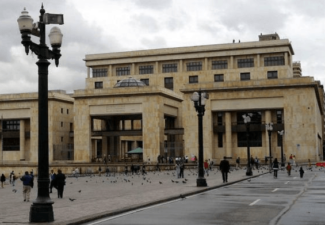
The Center for the Study of the Law, Justice and Society (Dejusticia) and the Excellence in Justice Corporation (CEJ), call on the high courts and the Attorney General to take immediate measures of transparency to face corruption and restore public confidence in the judiciary.
Read MoreCase of indigenous people from Bojayá who could not vote in the plebiscite is about to reach the Court

An Emberá group claimed their rights to political participation and equality, because in light of their economic situation and geographic isolation, they could not vote on the Peace Agreement. Dejusticia, human rights organizations and indigenous leaders asked the High Court to review the case.
Read MoreSpace
In Colombia we are parochial and self-absorbed. We need a way of dealing with our individual and social smallness, other than religion, maximalist ideology or contempt for others.
Read MoreIt is not enough to say “no”
Given the inability of the national government to organize development in order to make mining compatible with the environment and other economies, popular consultations are a democratic step to try to do so.
Read MoreInnovative approaches to the drug problem and imprisonment
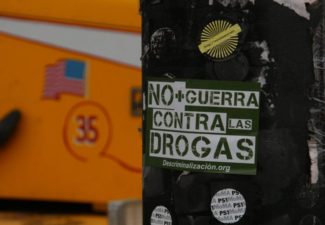
The experiences of Uruguay, Costa Rica and Ecuador show that it is possible and useful to apply innovative approaches to drug-related incarceration. However, they also highlight the limits of these programs and their failure to prevent further criminal activity.
Read MoreTime
We live between the frenetic present of political activity and the unattainable future of preachers, without any of these time frames allowing us to anticipate the country that we will have in three or four decades.
Read MoreInnocence and jail
Not all people who have been deprived of their liberty should have been in prison in the first place. In 2013, for example, the State Legal Defense Agency was handling 13,385 lawsuits for unjust deprivation of liberty.
Read MoreTaking religion seriously
The results of the plebiscite to approve the Peace Agreement showed us that it is time to take religion seriously and to dispute the right’s political predominance in spiritual matters.
Read MoreHow is the implementation of the Agreement on Victims going?
Despite the setbacks, the Transitional Justice System is already working. However, the sustainability of the process will depend on the decisions of the Constitutional Court and the proper processing of amnesties.
Read MoreAsbestos: the unpunished killer

Latin American countries need to strengthen both their legislation and access to justice mechanisms, particularly those involving civil and consumer rights, in order to stop the use of asbestos and similarly harmful substances.
Read MoreThe example of teachers
The university does not only have the task of preparing good professionals, but of forming honest citizens, and teachers are key in that mission. The book Academy and Citizenship explores the fulfillment of academic and citizenship standards by teachers in Antioquia.
Read MoreHacked
Governments have taken advantage of a legal and informative vacuum to turn their critics’ cell phones into surveillance devices. It is essential to update the legislation and require government entities to disclose how they use electronic surveillance systems.
Read More