Bukele: the savior?
Rodrigo Uprimny Yepes May 28, 2023
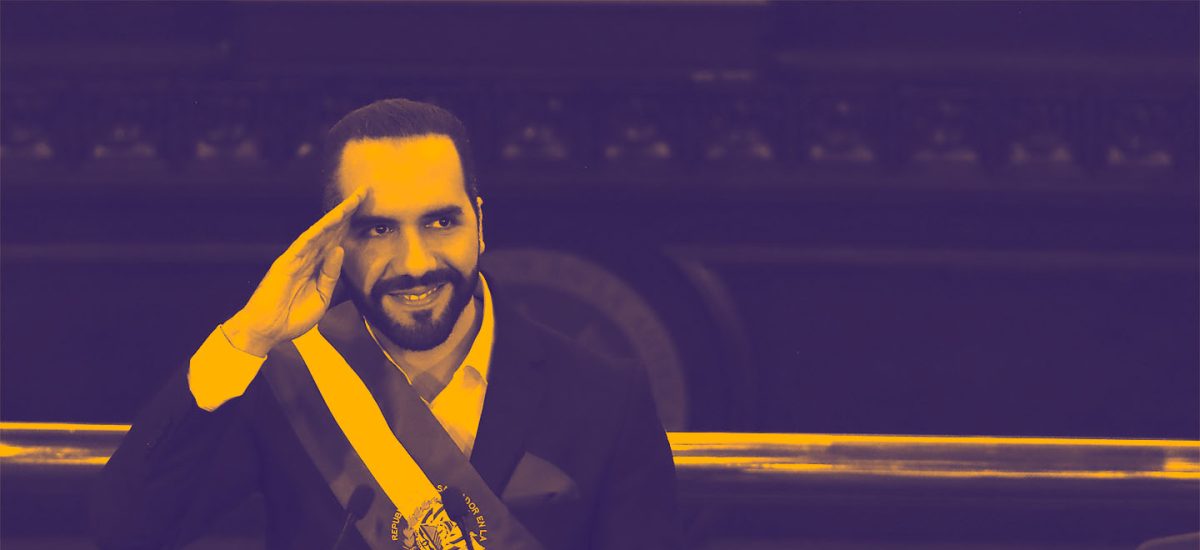
Having co-opted the state, this president is running for re-election next year. |

This saga involving Bukele deserves to be known in Colombia because there are certain sectors, especially on the right, that rightly criticize similar processes of destruction of the rule of law by Ortega in Nicaragua or Maduro in Venezuela, but remain silent in the face of this assault on democracy in El Salvador.
This saga involving Bukele deserves to be known in Colombia because there are certain sectors, especially on the right, that rightly criticize similar processes of destruction of the rule of law by Ortega in Nicaragua or Maduro in Venezuela, but remain silent in the face of this assault on democracy in El Salvador.
Something that is rarely talked about in Colombia is how, in El Salvador, Bukele destroyed judicial independence in 2021 to run for immediate re-election, even though this is expressly prohibited in the Constitution.
The victory in the legislative elections of February 2021 allowed Bukele to have a comfortable majority (66%) in the Legislative Assembly, which, as soon as it took office, dismissed in May 2021 all the members of the Constitutional Chamber of the Supreme Court, the equivalent of our Constitutional Court. This dismissal was completely arbitrary: not only was it done collectively and without minimal due process, but it was also not for faults committed by those magistrates but because Bukele did not like their interpretations. In previous months, this Constitutional Chamber had annulled several government measures regarding the pandemic and Bukele said that, if he were a dictator, he would have shot all the magistrates. Finally he did not execute them, but he did manage to have them dismissed.
The Legislative Assembly then appointed the new members of the Constitutional Chamber, all close to the Government. A few months later, in September, this new Constitutional Chamber opened the door to Bukele’s immediate presidential re-election. And it did so by contradicting the constitutional text, whose article 152 says that “a person who has held the Presidency of the Republic for more than six months, consecutive or not, during the immediately preceding period” may not be “a presidential candidate.” Obviously, if he cannot be a candidate, he cannot be president either. But that’s not all: the Constitution states that a cause for loss of citizenship is “promoting or supporting re-election” (art. 75) and that there is a duty of “insurrection” if the rule of “alternation in the exercise of the Presidency” is violated.
These constitutional texts are so clear that it was a constant and peaceful doctrine of the Constitutional Chamber and all Salvadoran constitutionalists that immediate re-election was prohibited, as Bukele himself had acknowledged in interviews in previous years. But all of that was swept away by the new Bukelista Constitutional Chamber, with an argument so absurd that it is even difficult to understand. Suffice it to say that, according to their thesis, in Colombia Petro could run for re-election in 2026 but Duque could not. What a favor.
Bukele has not limited himself to co-opting the Constitutional Chamber, which is obviously the jewel in the crown, but has also used his majorities in the Assembly to fill the Supreme Court with magistrates close to the Government. With the State co-opted, this president is running for re-election next year. And since he is popular, due to the support of a citizenry overwhelmed by violence and gangs, he will probably be re-elected, which will consolidate the destruction of the Salvadoran rule of law.
This evolution has also had dramatic consequences, since the destruction of judicial independence has been the prelude to Bukele’s adoption of a severe state of exception, which he has maintained since March 2022 and which has led to the detention, in most cases arbitrarily, of some 60,000 people. To make matters worse, they are crowded into prisons where they receive cruel and inhuman treatment, as Amnesty International has documented.
This saga of Bukele’s deserves to be known in Colombia because there are certain sectors, especially on the right, who rightly severely criticize similar processes of destruction of the rule of law by Ortega in Nicaragua or Maduro in Venezuela, but remain silent in the face of this assault on democracy in El Salvador.
Related: