NGOs at risk of global extinction
Dejusticia July 3, 2025
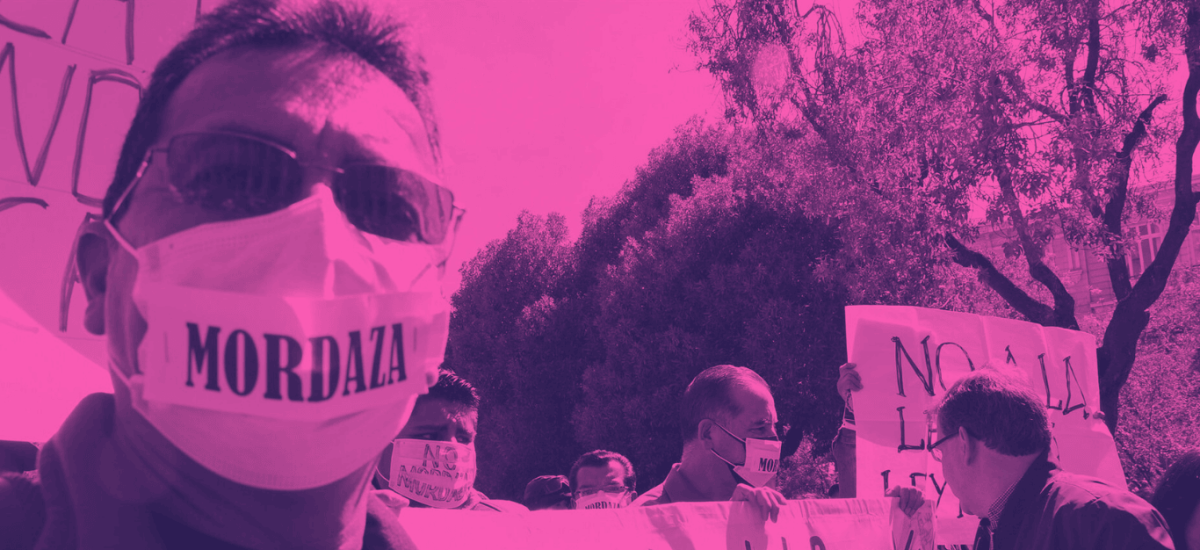
The work of NGOs has been key to defending human rights, denouncing injustices and the worst crimes of authoritarian governments. |

How can non-governmental organizations transform themselves? What were they like when they did not depend on international funding?
How can non-governmental organizations transform themselves? What were they like when they did not depend on international funding?
Precisely because NGOs have been a fundamental part of the defense of human rights, denouncing injustices and the worst crimes of authoritarian governments, today there are a number of governments, both right and left, that want to destroy them. A prime example is the anti-NGO laws, which began in Russia in 2012 and have been copied by India, Egypt, and Hungary, reaching our region in El Salvador, Venezuela, Nicaragua, Paraguay, and Peru. With some variations, all are justified by national protection against foreign interference and by transparency. They aim to limit the resources of NGOs, as well as their freedom of association and expression, and to impose bureaucratic requirements and sanctions to stifle them or make them illegal.
These laws are compounded by narratives generated by these same governments against NGOs, which accuse them of being corrupt and traitors to the homeland (with unfounded reasons), narratives that have taken root in societies, stripping their work of legitimacy. There is also a cut in resources from countries such as the United States, the Netherlands, France, Germany, and Sweden, etc., which used to finance development issues.
A few days ago, within the framework of our Enlaza Strengthening Program at Dejusticia, we met in Bogotá with civil society organizations from countries such as Peru, Venezuela, Nicaragua, Russia, Hungary, and El Salvador, along with other actors such as funders and multilateral organizations, to reflect on how to face this crisis. This meeting left us with at least three debates.
Read here: Strategies to defend civil society against authoritarianism in Latin America
First, if NGOs are going to tend to disappear, what can we transform into? It is necessary to look to the past, to the 60s, 70s, and 80s, to remember how we worked when we didn’t depend on international funding. Some say we should become social enterprises, others talk about volunteerism and resource diversification, and others about returning to our roots in community work. The question remains open.
Second, we must continue working in international human rights advocacy spaces (such as the UN and the Inter-American System), where each of the standards and rights achieved has been a gain for civil society. But it is also urgent to broaden our view to new countries, institutions, and advocacy spaces. What other actors and spaces can enter the equation?
Third, it is necessary to learn from others. In those places where these strategies against civil society are advancing rapidly, it is key to get ahead of the curve and see what happened in other countries like Russia, Hungary, and Nicaragua, for example. Colleagues from these countries don’t necessarily speak to us from the future, but rather from prudence, from the possibility of foreseeing what could happen. Their advice on different topics, such as in which other countries organizations can register, what they can become, the use of technologies, and fund transfers can be key in these moments.
Many questions remain to be answered and perhaps some certainties. The social movement and NGOs have played and continue to play a fundamental role in defending basic rights such as voting and not being discriminated against based on sex, gender, and race. They have also been a key part of denouncing the abuses of authoritarian and dictatorial governments. That is why these same governments want to destroy them, making their work impossible or making them illegal. Today more than ever we must defend those who defend rights.