


The homophobic machinery
The NO campaign on the peace plebiscite mobilized the homophobic machinery based on lies and the demonization of a historically discriminated community. We were the scapegoat of the peace debate.
Why Same-Sex Adoption Should Not Be Put to Vote
The current binary in Colombia presents an opportunity to ask when populations should vote on specific policies.
Read MoreFor the indecisive
Today we vote on the peace plebiscite, which is the main decision that we will have as citizens in the coming decades. Thus, we should make an effort to participate. For those of us without a defined vote, I would like to share the analysis that led me to decide YES.
Read MoreWithout a doubt
A day before the plebiscite and knowing that several of us are tired of hearing and reading about peace, I make a last call to those who are thinking about abstaining from voting on the peace accords.
Read MorePeace and echo chambers
In addition to the end of a half a century war, the most positive aspect that the process that will likely end this Sunday with the victory of the YES leaves behind is the strengthening of public debate and citizen participation in politics.
Read MorePeñalosa’s dehumanizing discourse
When he speaks about “recovering the public space,” Peñalosa utilizes a war discourse that dehumanizes the most vulnerable in the city and creates a mentality of “us against them.”
Read MoreVoice and vote for peace
Peace needs our voice and vote. Since today until October 2nd, we should use our words so peace can see the light.
Read MoreThe Special Peace Jurisdiction: between jail and restorative justice
One of the innovations of the Special Jurisdiction Peace within the Peace Accord is the way in which it combines retributive and restorative justice, which is better, at least in its design, than many other transitional arrangements.
Read MoreBrexit’s lessons
Brexit, which will make the United Kindgom (UK) leave the European Union (UE) brings at least two lessons for the plebiscite, especially for young voters.
Read MoreOn forgiveness and the YES vote
The final peace accord is already building peace. In fact, it is triggering one of the essential and most difficult conditions: the recognition and the request for forgiveness for those responsible of the victims’ suffering during the most painful events in the war.
Rodrigo Uprimny Responds to the Solicitor General’s and Ex-Judge Marco Velilla’s Regarding Alleged Leaks of Judicial Decisions
Prior Consultation Can Prevent Environmental Damage in Colombia and for Humanity: Daniel Cerqueira

Interview with DPLF’s expert that participated in the 25th Anniversary Seminar of the ILO Convention 169 in Bogotá.
Read MoreIn Search for an Alternative Drug Policy Peasant Leaders from Colombia, Peru, and Bolivia Meet

From July 4-6, Dejusticia will participate in the first meeting of the Coca, Poppy, and Marihuana Constituent Assembly in Putumayo, which seeks to take stock of current drug policy and and discuss alternatives.
Read MoreThe United States Shows that It Is Possible to Build a Path towards Equality

In a pluralist democracy it is discriminatory for a person to be deprived of a right due to their sexual orientation. Today the Supreme Court of the United States legalized same-sex marriage.
Read MoreReferendum Mechanisms for the Peace Accords in Colombia
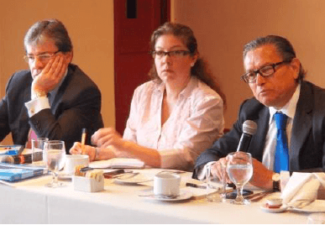
This past May 4th, the Center for the Study of Law, Justice and Society (Dejusticia), with the Konrad Adenauer Foundation’s Rule of Law for Latin America Program, held a Coffee and Debate about holding referenda for the peace agreements in Colombia.
Read MoreHow to Change the Box “Sex” on Your Documents: Infographic
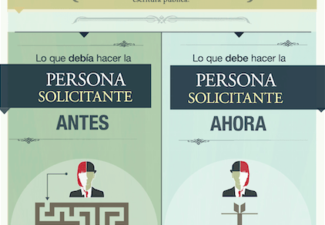
Dejusticia, alongside other organizations, intervened before the Court in the case of a trans woman who saw her rights to identity and dignitiy violated by the state not allowing her to change her sex on official documents.
The Constitutional Court ruled in her favor, and the ruling served as a precedent for the Decree 1227 that now allows people to change their sex on official ocuments through a notarized deed.
Read MoreSuspension of Glyphosate Fumigation: Big Decision

Due to its impacts on the rights of communities, aereal fumigation should not be considered as a anti-drug strategy.
Read MoreThe Truth Commission’s Advances and Challenges
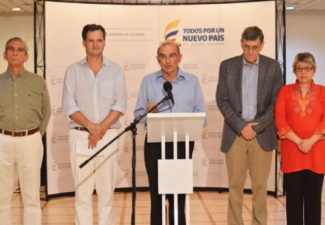
What implications does this new agreement reached between the National Government and the FARC-EP at the negotiation table have? Some thoughts from Dejusticia.
Read MoreThe Balance of Powers Reform: An Infographic

The pros and cons of four important points of the Reform to the Balance of Powers according to our analysis.
Read MorePodcast: Balance of Powers Reform
Radio program Derecho a la carta invited Carolina Villadiego to discuss the Balance of Powers Reform currently in Congress.
Read More