


Knowledge, resistance and reflection
A new initiative for indigenous leaders in the Global South.
Read MoreSo close and yet so fragile
The current situation in the country is dramatic: the pacific solution to our armed conflict is very close…and yet so fragile.
Read MoreDemocracy for peace
The analyses on the plebiscite have focused on explaining where and why the NO won. They have ignored the greatest worry: that the majority of voters did not vote
Read MoreMarching for a wide bloc for peace
The massive march last Wednesday confirms that a wide bloc for peace is consolidating: students, indigenous people, farmers and citizens of all ages that converge on an expedited and reached by concesus peace, whether they voted on October 2nd or they voted in favor or against the accords.
Read MoreA letter to Christians
I write to women and men who in good faith believe in the teachings of Jesus Christ.
Read MoreThe hidden face of abstention
What is wrong in a democracy where a clear majority stays at home on the day of the most important vote of a generation?
Read MoreThe Growing Political Power of Christian Groups in Colombia is a Threat to Women and LGBTI People’s Rights

Given the stereotype of Colombia as a traditional, machista country, it was refreshing for me to see how the country used an effective separation of Church and State to be a leader in protecting the rights of women and LGBTI people. However, the growth of conservative morality and religious based movements and the tactics they are using to oppose such rights is uncomfortably similar to those I have witnessed in the United States.
Read MoreClarifications for peace
If the results of the plebiscite had been the opposite and the YES had
won by a narrow margin, the implementation of the accord would have been
politically very difficult in any case because we would have a similar
political situation to the one today: a technical tie between the YES and the
NO, mixed with a great rate of abstention and a great geographic and social
diversity in voting.
Elites, bases and peace
The plebiscite breaks the political chess in the country.
Read MoreA broad front for peace
There are two political roads towards a revision of the peace accords. One is a new National Front that, like in 1957, is a pact behind closed doors between two factions of the political class (those supporting Santos and those supporting Uribe), this time complimented by an accord with the FARC.
Read MoreESCR-Net and Dejusticia Defend Sawhoyamaxa Community Human Rights Advocate’s Innocence
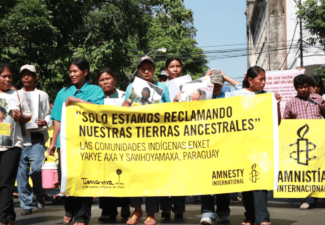
The organizations presented an amicus in Paraguay to protect the freedom of expression of the lawyer Julia Cabello.
Read More“One realizes that what has been done in Colombia isn’t so terrible”

Leonarda De la Ossa, Activist from Montes de María, talks about her experience in the Action-Research Global School.
Read MoreTo Tell Powerful Stories: A Goal of the Global School
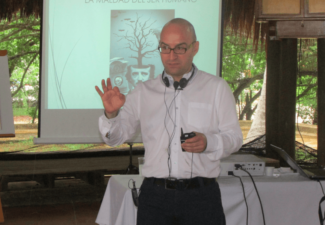
Interview with Nélson Padilla
Read MoreForum in Bogotá about the Challenges of Judicial Administration

Carolina Villadiego will intervene on behalf of Dejusticia.
Read MoreDejusticia’s Third Action-Research Global School Begins
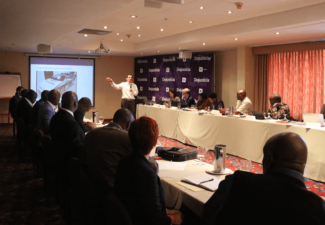
Indigenous Leaders, Afrodescendants and Human Rights Organizations Meet with Inter-American Commission on Human Rights
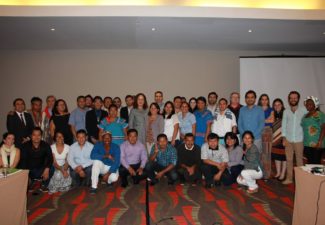
They discussed the implementation of the right to prior, free, and informed consultation and consent in Latin America.
Read MoreColombian Police Ought to Clarify Their Relationship with “Hacking Team”

According to investigations, the Colombian Police allegedly contracted Hacking Team in order to gain access to citizens’ digital information.
Read MoreDejusticia Launches Research Project about Ethnic-Racial Justice in Latin America
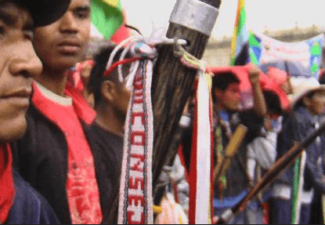
Regarding regulations on diversity in the continent and communities’ demands for recognition.
Read MoreMarriage Equality Public Hearing

This July 30th the Constitutional Court held a public hearing to discuss whether or not it should approve marriage equality nationally and not annull the existing marriages between same-sex couples.
Read MoreForum about Decongestion Measures

Sebastián Lalinde, researcher at Dejusticia, will present at a forum held at the College of Judges and Public Prosecutors of Antioquia.
Read More