


Future of human rights
#SOSPeru: The repeated script of repression in Latin America

The stigmatization of social protest by Peru’s interim government has put civil society and the media in demanding guarantees for a dialogue that allows for political transition without violence.
Read MoreThe immigration policy of the United States and its implications in Latin America

The United States has implemented different measures to prevent the entry of migrants and refugees into its territory, including extending its immigration policy to Latin American countries.
Read MoreNew Report: Misuse of Technologies in Emergency Responses

Three years after the begin of the Covid-19 pandemic, the ECNL, INCLO, and Privacy International published a report on how states use surveillance technologies to weaken Human Rights within their territories with the excuse of the fight against the virus.
Read MoreUnder Surveillance: (Mis)use of Technologies in Emergency Responses

Surveillance technologies exacerbated the impacts of Covid-19 emergency measures on civic space by allowing governments to collect fine-grained data about individuals while also working across large scales of information, in a way that has been unprecedented in the history of global pandemics.
Read MoreAre Human Rights Still Effective?

In 2018, we brought together activists from 11 Global South countries to reflect on the importance of human rights in contexts where their effectiveness has been questioned. Their conclusions were compiled in the book Reimagining the Future of Human Rights.
Read MoreReimagining the Future of Human Rights
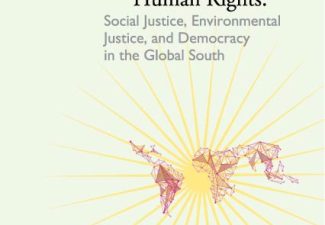
The chapters in this book offer a snapshot of the current state of Human Rights that can help guide our work as activists and researchers.
Read MoreResisting authoritarian tendencies in Latin America

Although the fight against authoritarian tendencies cannot be addressed simply with rights and the people who defend them, we believe that these types of strategies, insofar as they articulate different social sectors, contribute to the deepening of democratic practices.
Read MoreMigration and Decent Work: Challenges for the Global South

This book seeks to strenghten the Human Rights movement through collaboration and the sharing of experiences. The diversity of voices featured here offers a look at migration based on and geared toward the Global South.
Read MoreINCLO condemns Russia’s invasion of Ukraine and joins calls for an immediate cease fire
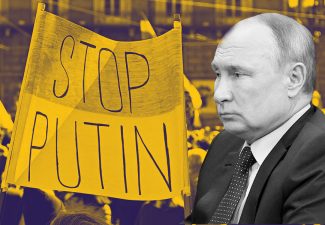
As INCLO members, we raise our collective voice to condemn Russia’s invasion of Ukraine, its violation of international law, and the war crimes and human rights violations being committed against the people in Ukraine.
Read MoreData Feast: Enterprises and Personal Data in Latin America

Google, Amazon, Facebook, Apple, and Microsoft now possess an ability to reconfigure the behaviour of individuals, clients, and citizens globally. How Brazil, Chile, Colombia, and Mexico are responding?
Read MorePunitive drug laws: 10 years undermining the Bangkok Rules

A set of 70 rules that seek to adapt world prison systems to the needs and experiences of women deprived of liberty are in risk by the punitive approach of many drug laws.
Read MoreDejusticia welcomes Mary Lawlor’s appointment as the new UN Special Rapporteur on Human Rights Defenders

In continuity with the Michel Forst’s work, we hope that the Special Rapporteur will visit Colombia and follow up on the report made by her predecessor
Read MoreParticipation in Transitional Justice Measures: A Comparative Study

The study analyzes participatory scenarios involving not only victims but also civil society in a broader sense, as the latter has also been very important for the
promotion, adoption, and implementation of transitional justice measures.
Workshop on creative activism Days of Hope is coming to Caquetá on the 21st of September

Dejusticia, PID Amazonía, the Red Cross Bogotá and Tell are getting together in Florencia to hold the first event of this international initiative that combines art and social mobilization.
Read MoreThe Colombian government has failed to fulfill the Supreme Court’s landmark order to protect the Amazon

One year ago, the Colombian Supreme Court declared the Colombian Amazon a subject of rights, ordering the government to take measures to preserve it by curbing deforestation. However, the government has not taken sufficient action; meanwhile, threats to the rainforest continue to grow.
Read MoreLeading Human Rights Organizations Support a Democratic, Non-Violent Solution to Venezuela’s Crisis

International Community Must Advance a Democratic, Non-Violent Solution to Venezuela’s Crisis.
Read MoreTransnational Advocacy Networks

Activists, particularly those based in the global South, have accumulated a wealth of experience in dealing with a range of transnational networks operating in diverse issue areas. New theoretical understandings have reflected this accumulating experience.
Read MoreLeaders Assassinated in Colombia: how many are left out of the counts?

This analysis by Dejusticia and the Human Rights Data Analysis Group groups the information compiled by different organizations regarding the homicides of social leaders in the country and concludes, through a statistical method, that the problem has a greater magnitude than what is reported.
Read MoreDejusticia intervenes in defense of Venezuelan migrants’ right to health
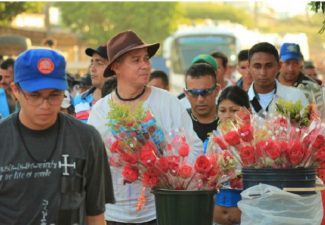
The Constitutional Court invited Dejusticia to present their legal opinion on two cases concerning the right to health of people coming from Venezuela.
Read MoreTongue Twisters of the State

Around 97% of the world’s population speaks approximately 4% of the world’s existing languages. Put differently, around 96% of languages are spoken by about 3% of the global population. Linguistic diversity is being preserved by only a handful of people.
Read MoreVacillation towards migrants
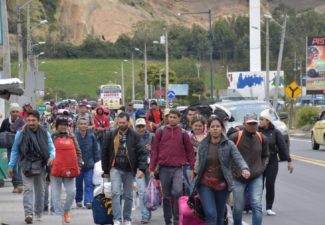
The situation of Venezuelan migrants is too serious and urgent to equivocate on good faith and sway with the changing political circumstances of each government.
Read MoreQue Sea Ley

In spite of the Argentine Senate’s decision, this mobilization showed the force of the feminist movement, destabilized conservative sectors, placed abortion at the center of the legislative debate, and, above all, gave a feeling of victory to women.
Read MorePreventing Corporate Intimidation of Rightsholders

Unfavorable news, a negative opinion of an opinion leader, or even an unfounded rumor can affect companies whose value depends to a large extent on the confidence of their shareholders and the public in their good behavior and the possibilities of obtaining profits by investing in them.
Read MoreNanette, the end of stand-up?

I was struck by her message and her innovative and thoughtful way of thinking about comedy.
Read More“Terms and Conditions May Apply”… depending on where you are

In practice, the Latin American lack of adequate protection manifests itself in the possibility of banks using credit algorithms to decide whether to grant a loan or not, without any intervention by someone with the authority and competence to change the decision.
Read MorePalliative Care: A Human Rights Approach to Health Care
This edition is an English translation of “Cuidados paliativos: El abordaje de la atención en salud desde un enfoque de derechos humanos”, published by Dejusticia in August 2016; the data was not updated for the English translation.
Read MoreThe Amazon is burning

Part of the solution lies in achieving greater effective control in the territory and economic incentives aligned with conservation. There is not a reason or actor that is single-handedly responsible for what is happening. And although neither the burning nor deforestation are totally new, today they are out of control.
Read MoreThe Spirit Level

Shouldn’t the struggle for greater equality be one of the main issues in the electoral debate given that Colombia is one of the most unequal countries in the world?
Read MoreRising to the Populist Challenge
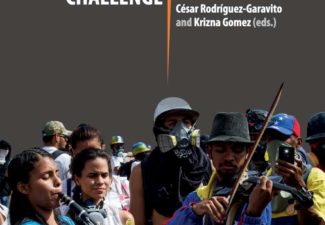
This book collects and analyzes a repertoire of responses by human rights organizations to the crackdown against civil society in the populist context.
Read MoreThe Future of Human Rights: From Gatekeeping to Symbiosis
The international human rights movement faces a context of uncertainty due to: (i) the rise of a multipolar world with new emerging powers, (ii) the emergence of new actors and legal and political strategies, (iii) the challenges and opportunities presented by information and communication technologies, as well as (iv) the threat posed by extreme environmental degradation.
Read More