


Area-Research and Publications
State intelligence gathering on the internet and social media: the case of Colombia
In this report, we explore this subject by drawing on the “Secret Dossiers” case published in 2020 by Semana magazine, which shows how the Colombian state exploits social media and the internet in order to monitor and profile individuals.
Read MoreInteligencia estatal en internet y redes sociales: la privacidad bajo amenaza

La inteligencia estatal hace mucho que se trasladó a la internet y las redes sociales. Esto, por supuesto, representa riesgos adicionales al ejercicio del derecho a la privacidad en línea que ya enfrenta serios obstáculos por cuenta de prácticas nocivas que desempeñan otros actores.
Read MoreStrategic Litigation Manual: From Theory to Practice, Lessons from Colombia & Lebanon
The manual presents the theory of strategic litigation with examples of real cases brought by Dejusticia and The Legal Agenda. We encourage readers to continue to add to it with each new case they have the opportunity to work on.
Read MoreAre Human Rights Still Effective?
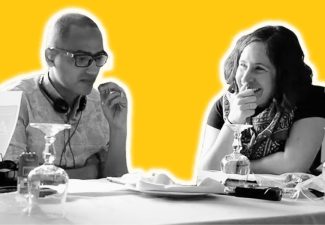
In 2018, we brought together activists from 11 Global South countries to reflect on the importance of human rights in contexts where their effectiveness has been questioned. Their conclusions were compiled in the book Reimagining the Future of Human Rights.
Read MoreDigital technologies and political campaigns: a risk for the 2022 elections?

We investigated micro-segmentation of potential voters on social media in Colombia and questionable company actions. Here are five findings.
Read MoreGender discrimination in Football. Building a Toolbox Toward Gender Equity in the Beautiful Game

As the most popular sport worldwide, football (or soccer) may be the poster child for lingering gender disparities in sport.
Read MoreData Feast: Enterprises and Personal Data in Latin America
Google, Amazon, Facebook, Apple, and Microsoft now possess an ability to reconfigure the behaviour of individuals, clients, and citizens globally. How Brazil, Chile, Colombia, and Mexico are responding?
Read MoreParticipation in Transitional Justice Measures: A Comparative Study

The study analyzes participatory scenarios involving not only victims but also civil society in a broader sense, as the latter has also been very important for the
promotion, adoption, and implementation of transitional justice measures.
Accountability of Google and other data-driven business models: data protection in the digital age

In this document we analyze the privacy policies of 30 companies with data-driven business models that collect data in Colombia and identify practices that have not been sufficiently contemplated by the personal data protection regime currently applicable in our country.
Read MoreFraught with Pain: Access to Palliative Care and Treatment for Heroin Use Disorder in Colombia
This books seeks to facilitate linkages between discussions on the right to health and discussions on drug policy reform. The populations we talk about here are the noes most in need of a change whereby drug culture measures cease to stand in the way of a life free from pain.
Read MoreWaiting to Advertise: Children and Junk Food

The strategy, then, is simple: companies assure themselves a client for life, without the person even knowing they’re being sold something.
Read MoreBeyond the Binary: Securing Peace and Promoting Justice after Conflict
The main objective of Beyond the Binary is to place on record the need to formulate answers to the question of the role that criminal action and punishment should play in negotiated political transitions from war to peace.
Read MoreTransnational Advocacy Networks

Activists, particularly those based in the global South, have accumulated a wealth of experience in dealing with a range of transnational networks operating in diverse issue areas. New theoretical understandings have reflected this accumulating experience.
Read MoreIncreasing Accountability

All Colombian society, especially economic actors who had no connection to the conflict, in an effort to go beyond political differences and as a gesture of solidarity towards the victims, should commit themselves to claim and promote victims’ rights without restrictions.
Read MoreTruth Commission and economic actors

In recent days, Juan Manuel Charry published a column in Semana.com accusing Dejusticia of being a biased organization. Here is our answer.
Read MoreBusinesses, democracy, and human rights

In Colombia, two strident sides tend to predominate: the private sector actors who refuse to talk about the issue and the critics who are suspicious of any business activity.
Read MoreIncreasing accountability
Some economic leaders and columnists have criticized our Increasing Accountability report. Beyond the conclusions that other readers may reach, I believe that a profound and dispassionate reading of the book shows that these criticisms do not have any basis.
Read More‘Ideas for peacebuilding’ brings four new debates for post-conflict
In response to the first implementation phase of the peace agreements that Colombia is currently experiencing in and light of the upcoming presidential elections of 2018, Dejusticia presents its second series of proposals to consolidate peace and think about post-conflict.
Read MoreThe example of teachers
The university does not only have the task of preparing good professionals, but of forming honest citizens, and teachers are key in that mission. The book Academy and Citizenship explores the fulfillment of academic and citizenship standards by teachers in Antioquia.
Read MoreAn organization with collective leadership: our history reviewed in the Leader Network
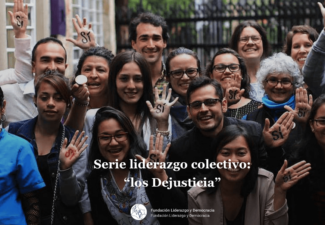
The Leader Network chose Dejusticia to initiate the series of profiles on collective leadership. The profile published in Silla Vacía investigates three fundamental measures of leadership: vision, example and results.
Read More“Democracy, justice and society: 10 years of Dejusticia research” is already available.

Edited by Mauricio García and María Adelaida Ceballos, this book collects the essential of the texts on justice produced by more than a dozen researchers during the last decade at Dejusticia.
Read MoreDejusticia News 2016

Thank you for being with us this year. We will return to work on January 5th, 2017.
Read MoreDejusticia Turns 10!

Learn how Dejusticia came to be and what are some of our lines of work.
Read MoreReturning to the Future: The Academy and Social Activism | Rodrigo Uprimny | TEDxGetsemaní

In case you missed Rodrigo Uprimny’s talk @TEDxGetsemaní:
Read More