


Issue-Environmental Justice
The Order of Priorities
There is a famous poem, erroneously attributed to Jorge Luis Borges that reads as follows: “If I could live my life over again,/ in the next one I would try to make less mistakes./ I would not try to be so perfect, I would relax more./ […] I would have more real problems and less imaginary ones.” The poem is not so good, but it does get something right: the ease with which human beings get lost when they have to try to distinguish what matters and what doesn’t.
Read MoreWhat Are the Roots of the Countryside?
Today, in the middle of Bogotá, people say that the roots of business are in the countryside.
Read MoreThe Moment for Renewable Energy Has Arrived
With renewable energy governments can not only reduce environmental damage and the probability of environmental conflicts, but can also provide greater access to clean and cheaper energy both to marginalized and non-marginalized people.
Read MoreConnecting the Dots in Egypt
It is important to develop a clear understanding of the correlation between the crackdown on civil liberties and the predominance of non-inclusive economic policies.
Read MoreSurprises in Express Decrees
Many have correctly criticized the “express compilation” of norms that the Ministry of Environment promulgated last week, a hefty volume of 732 pages that although seeks to replace all the decrees in the matter, was released only three days prior to the end of the period for comments.
Read MoreWho Is Who?
An important question for policies regarding racial and ethnic diversity is who is who?
Read MoreMontaigne, Five Centuries Later
Michel de Montaigne, the great French renaissance thinker, said that humans are not superior to animals and that the idea of evading our own animal condition is stupid and stubborn arrogance.
Read MoreIsagen
A decade ago, when my grandfather was 20 year old, Colombia had trains, a national postal system, a public health system, and a national telecommunications company; prestigious higher education was almost exclusively in the hands of the state, public services were provided by state-run companies, and there weren’t tolls on the highways because the state had built them.
Read MoreWhere Are Taxes in Human Rights?
How are taxes connected to human rights or how should they be? Why should human rights researchers and activists in the Global South care about taxes?
Read MoreThe Outstanding Debts of the Ranchería Dam
Coauthored by Angélica María Cuevas
The idea calling for a second phase of the El Cercado dam in the Riego Ranchería District of La Guajira (a Department in Northeastern Colombia), has revived the indigenous group Wiwa’s concerns. They belive that, for a second time, their opinion has not been considered in the government’s plans to authorize, since this year, the construction of preliminary public works for the construction of damns and irrigation systems in the Districts of Ranchería and San Juan del Cesar. These works, according to Ariel Borbón Ardila, head of the Colombian Institute for Rural Development (Incoder, by its name in Spanish), are estimated to cost $546 Billion Colombian Pesos (about $227.5 Million U.S. dollars).
Read MoreSleeping in a burning bed
The new report from the Intergovernmental panel on climate change (IPCC) nudes the existential dilemma of humanity: we know that we are destroying the planet, but we are still working on it.
Read MoreThe spring of social movements
The reactions to the agrarian strike show that Colombians are experts in understanding violence and surviving in solitary silence; but we do not know very well neither what to do, nor what to say when facing the rare happening of a collective and pacific mobilization.
Read MoreThe Wiwa People and the Rancheria Dam
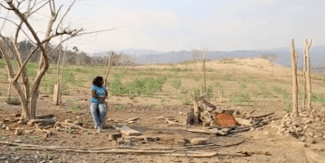
In this mini documentary, Dejusticia and the Wiwa people describe the effects of the construction of a dam without prior consulation on the affected communities. It shows the devastating affects of the dam on the lives and territority of the Wiwa People.
Read MoreWhat is most important for the Sarayaku People?
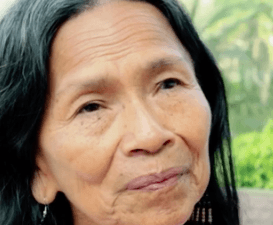
Dejusticia asks members of the Sarayaku People what is most important to them.
Read MoreWhat is the Sierra Nevada of Santa Marta?
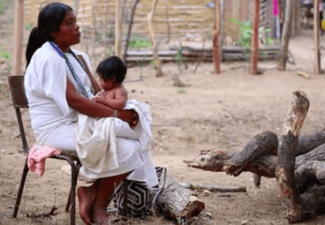
The Sierra Nevada of Santa Marta is a disputed territory. The resources found there attract both legal and illegal actors seeking to control the area. In this documentary members of the Wiwa and Kankuamo People explain what the Sierra means to them.
Read MoreSumak Kawsay: The Sarayaku Case (long version)
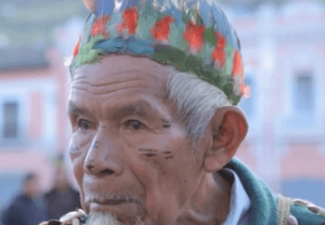
In this documentary, Dejusticia and Canal Justicia follow one of the most important cases on environmental conflicts and indigenous rights before the Inter-American Human Rights Court in Latin America: Sarayaku v. Ecuador.
Read MoreSumak Kawsay: The Sarayaku Case (short version)
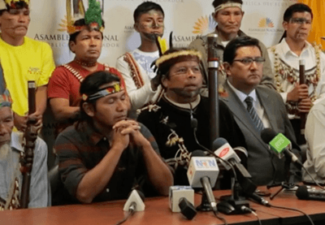
The Sarayaku vs. Ecuador case began in 2003, when the Poeple of Sarayaku filed a complaint with the Inter-American Commission on Human Rights. They accused the Ecuadorian government of authorizing a petroleum company to explore for petroleum on their indigenous territory in the Amazon, in violation of their right to prior consultation.
Read MoreLessons from the Sarayaku People for Other Indigenous Peoples

Dejusticia asks members of the Sarayaku People what lessons they can share with other indigenous people of the region.
Read MoreGold, rocks and consultations
In the town of Piedras, located in the state of Tolima in Colombia, the future of participatory democracy and the environment is at stake. The first prior consultation related to a mining project (La Colosa) took place in this town. This project would be one of the largest of the country and a star within the national portfolio of Anglo Gold, the gold mining multinational.
Read MoreMinorities, threshold and oposition
Democracy assumes that the majority rules, but democracy also assumes that the political minority will be protected so that it can eventually reach power and, thus alternation can exist.
Read More