


Trump’s inauguration
The idea of “inauguration” of a new political era rather than a presidential period seems to be more appropriate.
Read MoreThe new world disorder
There are two ways to read the global moment that begins today with Trump as president. The possibility that it is a periodic oscillation of the political pendulum, within the basic contours of the current world order since 1945.
Read MoreViolence Against Prisoners
More than a prison crisis, massive murders in prisons are proof of the institutional weakeness when facing organized crime.
Read MoreJudges, elections and post-truth
If the policy of post-truth is a threat to democracy as I argued in my last op-ed, a question arises: would the solution be that judges revoke electoral victories based on lies?
Read MoreOf espionage and bullying
Two intelligence reports that entangle Donald Trump with the Russians have just been published: the Russian hacking against Hillary Clinton and the espionage against Trump from the Kremlin. Both reports have different origins and credibility, but once again, they reflect the black clouds threatening the neighborhood.
Read MoreBojayá, the town we left without a voice or a vote
“The paramilitaries enter, two weeks later, the FARC enters, and kills half the town.” This is how Maxima, a black woman in the Committee for the Rights of the Bojayá Victims, summarizes what happened on May 2, 2002.
Read MoreAntidemocratic referendums
Days after the Brexit vote, the economist Kenneth Rogoff publicly opposed referendums and plebiscites like the British one on the European Union or the Colombian one on the peace accord.
An independent court for peace
An independent Judicial Branch is essential for the construction of a peaceful country, especially in this polarized environment. Thus, judicial decisions regarding peace must be juridically solid and cannot filtrate without being adopted.
Read MoreHow to move forward in the Access to Information Movement
I have learned that at some point, the human rights perspective is not enough to push the right forward. Instead, the time has come to collaborate more closely with tech-oriented background actors, such as the Open Government Data Movement.
Read MoreDemocracy and “post-truth”

The Oxford dictionaries chose “post-truth” as the 2016 word to emphasize that objective facts and the truth had become less important in the political discussion and elections than the so called appeals to emotions and personal beliefs.
Read MoreTolima Tribunal approved popular referendum in Ibagué
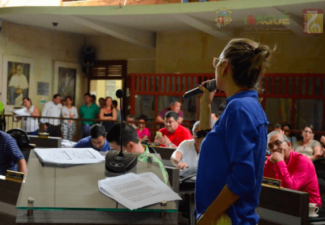
The tribunal accepted the proposals made by Dejusticia and others who supported the initiative.
Read MoreOpen Call for Applications: Intensive Social Rights Course

Applications due July 24th. The course, which offers advanced training in litigation, research, jurisprudence, and innovative social rights implementation strategies will take place October 24th-28th in Bogotá.
Read MoreDo you know the reach of the Special Jurisdiction for Peace?
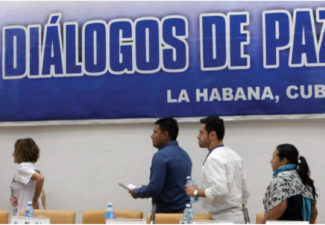
A common refrain in social media comments related to the peace process has been “we want peace without impunity,” implying that the current agreement does not deliver justice. However, how much of this is true?
Read MorePeople’s Consultations About Mining Are Constitutional

Dejusticia filed a supporting brief in the protection case presented by citizens of Pijao, in defense of their right to citizen participation in a people’s consultation about mining.
Read MoreMarriage Equality Approved

The Constitutional Court approved marriage equality. Congratulations! Here are some of the arguments that Dejusticia has presented over time.
Read MoreLaunch of “The Desired Peace”

Today at 6pm a citizen initiative that supports the peace, “The Desired Peace”, will be launched at the Luis Ángel Arango.
Read MoreHuman Rights Case Against Former Bolivian President for Role in 2003 Massacre Cleared to Move Forward
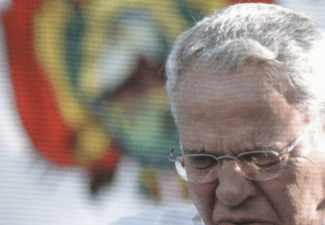
United States Court of Appeals Rejects Defendants’ Attempt to Have Case Dismissed
Read MoreCase Against Bolivian Ex-President for His Role in 2003 Massacre Can Proceed
A U.S. Appeals Court rejected the attempt by the defendant to throw out the case.
Read More“The Conception of the Constitutional Court is Too Narrow”

César Rodríguez Garavito spoke about the face-off between the government and Congress with the judiciary due to the Constitutional Court’s ruling about the judiciary in this interview with Cecilia Orozco for El Espectador.
Read MoreThe Ineffective Reform about the Efficient Use of Prison

Alerts the inconsistencies of the bill in Congress to reform Law 1760 of 2015 about the maximum duration of pretrial detention in Colombia.
Read More