


Dying in Pain in the Global South
All of us, at one point, have been close to the pain of a loved one: a grandmother with cancer at home, a father at the oncological care unit, a brother ongoing sessions of radio and/or chemotherapy.
Read MoreMulti-Ethnic Peace
It seems that the negotating table in Habana agreed to meet with representatives of indigenous and afro-descendant communities in the next days, after many requests from these groups.
Read MoreUniversity and Society
Some three weeks ago I wrote about the confusions that exists in many universities in Colombia (starting with the Catholic ones) between politics, religion, and academia.
Read MoreWar against Hunger?
Thirty three children have died from hunger this year in Colombia, doubly forgotten: first by the government and then by citizens and the media.
Read MoreCivil Matrimony as Shared Public Space
The Court must determine what reasons justify, in our world today, same-sex couple’s prohibition to accessing civil matrimony.
Read MoreThis Isn’t Santos’ Peace
Recently, we have heard many voices against putting the peace agreement to a popular vote. Some of them are political while others have a constitutional argument. Nevertheless, the popular vote isn’t some whim of the president, it is above all else a direct development of the Constitution.
Read MoreReconciliation through the Environment
El proceso de paz de Colombia debería aprender de ejemplos internacionales que hacen uso de la gestión y restauración del medio ambiente como herramientas útiles para promover y reforzar el diálogo y la confianza en situaciones de posconflicto.
Read MoreLessons from the Judicial Strike
Although on Friday courts re-opened, the judiciary’s structural problems persist without real solutions: judges and stuff, alongside government bodies, are responsible for improvising the implementation of reforms.
Read MoreThe Public Prosecutor and the Peace Agreement’s Popular Vote
The General Public Prosecutor asked the Court that it declare the so-called plesbiscite to put the peace agreement to a popular vote unconstitutional. His argument is that the possiblity of submitting this agreement to a binding citizen vote ignores that the President has complete competency to negotiate peace and that the Constitution does not require the peace agreement be put to a popular vote.
Read MoreInvisible Tragedies
Last week I wrote about my father’s death who was run over by a motorcyle that shattered his skull when he was walking on San Juan street in Medellín.
Read MoreBefore intimacy dissapears
It was after taking a look at 10 notebooks in which the Egyptian authorities showed him the printed version of all his e-mails, since he had opened his Gmail account, that Ilan Grapel knew he had to change his defense strategy. In this moment, he confirmed that he was no longer the 27-year-old- young american-israeli that had travelled to Cairo to help refugees from Iraq and Sudan. Instead he had become a dangerous spy deprived from his liberty.
Read MoreLegal Peace Framework: the hearing before the Constitutional Court
A radiography of the diverse positions regarding the Legal Peace Framework and the alternatives that the Court has in terms of punishment of authors of atrocious crimes.
Read MoreA country of sophisticated lawyers
This has not been the year for lawyers. First, was the election of Alberto Rojas as judge of the Constitutional Court, in the midst of criticisms that remain unclear.
Read MoreDemocracy, intimacy and transparency
Could an old and respectable democracy, such as the United States, be adopting authoritarian principles, characteristic of totalitarianism rather than of a state under the rule of law?
Read MoreMedicine prices: ¿how is the pie distributed?
Amid the national controversy over the exorbitant medicine prices, last thursday the Ministry of Health Alejandro Gaviria met his promise. That day, and in the name of the National Commission of Medicine Prices and Medical Devices, the minister presented the expected draft of the circular 04 of 2013, through which he aims to regulate the prices of 195 medications corresponding to 37 molecules.
Read MoreThe institutional weakness of Colombian towns
Project institutions ad hoc for municipalities in Colombia
This text is a preliminary document of research, still in process, which will culminate in a book that will be published the first semester of 2013. This book offers input for a larger project, with a collective dimension, aimed at diagnosing the municipalities’ main problems. Through this assessment, the text will build indicators that allow a focus on the disparate action by the state in specific territories of the country. Therefore this text undertakes to interact with other documents that form a part of a collective project.
Read MoreAgainst reductionist visions of human rights
César Rodríguez Garavito answers Stephen Hopgood and Aryeh Neier, criticizing both sides of the debate due to a very simplistic point of view of the actors, the content and the strategies of the international human rights movement.
Read MoreThe abuse of Riopaila and Cargill
Read the reasons why the purchase was illegal and should be anuled.
Read MoreWhat the Kichwa People of Sarayaku Leave Behind
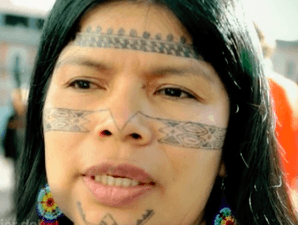
What do the Kichwa People of Sarayaku leave behind?
Read MoreGovernment, companies and medicine prices
With technical rigour and political courage, the Health Ministry is facing the powerful lobby of pharmaceutical companies and is establishing a roof for exorbitant prices of drugs.
Read More