


Justice for Peace
Many people have said it: it’s an imperfect peace deal, but it distances us from perfect war. The statement attached read by the guarantor countries is historic both symbolically and for what it means.
Read MoreThe Light Revenge of Peace
How does the proposed transitional justice accord between the Colombian government and the FARC compare with the South African model?
Read MoreImperfect Justice, Possible Peace
Some have criticized the “special jurisdiction for peace” agreed upon by the government and the FARC because it is not perfect, and for example, does not inevitably establish prison terms for those responsible of atrocious crimes.
Read MoreThe Immaterial Benefits of the Agreement
In 1966 Camilo Torres justified his loyalty to the guerrilla saying that “legal paths have been exhausted” and thus the only viable option was armed struggle.
Read MoreJustice, Prison, and Peace
The agreement on transitional justice achieved in Habana is much too important and complex to leave it to those, like the Solicitor General, who reduce it to demanding prison terms for the FARC.
Read MoreA Net to Fish Data
The Colombian state is arming itself to the teeth to do mass surveillance on our communications.
Read MoreDrug Policy with a Gender Perspective
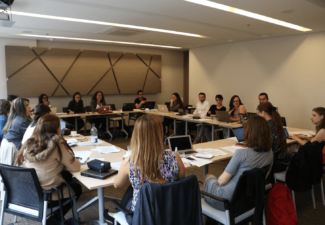
This Friday will take place a forum on “Women, Drug Policy, and Imprisonment in the Americas.”
Read MoreAgricultural Bogotá
“For our grandparents’ lands,” so says grafitti painted during the agricultural strike last year in the center of Bogotá.
Read More“Hunger elimination is one of the principal challenges”

Harsh Mander, Director of the Centre for the Study of Equity in India, was one of the instructors for the Intensive ESC Rights Course that took place last week in Bogotá. Carlos Baquero, researcher at Dejustcia, interviewed him for El Espectador about the fight against hunger.
Read MoreShame and Hope
In Colombia there are situations that inspire simultaneously shame and admiration, impotence and hope.
Read MoreJurisdiction or military outrage?
In sixth debate and with little public discussion was approved a constitutional reform that enormously increases the military jurisdiction. And that is very concerning.
Read MoreThe non explanations of the Prosecuter
Five weeks ago, in a column in El Espectador, I stated that the General Prosecuter, Alejandro Ordóñez, had violated articule 126 of the Constitution, which is a disciplinary fault of great gravity.
Read MoreThree reasons in favor of euthanasia
Why support the bill on the right to a dead with dignity that passed to second debate in the Congress?
Read MoreThe prosecuter and the “para-politics”
When it is about investigating parapolitics, the prosecuter is no saint at all.
Read MoreValladolid: a contemporary controversy
¿Do or don’t have the indians of the Americas the same dignity as the christians of Europe?
Read MoreBlocking the protest
The Constitutional Court confirmed the Law of Citizen Security that penalizes those who block the roads as a mean of protest. However, this doesn’t mean that blocking a road is enough to go to jail.
Read MoreAn agreement on dying with dignity
Is it posible to reach an agreement around the bill about eutanasia and dying with dignity that is now being discussed in the Congres?
Read MoreIs this your answer Mr. Prosecuter?
Three weeks ago, I invited Prosecuter Ordóñez to debate seriously if he had or not violated article 126 of the Constitution.
Read MoreReviving the San Juan
The reopening of the San Juan de Dios Hospital has created great expectations, but will the Hospital be able to grow again from its ashes?
Read MoreThe good and the bad of the bill of opportunities for afrocolombians
The bill of opportunities for afrocolombians deserves a serious debate.
Instead of rushed reactions, based on half heard versions of the bill that the Government just presented, the coming discussion in the Congres needs a serious debate, based on data and lessons from other countries that have adopted similar regulations against discrimination.
Read More