


Litigation
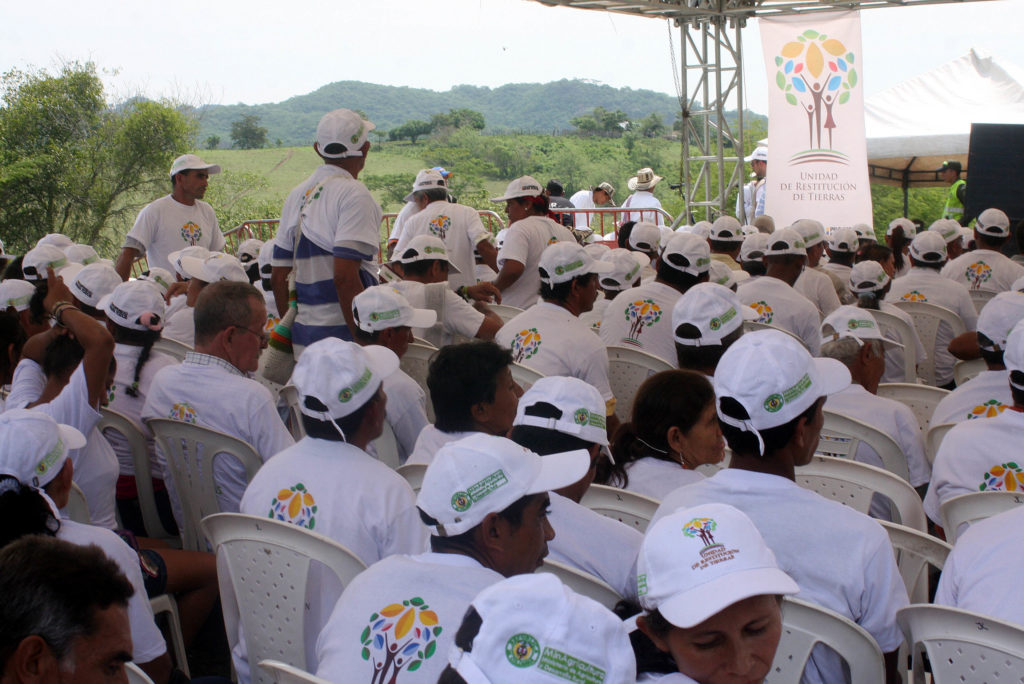
Intervention Litigating Unconstitutionality of the Expression “Free of Blame” of the Evidenciary Requirements of Good Faith Which Is Necessary to Access Economic Compensation
By Dejusticia |
We intervened before the Constitutional Court litigating the unconstitutionality of the formulated expression “free of blame” of the evidenciary standards of good faith, contained in the Law 1448 of 2011 (Victims and Land Restitution Law) that is a requirement to access economic compensation.
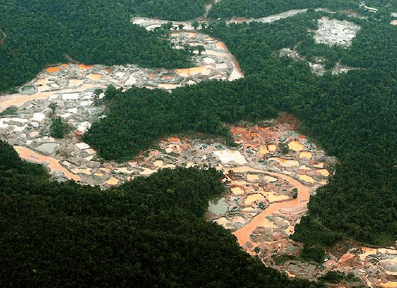
What should the mining licensees prove, which are opponents of land restitution processes of ethnic communities, to show good faith free of guilt?
By Dejusticia |
We presented an amicus curiae in the land restitution process in support of the Cocomopoca afro-descendant community.
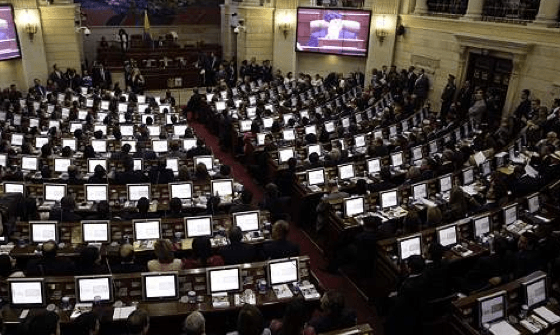
Citizen Intervention in Favor of Changed Introduced by the Balance of Powers Reform regarding Presidential Re-election
By Dejusticia |
The Balance of Powers Reform excluded in regards to presidential re-election the other mechanisms of constitutional reform that are included in the Constitution: legislative act and constitutional referendum of a governmental initiative. Dejusticia argues that this is not unconstitutional.

Citizen Intervention Litigating the Unconstitutionality against Legislative Act, Which Reforms Military Tribunals
By Dejusticia |
Our intervention highlighted that although International Humanitarian Law specifically regulates contexts of war, this does not mean that, from the standard of specialty, the reform introduced by the Legislative Act 02 of 2015 exclude International Human Rights Law standards.

Intervention before the Constitutional Court in Writ of Constitutional Protection that Seeks to Protect a Wetland in Santander from Large-Scale Ranching
By Dejusticia |
We intervened in the revision process of a writ of constitutional protection requested by a citizen of Satander that seeks to protect a wetland that has been affected by large-scale ranching of an agricultural actor in the area.
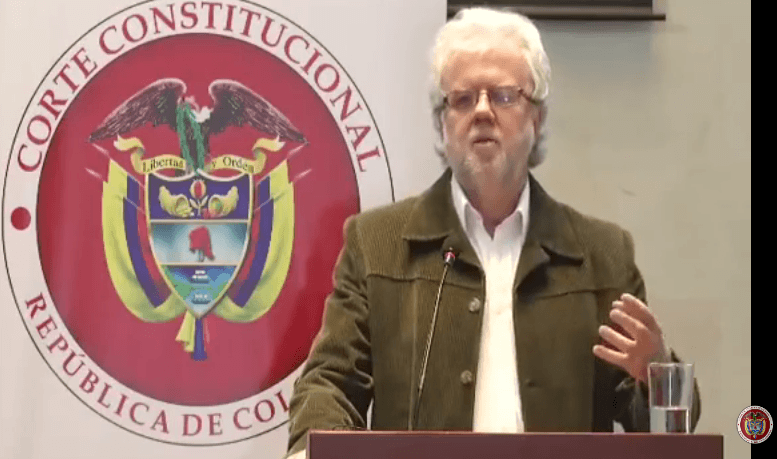
Is the new judicial governance model adopted by the Legislative Act 02 of 2015 or “Balance of Powers Reform” constitutional? Rodrigo Uprimny intervenes in public hearing before the Constitutional Court
By Dejusticia |
On September 9th, 2015 Rodrigo Uprimny participated in a public hearing called by the Constitutional Court during the process of assessing the constitutionality of the Legislative Act 02 of 2015 or the “balance of powers reform.” In his intervention, Rodrigo Uprimny argues that the balance of power reform did not replace the fundamental pillar of judicial independence by modifying the 1991 Constitution’s model of judicial governance.

Some Regulations of the New Nacional Development Plan Violate the Protection of Paramos, Citizen Participation, and Land Restitution
By Dejusticia |
We intervened in new litigation arguing the inconstitutionality of some of the articles of the new National Development Plan 2014-2018.

Why are Victims of Forced and Illicit Recruitment De-Linked from Post-Demobilization Groups Have the Right to the CODA Certificate to Access Reintegration Programs?
By Dejusticia |
We intervened before the Constitutional Court in a lawsuit arguing the inconstitutionality of Article 190 of the Law 1448 of 2011. This law states that victims of forced and illicit recruitment de-linked from post-demobilization groups and that are legal adults have to obtain a certificate from the Operating Committe for the Surrender of Arms (CODA) in order to gain access to reintegration programs.

Can a Criminal Law Judge Suspend a Land Restitution Process?
By Dejusticia |
We intervened before the Constitutional Court in a writ of constitutional protection case, in which a criminal law judge ordered, as a precautionary measure, to suspend a land restitution process. The criminal case investigated the alleged procedural fraud in the land restitution process by the plaintiffs. According to the litigants (who act as defendants in the land restitution case), the restitution plaintiffs committed procedural fraud by arguing that the seeling of the land in question constitutes legal displacement.
