


Income inequality and funding in the health sector in Nigeria
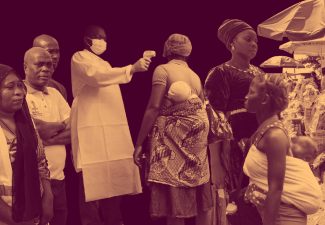
In one of the most unequal countries in the world, the poor people spend nine times more on health services than the wealthy. The solutions to this problem may lie in the payment of income tax.
Read MoreEmerging debate inside drug policy: climate change and the right to a healthy environment
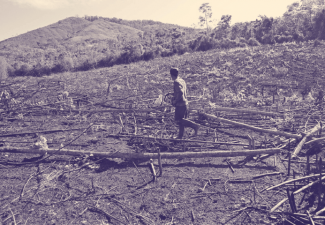
The UN system can no longer ignore calls to align its objectives on drug policy, climate change and the protection of the right to a healthy environment. Beyond building policies on “environment” or “climate change,” the focus should be on human rights, particularly the right to a healthy environment.
Read MoreCaptagon, Syria and armed conflict: another failure of the war on drugs
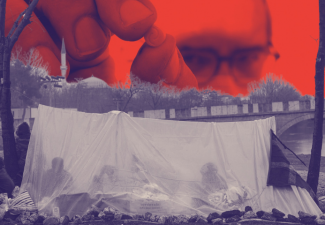
The CND 67 scenario led to conversations around this substance, a kind of amphetamine whose trafficking networks are of concern to several governments. The human rights approach is minimal in the understanding of the problem, and in Colombia, we already know the consequences of this mistake.
Read MoreThe rifts in prohibition at the Commission on Narcotic Drugs
The CND67 showed us a more consolidated rupture in the prohibition system, a crack through which perhaps the light of reform can shine.
Read MoreWhat happens at CND 67, the international forum where the future of drug policy is decided
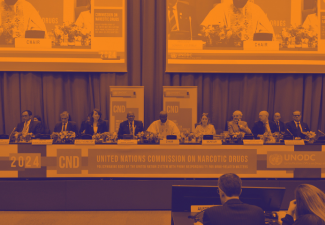
The historic presence of the High Commissioner for Human Rights, Colombia’s leading role and frustration at the slow progress towards a new global monitoring system. Analysis of the first day of the CND in Vienna.
Read MoreLatin America in 2024, according to Paulo Ilich Bacca
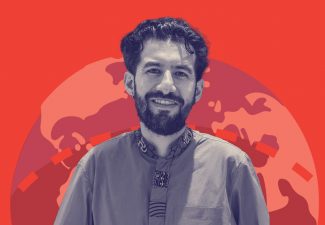
Our deputy director answers five questions about some urgent debates in the region for this year.
Read MoreClimate justice requires a development agenda from the South
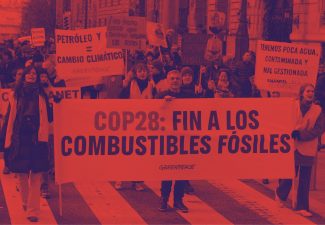
COP 28 revealed the tensions between climate ambitions and actual actions. How to implement development and cooperation strategies in line with climate justice in the Global South?
Read MoreChallenges for Latin America and the Caribbean in the management and protection of migrants’ rights

Socioeconomic integration, border management and the climate emergency in the region are some of the challenges to create programs that safeguard the rights of migrants and refugees.
Read MoreEcuador: a question of security in Latin America
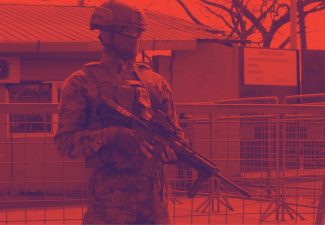
The declaration of a state of emergency in Ecuador reveals security challenges that threaten democracy and human rights in the region. What are the solutions to the crisis and how to protect fundamental rights in a context of increasing violence?
Read MoreA story of uncertainty and access to information: the search for missing persons in Latin America
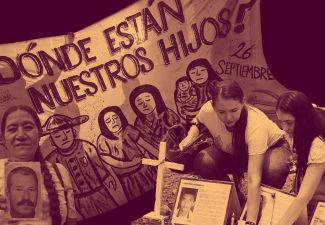
Although the contexts in Mexico and Colombia are different, both cases highlight the importance of accessing judicial and extrajudicial information as a necessary prerequisite for the success of searches and the relief of family members.
Read MoreCiro and us
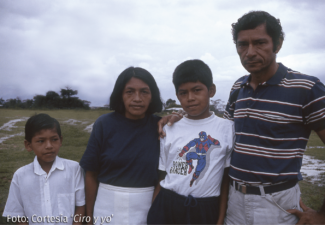
Ciro Galindo, protagonist of the documentary ‘Ciro y yo’, came to remind me where I come from, so I take his story personally. Ultimately, we are children of the same Colombia.
Read MoreVenezuelan migration and political opportunism

Many Colombians are welcoming the Venezuelan neighbors who are crossing the border in solidarity. However, some campaign politicians take advantage of the situation to win votes in the upcoming elections.
Read MoreThe Judiciary Branch: Investigated and Accused in Latin America
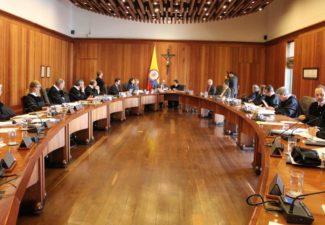
National attorney generals and Latin American high court magistrates are being investigated and accused of having committed crimes. The cases vary and the region must ask: how to ensure that these processes are not used in retaliation for their actions? And at the same time, how to ensure that when it is necessary to investigate and prosecute, procedures function properly?
Read MoreWill they remain missing?
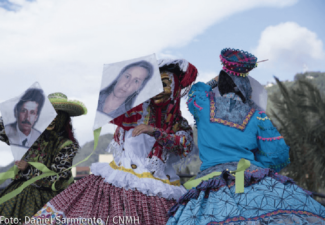
Despite the nobility and importance of its function, almost nobody knows or speaks about the Unit for the Search of Missing Persons, while every day we discuss the Special Jurisdiction for Peace.
Read MoreBankers and garbage collectors
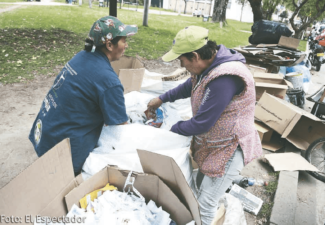
In the midst of the garbage crisis, we must rethink the treatment that, as a society, we give garbage collectors.
Read MoreThe walls talk in Cartagena
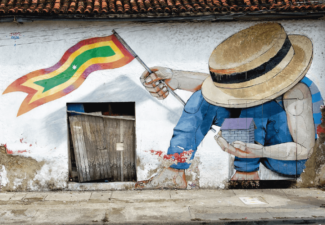
Cartageneros engaged in a worthwhile act in a city where the current leaders are immersed in serious cases of corruption.
Read MoreThe victims of natural disasters also need historical memory
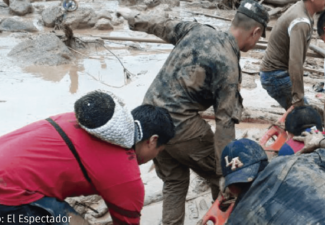
This was the same government that after the tragedy of Mocoa applied a new response apparatus that failed to take into account the 2011 rainy season.
Read MoreAttention to GAFA

It’s time to look at GAFA through a magnifying glass, as Google, Amazon, Facebook and Apple are known, the dominant companies of the digital era.
Read MoreWhy we are demanding the Colombian government halt deforestation
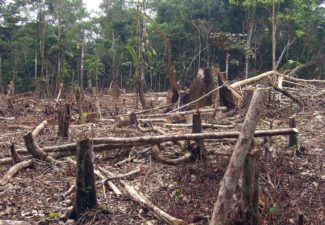
We argue that deforestation in the Colombian Amazon is violating our constitutional right to a healthy environment, which in turn threatens our right to life, water, food, and health. We, the future generations, are 25 youth who will have to face the impacts of climate change and deforestation the rest of our lives.
Read MoreFor a pact against murders
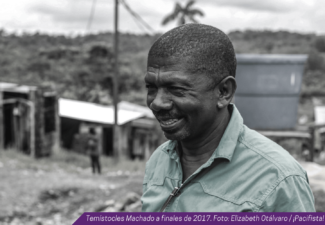
The photo with the honest smile of the murdered social leader Temístocles Machado and his interviews or articles about his life and his struggle put a face to the violence against social leaders.
Read MoreJustice to Achieve Peace: Heinous Crimes, the Right to Negotiated Peace and Justice

This book seeks to contribute to the difficult debate on how to reconcile the imperatives of justice and the rights of the victims, with the internal dynamics of a peace negotiation.
Read MoreThe Implementation of the Partial Decriminalization of Abortion in Colombia
This document identifies some of the biggest obstacles that the partial decriminalization of abortion faces in Colombia.
Read MoreThe Right to Government: The Legal Effects of Institutional Apartheid in Colombia
This book defends the idea that people living in isolated territories have a right to institutional assistance; in other words, they have a right to government. Not just to any government, but one that that protects their dignity and their rights.
Read MoreFar from the Law: Voluntary Interruption of Pregnancy in the Colombian Health Care System
This study intends is contribute to the empirical research on voluntary interruption of pregnancy (VIP).
Read MoreThe Regulation of Voluntary Interruptions of Pregnancy in Colombia

This document describes the current status of voluntary interruption of pregnancy (VIP) regulation in Colombia.
Read MoreRacial Discrimination at Work: an Experimental Study in Bogotá
The denial of the racial discrimination in Colombia and the lack of measures to combat it, is partly due to the lack of reliable data on the disadvantages the afro-colombian population face in the workforce, the education system and in housing.
Read MoreRacial Discrimination in the Labor Market: An Experimental Study in Bogotá
This paper documents the first Colombian quantitative study on racial discrimination in the labor market, specifically in Bogotá. The study finds that the skin color has a direct and negative effect on the chances of finding a job.
Read MoreBetween Stereotypes: Labor Trajectories for Men and Women in Colombia
This document explores the labor trajectories of men and women. It finds that strategic decisions, as well as formal and informal labor market norms, are based on images, stereotypes and ideas about gender that leads to a division of labor by gender.
Read MorePublic Order and Racial Profiling: Afro-Colombian Experiences with the Cali Police
This book documents the Police Forces’ treatment of the Afro-Colombian population in Cali.
Read MoreInsufficient Judicial Independence, Deformed Preventive Prison: The cases of Argentina, Colombia, Ecuador and Peru
In this study we analyze the main pressures and interferences to which Colombian judges and prosecutors are subject when they have to make decisions regarding the imposition of preventive detention
Read MoreIntervention against reformatory articles of the Family Agricultural Unit in the National Development Plan
Dejusticia supported the claim of unconstitutionality of Articles 60 and 61 of the National Development Plan because they contain measures that promote land concentration and constitute a step backward in guaranteeing the right of agricultural workers to access land.
Read MoreIntervention on the constitutionality of the victims law
The intervention refers to three aspects of the victims law. The first one challenges establishing is January 1, 1985 as the date from which victims would be recognized for purposes of reparations. The second is the exclusion of victims of common crimes. Finally, we argue that the exclusion of victims from illegal armed groups is unconstitutional.
Read MoreChandler Burr case: individual adoption and sexual orientation
Dejusticia and Colombia Diversa challenged the decision of ICBF authorities to remove two adopted children from the custody of Mr. Burr after the authorities learned he was gay.
Read MoreIntervention in the law of employment formalization and creation
Dejusticia intervened before the Constitutional Court arguing that challenged law, part of the Law of Employment Formalization, should be interpreted to mean that any employees responsible for programmatic and permanent activities in private and public entities must hired via employment contract.
Read MoreIntervention regarding the constitutional prohibition of possession and consumption of narcotic substances.
Dejusticia intervened to challenge a legislative constitutional reform prohibiting the possession and consumption of drugs, which sought to replace jurisprudence of the Constitutional Court that interpreted the right to personal autonomy as permitting the possession of a personal dose of drugs.
Read MoreIntervention in tutela proceedins for protection of rights concerning discriminatory speech
Dejusticia and Racial Discrimination Watch intervened before the Constitutional Court in a tutela proceeding filed by a student of the University Distrital Francisco José de Caldas who alleged he was the victim of racial discrimination because of racist remarks of a teacher during class.
Read MoreIntervention in the statutory law of political reform
Dejusticia intervened before the Court with regards of the constitutional review of the statutory bill of political reform, specifically in the study of Articles 2, 28 and 47.
Read MoreAmicus in tutela proceeding regarding a voluntary interruption of pregnancy due to the risk to the mental health of the woman.
Dejusticia intervened to support the protection of the fundamental rights of a woman who was denied the right to terminate her pregnancy, although her situation fit into one of the three circumstances in which abortion is permitted, namely, the risk to the women’s mental health.
Read MoreIntervention in the request for annulment of decision T-769/09
projects (Mandé Norte) in indigenous and Afro-Colombian collective territories until affected communities were consulted.
Read MoreLawsuit to permit gay marriage.
Colombia Diversa and Dejusticia presented this lawsuit with to challenge the restriction of civil marriage to heterosexual couples. We argue that this restriction violates the rights to equality, to the recognition of legal personality, to privacy and good name, and to the free development of personality of homosexual couples.
Read More