


Posts by Dejusticia
Democracies in Crisis Bring Challenges for Civil Society
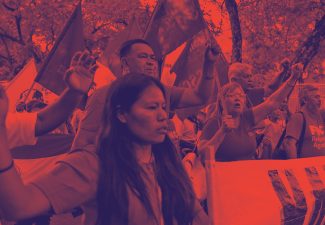
In this newsletter we show how the current decline of democracies goes hand in hand with strategies to weaken civil society. On the other hand, this double crisis can offer the human rights movement an opportunity to rethink and transform ourselves.
Read MoreAre we moving forward or backward? The global debate on drugs at CND68
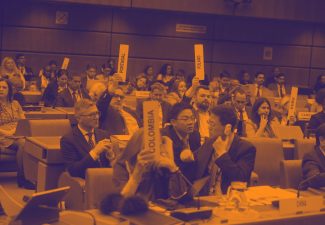
Drug policy remains at a permanent crossroads. CND68 will determine whether we move towards a human rights and public health approach or remain in prohibitionism. Colombia hopes to maintain its global leadership and push for reform of the system.
Read MoreThe right to protest under threat: the situation in Peru
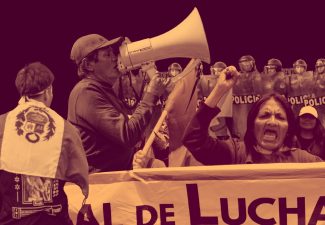
Peru faces a fractured democracy: violent repression, criminalization of protests, and exclusion of indigenous communities expose historical wounds. The political and social crisis demands justice and urgent structural change.
Read MoreThe right to protest under threat: the situation in Peru
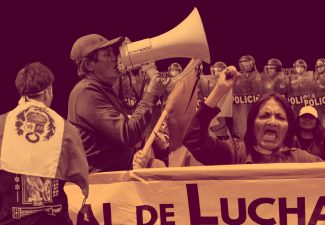
Peru faces a fractured democracy: violent repression, criminalization of protests, and exclusion of rural and indigenous communities. The political and social crisis demands justice and urgent structural change to settle the historical debts owed to vulnerable populations.
Read MoreThe search for the disappeared: similar paths miles away
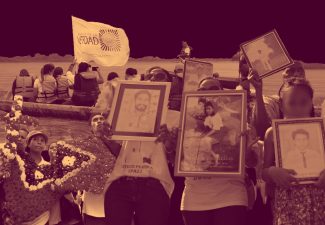
An empty plate speaks louder than words. In Colombia, Timor-Leste, and Indonesia, families refuse to forget their disappeared loved ones, confronting bureaucratic obstacles, institutional failures, and silence, demanding truth, justice, and the answers they are owed.
Read MoreStraddling borders: a journey of indigenous identity and sovereignty
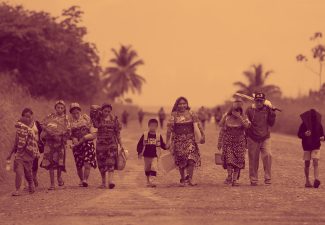
The 21st century continues to portray Indigenous peoples as “a thing of the past,” as a people “dominated by the Europeans, civilized by them, or dead by their hatred,” making the impacts of Indigenous genocide clearly persist today.
Read MoreIndigenous peoples in cross-border mobility. An unknown phenomenon that deserves attention.
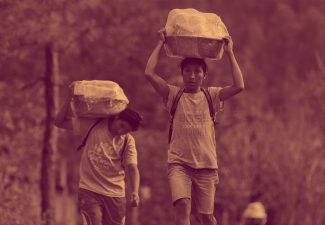
The lack of agreements between Colombia and neighboring countries for the granting of bi-nationality, as well as the practical impossibility of access to nationality by naturalization, due to the impossibility of meeting requirements for members of cross-border indigenous peoples
Read MoreNew Book Collating Nutrition Labeling Experiences in Latin America Launched

This book explores the role of nutrition labeling in combating obesity and non-communicable diseases in Latin America. Activists and researchers share lessons learned, emphasizing collaboration between civil society and academia to advance public health reforms.
Read MoreGender identity and migration in South Africa: a layered experience
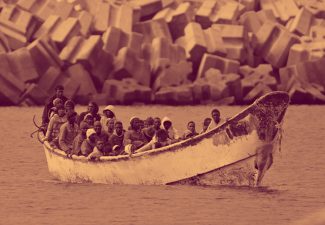
South Africa carries an additional appeal for African LGBTQIA+ individuals seeking to flee victimisation and criminalisation in their home countries. Due to the provisions of its progressive post-apartheid constitution, South Africa has explicitly recognised persecution based on sexuality and gender identity as legitimate grounds for asylum since 1998.
Read MoreTrafficked migrant and refugee women in Latin America: State responses and challenges
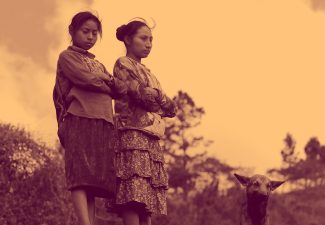
Approximately 8 million people have left Venezuela and about 36% (2,811,570) of them are in Colombia, the main receiving country of the Venezuelan migrant population in the region.
Read MoreThe Amazon is burning

Part of the solution lies in achieving greater effective control in the territory and economic incentives aligned with conservation. There is not a reason or actor that is single-handedly responsible for what is happening. And although neither the burning nor deforestation are totally new, today they are out of control.
Read MoreA mother with many daughters

Daughters from a same mother are mobilizing in Colombia, Ecuador, the United States, Philippines and Mexico to defend it.
Read MoreFarmer markets: the countryside can come to Bogotá

In farmer markets there are no products sold by intermediaries or imported food. It is local food for local people.
Read MoreThe Spirit Level

Shouldn’t the struggle for greater equality be one of the main issues in the electoral debate given that Colombia is one of the most unequal countries in the world?
Read MoreTheoretical musings

Perhaps the greatest political challenge that current democracies face is to rescue something of the public and civic virtue that the Greeks discussed, without falling into the different populisms that today offer themselves as saviors of society.
Read MoreAmazon, subject of rights

Recognizing that the Amazon has rights means that all citizens, regardless of whether you are from the region, can demand its protection—even before the courts.
Read MoreThe battle for differentiated criminal treatment for small growers continues

On March 20th, the Ministry of Justice issued a new version of the bill on differentiated criminal treatment for small coca, marihuana and poppy growers. The proposed changes aim to respond to the General Attorney’s criticisms, but have generated concern and distrust among communities.
Read MoreIn Venezuela, cancer patients are dying without access to morphine
The shortage of medicine in Venezuela has generated a humanitarian crisis that impacts thousands of patients. According to approximated statistics, only 10% of patients with terminal and/or chronic illnesses that require medication like morphine actually enjoy access to such. They face a dilemma of having to choose between hunger and pain.
Read MoreTruth Commission and economic actors

In recent days, Juan Manuel Charry published a column in Semana.com accusing Dejusticia of being a biased organization. Here is our answer.
Read MoreThe right to live and die without pain in the Americas
Living and dying without pain is a very important component of the right to health. Consequently, States have an obligation not only to remove obstacles that prevent patients from obtaining palliative drugs, but also to promote more flexible programs and policies that facilitate access to these medicines.
Read MoreDemocracy, Justice & Society: Ten Years of Research at Dejusticia
This book collects the essential from the texts on justice elaborated during the last decade in the Center for the Study of Law, Justice and Society – Dejusticia.
Read MoreExtractivism versus human rights: chronicles of the mined fields in the Global South

Un nuevo acercamiento a los derechos humanos: escritura reflexiva por autores activistas de organizaciones defensoras que considera el potencial, los logros y desafíos de su práctica.
Read MoreArguments and pathways for the ratification of the American Convention on Protecting the Human Rights of Older Persons
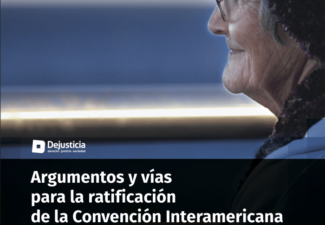
On June 15, 2015, the General Assembly of the Organization of American States (OAS) adopted the text of the Inter-American Convention on Protecting the Human Rights of Older Persons (Convention on Older Persons).
Read MoreEffective Criminal Defense in Latin America

This book analyzes the national and regional standards related to effective criminal defense. It is the result of a joint research project conducted with different organizations including Dejusticia.
Read MoreLegal Framework for the Sugary Drinks Tax in Colombia
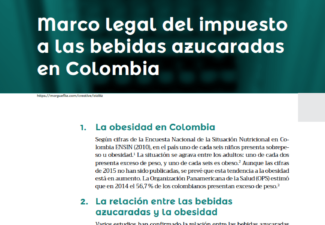
The document provides a summary on the legal framework for the sugary drinks tax in Colombia
Read MoreICAR and Dejusticia Release Assessment of Colombian National Action Plan

ICAR and Dejusticia are pleased to publish an assessment of the Colombian National Action Plan (NAP) on business and human rights.
Read MoreAlternative report to the United Nations Committee Against Forced Displacement
Dejusticia and five allied organizations presented an alternative report to the United Nations Committee Against Forced Displacement before its 11th Session, which took place on October 3-14, 2016.
Read MorePalliative Care and its Status in Latin America
Dejusticia launched a report on the status of palliative care across eight countries in Latin America.
Read MoreThe Multithematic and Diverse Justice Reform in Latin America
This article deals with reforms to the justice system in various Latin American countries across the 20th century.
Read MoreCriminal Systems for Youth in Latin America
This article analyzes recent reforms on youth criminal systems in Latin American countries.
Read MoreIntervention before the Constitutional Court Regarding Legal Regulations on Obligatory Military Service and Its Application to Trans* People

Dejusticia intervened in a lawsuit arguing the unconstitutional nature of laws that regulate military service for trans people. For the plaintiffs these laws ignore their gender identity. Dejusticia has asked the Court to declare itself inhibited from releasing a substantive ruling.
Read MoreConstitutional Court Accepts Case to Guarantee Medical Attention to Survivors of Sexual Assault

Dejusticia alongside four women’s human rights organizations filed a lawsuit that seeks to ameliorate the serious problems that survivors of sexual assault face in Colombia.
Read MoreDejusticia Defends the Autonomy of Local Government Agencies to Protect their Land
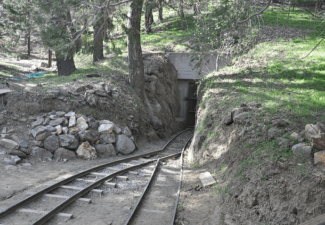
Dejusticia litigated against the Decree 2691 of 2014 for violating the local government agencies’ and municipalities’ autonomy to regulate land use and also ignores the environment’s important status in the national legal framework.
Read MoreExpert Opinion about Administrative Reparations before the Inter-American Human Rights Court
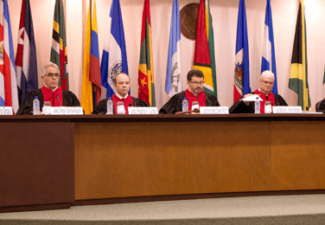
Camilo Sánchez, transitional justice research coordinator, presented an expert opinion about the administrative reparations program and the compliance of the Land Restitution and Victims’ Law to international standards before the Inter-American Court of Human Rights, within the framework of the case “Yarce and others v. Colombia.”
Read MoreIntervention in Favor of the Nasa Community due to Glyphosate in Putumayo

Dejusticia intervened in the revision process of a writ of constitutional protection case due to the violation of the indigenous community Nasa’s right to prior consultation in Putumayo, resulting in the aereal fumigation with glysophate of illicit crops.
Read MoreDejusticia Intervenes in Process to Protect the Rights of Indigenous Peoples in Campeche, Mexico

Dejusticia presented an amicus curiae before the First Court of the Trigésimo First Circuit District of San Francisco de Campeche in the state of Campeche, Mexico to support a process of constitutional protection in which the community of San Antonio de Ébula seeks to protect its fundamental rights after forced displacement in 2009.
Read MoreDejusticia Intervenes in Sergio Urrego’s Case Against Homophobic Bullying in Schools
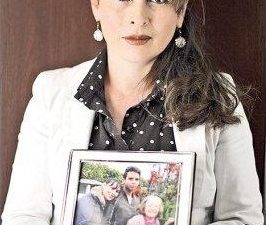
Dejusticia presented an amicus curiae (a document that outlines a legal concept) to support the writ of constitutional protection proceeding filed by Sergio Urrego’s mother against his former school, the Gimnasio Castillo Campestre. Sergio Urrego was a young victim who committed suicide on September 5th, 2014 as a result of homophobic bullying he experienced in his school.
In the document, Dejusticia asked the Court to revoke the sentence referred to by the Second Section of the Council of State and protect the rights requested by Sergio’s mother.
Read MoreCan a Person Ask Google, Or Any Search Engine, to Erase and Take Down Their Personal Information?

We intervened before the Constitutional Court in a writ of constitutional protection case in which the plaintiff asks that El Tiempo and Google.com to erase and take down from their digital media and web searches all information related to a past criminal case she was implicated in that has expired.
Read MoreThe Constitutional Court Decides in Constitutional Writ of Protection Case about Changing Gender on Official Identification Documents for Trans People– Intervention by Dejusticia

The Constitutional Court in the T-063 Decision of 2005 protected the fundamental rights to human dignity, free development of personality, sexual and gender identity, and the legal personhood of trans women, who they previously asked to use a judicial process and present a medical certificate in order to change one’s sex on official identification documents.
Read MoreWe Presented an Amicus Curiae before the Constitutional Tribunal Asking for the Preservation of the Reform that Allows for Abortion
We presented an amicus curiae before the Constitutional Tribunal of the Dominican Republic in favor of the depenalization of abortion in the process that this court is considering to determine whether to preserve the reform to the Criminal Code that allows for abortion in three circumstances, thus protecting the life and integrity of Dominican women.
Read More