


Posts by Dejusticia
Borders, forced migration and differential approaches
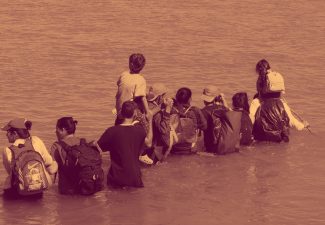
The articles and blogs in this new edition of the Newsletter highlight just some of the impacts that borders can have on the lives of individuals and communities.
Read MoreFrom Indonesia to Peru: The Experiences of Our Fellows from the Global South

Seven researchers from six countries came to our organization to strengthen their work on transitional justice, gender, peasant rights, extractivism, technology, among others. This exchange strengthens the impact of their organizations and promotes the defense of human rights in their countries of origin.
Read MoreLocal stories of justice and reparation in the face of extractivism in Latin America
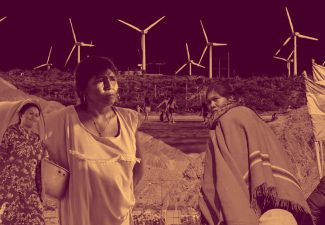
The question persists on how to address this tension from the perspective of the territories, considering the way indigenous communities construct justice, prioritizing their views over those of companies and states.
Read MoreOpen call for Global North fellowships 2025
This opportunity, for the second semester of 2025, allows for the exchange of tools and research-action strategies developed at Dejusticia, as well as the contributions of interns and fellows with their own experiences and those of their organizations.
Read MoreWe have fellowships for defenders from the Global South: Be part of the 2025 cohort!

This opportunity allows human rights defenders from countries in the Global South who are in emergency or high-risk situations to develop their projects and participate in an academic and cultural exchange in a safe space. Apply before January 31, 2025.
Read MoreJustice for victims of the armed conflict in Peru, again at risk

Law 32107 blocks investigations and sanctions for war crimes prior to 2002 in Peru. This affects more than 69,000 victims of the armed conflict, mainly indigenous and peasant communities, perpetuating impunity, exclusion and making social reconciliation difficult in a polarized country.
Read MoreThe Darien route: a journey of survival that calls for more humane migration policies

Migration through the Darién reflects a humanitarian and human rights crisis. Restrictive policies, external influences and socioeconomic contexts deepen these migratory flows. It’s urgent that Latin American countries develop regional policies based on human rights to protect migrants and communities.
Read MoreExpansion of the Technological Frontier: Connectivity and Community in Rural and Indigenous Areas of Colombia and Brazil

Faced with the processes of violence and social exclusion in rural areas, community networks offer a viable alternative to guarantee access to communication and dignity.
Read MoreStrengthening civil society as an avenue for environmental governance

The past Conference of the Parties to the Convention on Biological Diversity had one of the largest levels of civil society participation in the green zone. This space, which has traditionally been designed for the presence and voice of NGOs and local actors, was one of the most outstanding spaces, as it reached a participation…
Read MoreBiodiverse business: the private sector at COP16

One of the indicators of success was the participation of the private sector in COP16. Under the guise of the green economy, the national government and the business community sought to position a message of progress in terms of economic diversification and energy transition based on the opportunities offered by the environmental market. Specifically, the…
Read MoreDo they want to polarize us?

Every day, at all times, through all possible forms of communication, I am told that Colombia is a completely polarized country that only understands extremes. Mu intuition tells me that the political reality of my country is not so simple. I will explain my reasoning.
Read MoreWarnings about rural tourism in the post-conflict

If the rural tourism policies implemented in victimized communities are not accompanied by public policies, we will soon see new forms of dispossession, exile, and land ownership changes in the areas mentioned in the official tourism speech.
Read MoreA single court?
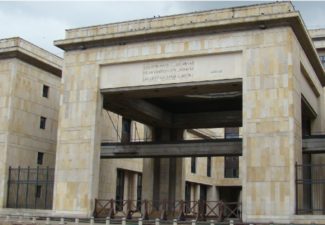
The problem of “a single court,” proposed by Uribismo, is that in the concrete situation of Colombia, it contributes very little to the solution of the problems of our judicial system, and on the contrary, presents many risks.
Read MoreA different campaign
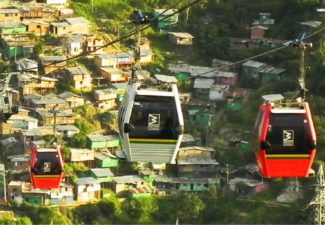
A campaign has just been launched in Medellín. Instead of focusing on the non-compliers, it highlights those who comply. One of the posters of the campaign says “In Medellin, eight out of ten people prefer to dialogue to resolve a conflict, just like you”.
Read MoreBusinesses, democracy, and human rights
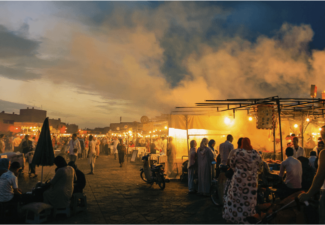
In Colombia, two strident sides tend to predominate: the private sector actors who refuse to talk about the issue and the critics who are suspicious of any business activity.
Read MoreAsk yourself: would you hire a d ex-combatant?
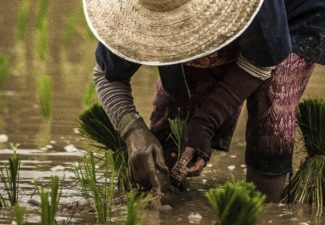
I asked people I knew what they thought and I realized that there was a gender difference. They told me “I would not hire a man. But I would hire a woman.”
Read MoreIncreasing accountability

Some economic leaders and columnists have criticized our Increasing Accountability report. Beyond the conclusions that other readers may reach, I believe that a profound and dispassionate reading of the book shows that these criticisms do not have any basis.
Read MoreCampesinos will have to be included in the census: judges reignite their dialogue with the State
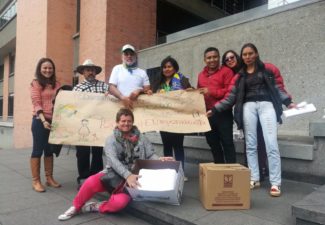
Thanks to the Supreme Court of Justice’s decision on the lawsuit filed by more than 1,700 campesinos who want to be counted in the 2018 population census, this group and the State once again sat down to talk.
Read MoreHow I gave a mother a cake because I couldn’t get her son out of jail
Certainly one does not need to be a human rights activist to be able to shake someone’s hand. But it’s only a truly caring and grounded advocate who can write a set of policy recommendations and at the same time keep giving hope to the people s/he works with to make sure that all this does not become pointless in the end.
Read MoreTwo possible worlds, two feelings
Globally, we live a new spring of hope, but also a new winter of despair. Despite advances in social welfare, the shadow of populism and the increase in inequality remind us that there are reasons to work for a better world.
Read MoreWomen, Drug Policy, and Imprisonment: A Guide for Reforming Policy in Colombia
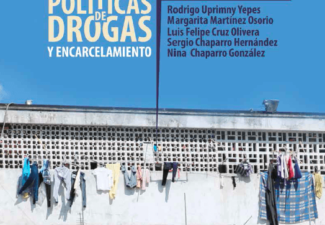
This guide diagnoses the impact of deprivation of liberty on women imprisoned due to drug offenses, and formulates recommendations to mitigate and prevent the disproportionate effects of incarceration.
Read MoreConstitution, Democracy, and Rights: Selected Texts from Juan Jaramillo
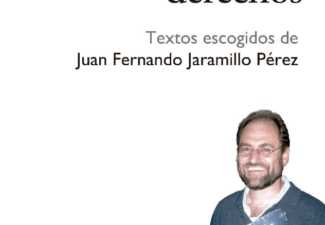
Constitution, Democracy, and Rights is a compilation of some of Juan Fernando Jaramillo’s best constitutional law articles. He was a founding member of Dejusticia who passed away young four years ago.
Read MoreAfter the Drug Wars
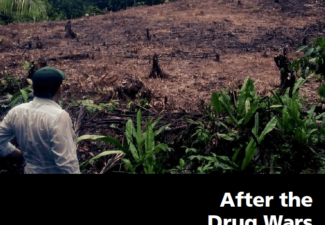
The post-‘war on drugs’ era has begun. Prohibitionist policies must now take a back seat to the new, comprehensive, people-centred set of universal goals and targets that we know as the Sustainable Development Goals.
Read MoreThe OECD and the Downscaling of Labor and Pension Policies: Imagining Alternatives through Decent Work and Rights
This document analyzes the tensions in the OECD’s recommendations in labor and pensions and the legal obligations of the state regarding decent work and international human rights law.
Read MoreWomen, Drug Policy, and Imprisonment
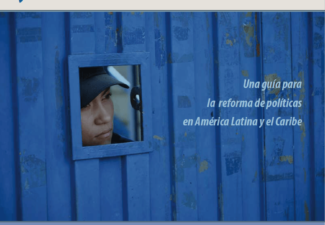
This guide, written by the Washington Office on Latin America, the International Drug Policy Consortium, the Inter-American Commission of Women, and Dejusticia, proposes drug policy reform to reduce the female prison population in the Americas.
Read MoreExercising the Right to Voluntary Interruption of Pregnancy in the context of armed conflict
One of the central aims of this text is to overcome, in a first attempt, the lack of data regarding abortions and the armed conflict, and the obstacles women face when trying to access that procedure in those contexts.
Read MoreExercising the Right to Voluntary Interruption of Pregnancy in the Context of Armed Conflict
One of the central aims of this text is to overcome, in a first attempt, the lack of data regarding abortions and the armed conflict, and the obstacles women face when trying to access that procedure in those contexts.
Read MoreLegal Remedies. The Role of Constitutional Judges when Abortion Is Not Guaranteed
This text, which at first seems to broach simply a legal debate, is truly about how to resolve the human drama of what to do when women attempt to access legal abortions, but face innumerable obstacles which end up limiting it.
Read MoreExercising the Right to Voluntary Interruption of Pregnancy in the context of armed conflict
One of the central aims of this text is to overcome, in a first attempt, the lack of data regarding abortions and the armed conflict, and the obstacles women face when trying to access this procedure in those contexts.
Read MoreMitigating Criminal Law Addiction: Alternatives to Prison for Drug-related Offenses
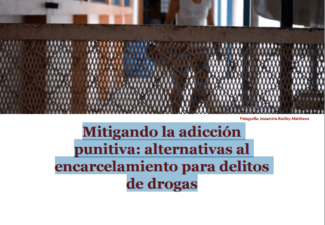
This report was prepared with the Colectivo de Estudios Drogas y Derecho and discusses alternatives to prison for drug-related offenses.
Read MoreWe Ask the Government to Immediately Suspend Glifosate Fumigations
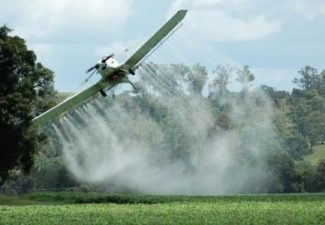
We ask the Justice Ministry, as the President of the National Narcotics Council, the Technical Secretary of that organization, and the Anti-Narcotics Director of the National Police, to immediately suspend all glifosate spraying operations in the Colombian territory, in application of the precautionary principle.
Read MoreAmicus Curae in Popular Action Case against the Omission of the Ministry of Mines, the National Mining Agency, and Other Entities Responsible for Extending the “Mining Moratorium”
We present an amicus curae in the case in reference with the aim of asking the Office to protect the collective right to the environment, and qualify the decision to allow a window for mining title requests until the conditions for which the moratorium was initially instituted are overcome and to further consider this in future extensions of said moratorium.
Read MoreVenezuela: Stop Harassing Human Rights Defenders

Dejusticia joins the call of several international organizations asking Venezuela to stop harrassing human rights defenders.
Read MoreAmicus Curiae Presented to the Supreme Court of the Nation Regarding International Standards on the Definition of Grave Human Rights Violations Applicable in the United States of Mexico
Taking into account the ongoing discussion in Mexico regarding the application of classified information in investigations in preliminary inquiry phases and declassifying said information when dealing with grave violations of human rights, stipulated in the Law of Federal Transparency and Access to Public Government Information of 2002, Dejusticia presented an amicus curiae in the case taken by the Supreme Court of Mexico regarding the writ of constitutional protection 661/2014 presented by the Foundation for Justice and Democratic Rule of Law, where we analyze the international standards applicable to the Mexican state in relation with the definition of the category of grave human rights violations.
Read MoreColombia Diversa and Dejusticia Registered a Citizen Petition in LDM and RPA’s Writ of Constitutional Protection Process, Acting in Their Own Name and in Representation of their Children S and SVP
Submitted with Mauricio Albarracín Caballero, Eliana Robles Pallares y Mávilo Nicolás Giraldo, Colombia Diversa’s executive director and members of the litigation team.
Read MoreWe Brought a Lawsuit Against the Inconstitutionality of the 13th Article (Partial) of the Mining Code
We ask the Constitutional Court to declare the inconstitutionality of that article because it allows property that has a predefined and important environmental function to be used for mining activities automatically.
Read MorePress Release – International human rights network intervenes in case challenging large-scale disconnection of water supply to tens of thousands of low-income residents in Detroit
New York. February 9, 2015. The International Network for Economic, Social and Cultural Rights (ESCR-Net), a global network of over 220 groups and 50 individual advocates from around the world working to secure economic and social justice through human rights, has requested leave from the U.S. District Court to be recognized as amicus curiae[1] in the case of Lyda et al. v. City of Detroit[2]in support of residents challenging the City of Detroit’s decision to cut off water supply to thousands of households unable to pay their bills.
Read MoreAmicus Curiae for Mr. President of the Transitory Liquidating Criminal Court
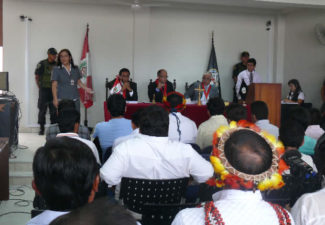
Presented by the Due Process of Law Foundation, Human Rights Center of the Pontifical Catholic University of Ecuador, the Center for the Study of Law, Justice, and Society- Dejusticia.
Read MoreTutela UP – Díaz Mansilla Family
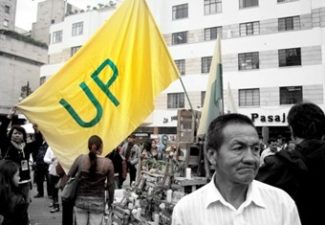
30 years ago Miguel Ángel Díaz was forcefully disappeared in Puerto Boyacá with participation of a DAS agent. He was one of the first victims of the persecution against the Patriotic Union.
Read MoreDejusticia Asks the Court Not to Annul Its Ruling About Women’s Right to Voluntary Pregnancy Interruption, Following a Request from the Public Prosecutor’s Office
The Constitutional Court has announced that if one of its rulings constitutes an ostensible, proven, significant, and transcendental violation of due process, it itself will proceed to declare the annulment of that decision.
Read More