


Posts by Dejusticia
Trump and USAID: an Opportunity to Integrate a Horizontal Treatment in International Cooperation Relations between Colombia and Other Countries?
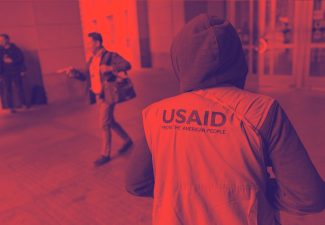
Future international cooperation agreements between Colombia and other countries must be transformed into horizontal and transparent alliances.
Read MoreProspects for civil society in light of USAID’s withdrawal
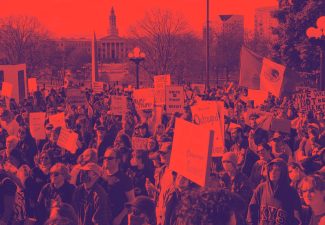
This issue of the Newsletter prepared by the Regionalization team at Dejusticia addresses the different aspects of this debate based on the analysis of two critical cases in the Latin American context: Colombia and Mexico.
Read MoreNew world order: a great opportunity for the South
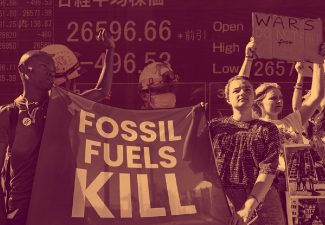
While this storm for control of the old order continues to intensify in the North, the Global South has a historic opportunity to redefine its role in the global economy with its natural and human wealth.
Read MoreThe Harm Reduction International Conference has come to an end: what happens next?
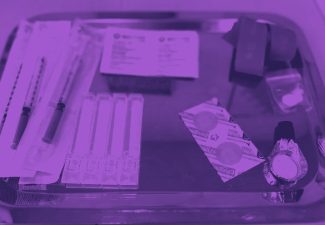
Civil society organizations have issued five calls for action on current global drug policy and its impact on people who use substances.
Read MoreClimate change reached the world’s highest court: a moment of hope for environmental justice
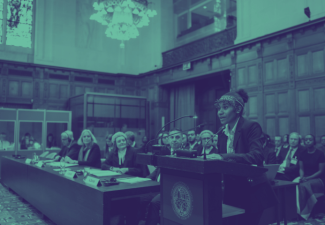
The International Court of Justice held a series of historic hearings regarding the most pressing problem of our times: climate change. We followed them from The Hague.
Read MoreArgentina must protect social mobilization, not silence it
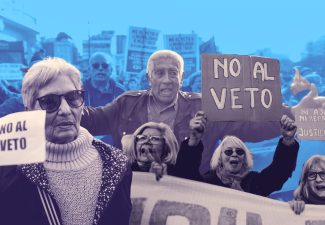
We express concern about the advance of authoritarianism in Argentina and its consequences for the entire region, and urge Latin American states to speak out in defense of democracy and the human rights of Latin American peoples.
Read MoreA Historic Vote at the CND: Colombia Challenges the Global Drug Control System
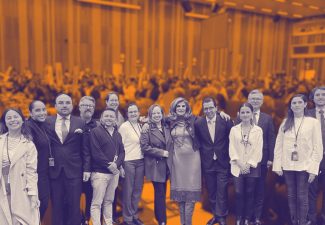
Here’s how the battle for a historic resolution unfolded at CND68 in Vienna: Colombia challenged the consensus, faced resistance, and secured the first-ever approval of an independent external review of the international drug control system. This is the report on what happened.
Read MoreEnlaza Strengthening Program: an Opportunity to Strengthen Ourselves as a Civil Society

Faced with the closure of civic space and the advance of authoritarianism, civil society organizations are strengthening their strategies for resistance and sustainability.
Read MoreDictatorship in Peru: Silencing the People’s Voice
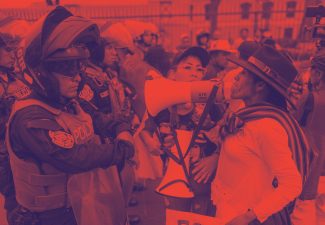
Since the coup d’état against President Castillo, the Executive lost the confidence of broad social sectors, which felt that their will expressed at the polls had been violated.
Read MoreUnderstanding Democratic Decline
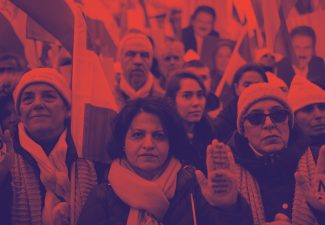
What explains the rise of these authoritarian populisms? There are no easy answers to that question because this evolution responds to multiple factors.
Read MoreTaxes on soft drinks in the Americas: trend or necessity

More than a trend, the increasing number of countries implementing a tax on soft drinks shows that this kind of fiscal measure is a cost-efficient policy to tackle the obesity epidemic in the Americas.
Read MoreThe justice needs of the world
States need to know the legal needs of their populations and the ways in which citizens act to manage and resolve those needs in order to design better schemes for the resolution of disputes and for providing access to justice.
Read MoreGoing Beyond Nature

What does granting rights to nature really mean? How can the rights of nature be materialized? Which rights? Where does this recognition leave the communities that have traditionally inhabited and helped to conserve certain areas?
Read MoreJuan Pedro Lares: The freed prisoner that never was
Juan Pedro Lares, a 24-year old Colombian-Venezuelan young man, who was abducted by a hundred civilian-dressed members of the Venezuelan Intelligence, the National Guard, the police, and armed civilian groups from his family’s home in July of last year was finally set free . But a feeling of injustice still lingers.
Read MoreVenezuela in a spiral
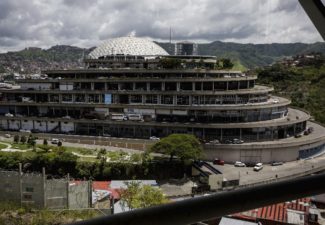
El Helicoide gets its name from the geometric shape of the building that houses the prison, which resembles a spiral. The crisis in the prison and the elections this Sunday could worsen the spiral of Maduro’s regime towards arbitrariness.
Read MoreA cure to end homicides

Examples from initiatives across Mexico, Colombia and South Africa shed some light on policies that could help reduce the homicide rate across the Global South. Inclusive and holistic policies that include a wide range of societal actors may offer remedies to tackle this crisis.
Read MoreIndigenous Sovereignty and the Wars on Drugs in the Americas
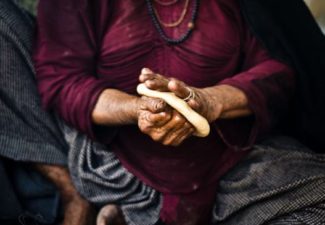
As drug policy reform takes on new meaning and energy across the hemisphere, let us also remember the historic indigenous effort to retain sovereignty over territory and sustain communities, now challenged by both drugs and the wars against them.
Read MoreThe needles revolution: reducing damages while protecting the health of drug users

Offering new needles to drug users – no matter how controversial it could be – is increasingly urgent in order to protect the health and rights of these populations.
Read MoreIncreasing Accountability

All Colombian society, especially economic actors who had no connection to the conflict, in an effort to go beyond political differences and as a gesture of solidarity towards the victims, should commit themselves to claim and promote victims’ rights without restrictions.
Read MoreWhy (don’t) we sleep?

Bad sleep is the great blind spot of public and private health. The damage from sleeping less than seven hours a day on a regular basis is equivalent to the damage from excessive smoking or drinking.
Read MoreJustice Mosaics: How Context Shapes Transitional Justice in Fractured Societies
Two of our researchers contribute a chapter to a book by the International Center for Transitional Justice.
Read MorePeace, everyone’s business! Corporate accountability in transitional justice: lessons for Colombia
The report includes a comparative study of eight countries (Argentina, Brazil, South Africa, Guatemala, East Timor, Sierra Leone and Liberia) that used transitional justice to judge crimes by corporate actors during armed conflicts.
Read MoreTransitional justice and action without harm: a reflection on the land restitution process
This document compiles the reflections made in recent years by the Transitional Justice team of Dejusticia and the Action without Harm team of the National University of Colombia.
Read MoreReimagining Human Rights
Our Director, César Rodríguez, published the article “Reimagining Human Rights” in the Journal of International Law and International Affairs.
Read MoreSocial Rights Judgments and the Politics of Compliance: Making it Stick (Cambridge University Press)

The book “Social Rights Judgments and the Politics of Compliance”, edited by César Rodríguez Garavito, director of Dejusticia, Malcolm Langford (Univ. Oslo) and Julieta Rossi (Univ. Lanús) was just published.
Read MoreAccess to intelligence and counterintelligence archives in the framework of the post-agreement
In this text, we offer options so that transitional justice mechanisms and society at large can have access to intelligence and counterintelligence archives, which relate to the armed conflict in Colombia.
Read MoreEnvironmental peace: challenges and proposals for the post-accord
Through the Ideas for Peacebuilding collection, Dejusticia seeks to contribute to this task through thematic documents that offer diagnoses and proposals on some of the central institutional challenges of this new stage. In this book, we analyze the impact of the conflict on the environment and the challenges that arise in the peacebuilding stage.
Read MoreNegotiating from the margins: The political participation of women in the peace processes of Colombia (1982-2016)
This book offers analyses and recommendations regarding the participation of women in peace processes so that peace agreements can become long-term social pacts that are both inclusive and committed to justice and equality.
Read MorePeace territories: the construction of the local state in Colombia

This book offers diagnoses and proposals surrounding one key challenge of peace building: carrying out out a large national state-building project on the periphery of the country.
Read MorePersons Deprived of Liberty for Drug Offenses
The research of the Collective on Persons Detained, Processed and Imprisoned presents statistical information about detention and imprisonment for drug offenses in Latin America and advocates for an overhaul of drug laws and their implementation in Latin America. — La evidencia existente muestra que, a nivel mundial, la política de drogas ha implicado diversos costos…
Read MoreSome Regulations of the New Nacional Development Plan Violate the Protection of Paramos, Citizen Participation, and Land Restitution
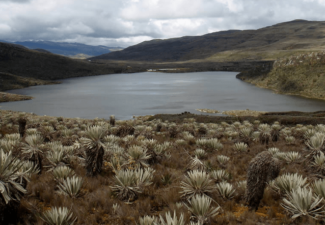
We intervened in new litigation arguing the inconstitutionality of some of the articles of the new National Development Plan 2014-2018.
Read MoreWhy are Victims of Forced and Illicit Recruitment De-Linked from Post-Demobilization Groups Have the Right to the CODA Certificate to Access Reintegration Programs?

We intervened before the Constitutional Court in a lawsuit arguing the inconstitutionality of Article 190 of the Law 1448 of 2011. This law states that victims of forced and illicit recruitment de-linked from post-demobilization groups and that are legal adults have to obtain a certificate from the Operating Committe for the Surrender of Arms (CODA) in order to gain access to reintegration programs.
Read MoreCan a Criminal Law Judge Suspend a Land Restitution Process?
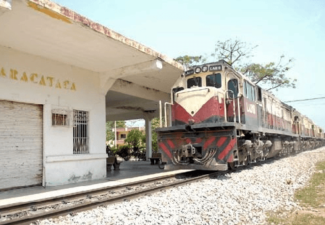
We intervened before the Constitutional Court in a writ of constitutional protection case, in which a criminal law judge ordered, as a precautionary measure, to suspend a land restitution process. The criminal case investigated the alleged procedural fraud in the land restitution process by the plaintiffs. According to the litigants (who act as defendants in the land restitution case), the restitution plaintiffs committed procedural fraud by arguing that the seeling of the land in question constitutes legal displacement.
Read MoreIntervention before the Constitutional Court in the Writ of Constitutional Protection Revision Process that Demands Protection of the Arauco Indigenous Community
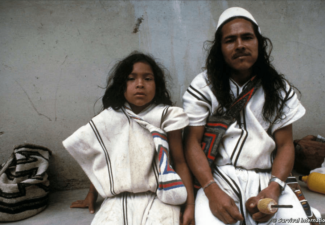
We intervened in the writ of constitutional protection instated by Mission Colombia Foundation in representation of the Arhuaco indigenous community due to the harms caused by the construction of a military base and more than 480 communication antenas and facts regarding this community’s ancestral territory.
Read MoreAmicus Curiae in Favor of the Right to Prior Consultation of Mayan Communities in Mexico

This amicus curiae seeks to support the actions of the Mayan communities from Pach-Chan and Canabchen to ask that their right to prior consultation be respected in the case against Monsanto’s genetically modified soy crops.
Read MoreRodrigo Uprimny’s Intervention before the Inter-American Court
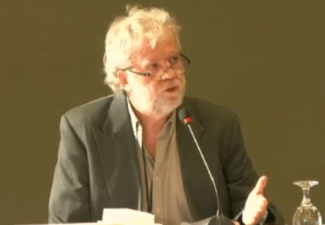
See the recording of the public hearing regarding the case against Colombia due to discrimination based on sexual orientation.
Read MoreDejusticia Supported Public Hearing Request by Indigenous Organizations in Constitutional Court regarding Decree that Regulates Indigenous Territories
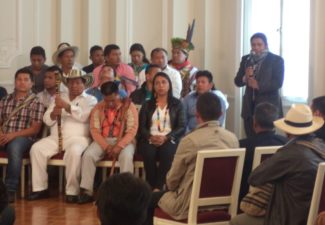
This past September 11th, Dejusticia presented before the Constitutional Court a request for it to hold a public hearing regarding the case of the decree that regulated indigenous territories (Decree 1953 of 2014).
Read MoreDejusticia Intervenes in Favor of an Activist that Defended the Sawhoya Community in Paraguay

The International Network for Economic, Social and Cultural Rights (ESCR-Net) and Dejusticia presented an intervention in favor of the lawyer Julia Cabello, executive coordinator of Tierraviva, who was sued by the Minister Gladys Bareiro de Módica.
Read MoreInterventions at Marriage Equality Public Hearing
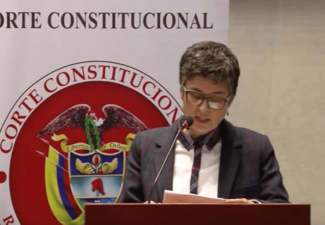
By Colombia Diversa and Dejusticia’s request, the Constitutional Court ordered a public hearing on July 30th, 2015, regarding the cases of constitutional writ of protection petitions from same-sex couples in review by that Court.
Read MoreDejusticia Intervenes in Lawsuit Against Adoption Laws That Discriminate Against Differently Mentally Abled People

We intervened in a lawsuit arguing the unconstitutionality of the text “also when inflicted with a mental illness” of the 66th article of the Infant and Adolescent Code that regulates parent’s consent to give up their child for adoption.
Read More