


Posts by Dejusticia
Strategies to defend civil society against authoritarianism in Latin America

In a context of crisis for the social movement, the “Imaginar con Otros” (Imagining with Others) meeting brought together Latin American civil society to broaden our perspective and explore how other organizations from different countries have developed strategies to face the challenges of working amid different forms of authoritarianism.
Read MoreA guardian of the Amazon: Taxation for sustainability
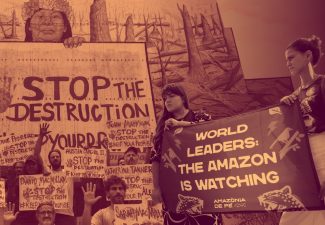
Saving the Amazon requires transforming the pain of deforestation into an urgent and collective commitment. It is imperative to design a comprehensive approach that combines sound public policies with a fair tax system.
Read MoreThank You, Activists from the Global South! We have selected the new 2025 cohort of fellows

The next call for applications will open at the end of 2025 to form the cohort that will begin in mid-2026. Don’t miss the opportunity to apply!
Read MoreBeing a migrant in times of surveillance

Biometric data, because it is personal and sensitive, requires rigorous handling, but today it is used without sufficient safeguards, exposing people to surveillance and discrimination.
Read MoreLet’s imagine with others to address the crisis of civil society in Latin America
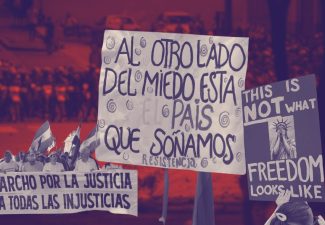
The current global context, in which we face a closure of civic space, requires us to improve our structures to find new forms of survival, resistance, and solidarity. For this reason, we held a dialogue with social organizations in Bogotá to exchange experiences and forge alliances that will allow us to overcome this crisis from different countries and realities.
Read MoreInterview with Naomi Roht-Arriaza by Vivian Newman, April 2025
Interview with Naomi Roht-Arriaza professor and expert in international law, human rights, damages and liability.
Read MoreThe Italian Formula for Fighting Corruption and Organized Crime

Italia es un caso de estudio que nos deberíamos atrever a mirar con detenimiento, pues su contexto tiene algunas similitudes con el nuestro. La violencia, los cárteles y las mafias, que por desgracia compartimos, son realidades que influyen en los niveles de corrupción y en la percepción de la ciudadanía.
Read MoreTrump’s Abandonment of the Global Fight Against Corruption

But we all know that what Trump wants is to give gringo companies a leg up against Chinese competitors, paying better bribes than them and thus continuing to regress ethically so that the law of “survival of the fittest” applies.
Read MoreGrand Corruption in the New Global Context
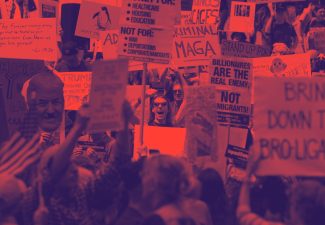
We need to think about how to make the world a safer place, without affecting the economy and without losing democratic gains.
Read MoreCooperation or dependency? Mexico’s dilemma in the face of USAID funding freeze
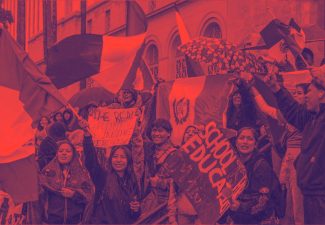
The freezing of USAID funds has reopened the debate on the relevance and nature of international cooperation.
Read MoreTongue Twisters of the State

Around 97% of the world’s population speaks approximately 4% of the world’s existing languages. Put differently, around 96% of languages are spoken by about 3% of the global population. Linguistic diversity is being preserved by only a handful of people.
Read MoreNavigating Human Rights in a War-Torn Yemen

Despite immensely difficult circumstances in a war-torn and diminishing space for activism, Mwatana for Human Rights has remained steadfast in its mission to defend human rights.
Read MoreRethinking the Anti-Poverty Recipe

Economic growth alone is not enough to alleviate extreme poverty. Instead, we need creative, targeted alternatives—like unconditional cash transfers and livestock donations.
Read MoreA Chain of Inequalities

The decline of redistributive agrarian reforms coupled with growing patterns of land concentration and land-grabbing threaten to exacerbate cycles of inequality in the countryside, in the city, and around the world.
Read MoreVacillation towards migrants
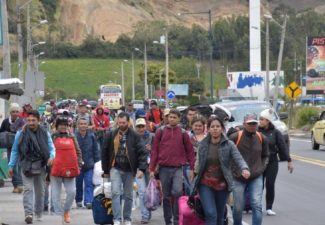
The situation of Venezuelan migrants is too serious and urgent to equivocate on good faith and sway with the changing political circumstances of each government.
Read MoreQue Sea Ley
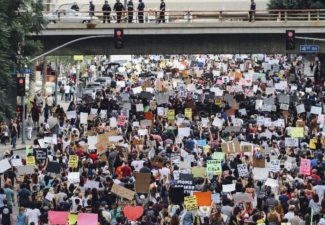
In spite of the Argentine Senate’s decision, this mobilization showed the force of the feminist movement, destabilized conservative sectors, placed abortion at the center of the legislative debate, and, above all, gave a feeling of victory to women.
Read MorePreventing Corporate Intimidation of Rightsholders

Unfavorable news, a negative opinion of an opinion leader, or even an unfounded rumor can affect companies whose value depends to a large extent on the confidence of their shareholders and the public in their good behavior and the possibilities of obtaining profits by investing in them.
Read MoreNanette, the end of stand-up?

I was struck by her message and her innovative and thoughtful way of thinking about comedy.
Read More“Terms and Conditions May Apply”… depending on where you are

In practice, the Latin American lack of adequate protection manifests itself in the possibility of banks using credit algorithms to decide whether to grant a loan or not, without any intervention by someone with the authority and competence to change the decision.
Read MoreThe New Routinization of Inhumanity: Small Acts of Staggering Consequence

Perhaps it’s time to state firmly, and insistently, that we see everyone who let themselves be swooped up in machines of inhumanity, and not just the masterminds. And perhaps it’s not too late to call out enough of the small bureaucrats and agents so that they, too, squirm, question and upend the pact of purposeful obtuseness that is required to carry on with systems of oppression designed to harm from a safe distance.
Read MoreAssessment of Existing National Action Plans (NAPs) on Business and Human Rights (2017)
The International Corporate Accountability Roundtable (ICAR), the European Coalition for Corporate Justice (ECCJ), and the Center for the Study of Law, Justice, and Society (Dejusticia) are pleased to release an updated report on Assessments of Existing National Action Plans (NAPs) on Business and Human Rights (August 2017).
Read MoreOn corruption in Colombia: conceptual framework, diagnosis and policy proposals
According to the Corruption Perceptions Index by Transparency International for 2016, Colombia obtained a rating of 37/100. How to characterize the phenomenon of corruption in Colombia and what academic and public policy strategies can be adopted to counteract it?
Read MoreStrategies for a rural transitional reform
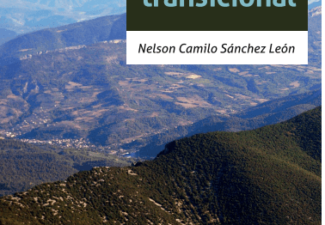
The best way to face the challenges posed by the implementation of the Peace Accord in rural policies and to pay off the historic debt to Colombian peasants is to deepen the restitution efforts and to integrate them to a broader agrarian policy.
Read MoreDrug crimes and prison overdose in Colombia
This research, carried out by Dejusticia and the Research Consortium on Drugs and the Law, assesses the impact of drug policy on the prison system and recommends, among other measures, to decriminalize the possession of a personal dose.
Read MoreDebates on the action of restitution

This document provides an analysis and reflection on the legal challenges of the implementation of land restitution action, the peculiarities of its mechanisms and procedures, and its more complex challenges.
Read MoreThe right to freedom of expression: advanced course for judges and legal practitioners in the Americas
This guide covers the main current legal rules under the inter-American order on freedom of expression.
Read MoreLand restitution and territories: justifications, dilemmas and strategies
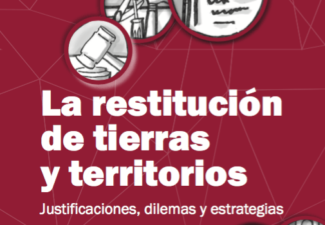
The teaching tools presented below aim to offer a database that will allow officials to quickly consult some of the most common challenges in their daily work.
Read MoreThe good faith in land restitution
A rigid application of the principle of good faith within the process of land restitution can disregard or transgress fundamental rights. The document presents the different legal problems that have arisen.
Read MoreAcademia and citizenship: university professors meeting and violating norms

What do higher education teachers understand about the concept of non-compliance? What are their main faults? This research, with 605 teachers from Antioquia, begins from these questions.
Read MoreWithout rules or control: regulation of food and drinks advertising aimed at minors

This text addresses questions regarding the role of unhealthy food and drink consumption, especially in children, and what the State does about it. The document is based on an analysis of the existing norms in Colombia and is skeptical about the self-regulation mechanisms proposed by the industry.
Read MoreDejusticia Intervenes in Defense of Executive Order 127 of 2015 (Trans Executive Order)

Last week, Dejusticia presented an intervention before the First Section of the Council of State and asked to keep in force Executive Order 1227 of 2015, which regulates the procedure for amending a person’s gender in the civil registry.
Read MoreDejusticia’s Director Intervenes before the Inter-American Court on Human Rights on Fazenda Brazil Workers Case

César Rodríguez Garavito, Dejusticia’s director, intervened as an expert witness in the first case that debates forced work in the Americas, regarding the complaint of slave work in Brazil.
Read MoreCitizen Intervention about the Constitutionality of the “Beginning at Birth” Language of Civil Code’s Article 90

Dejusticia intervened before the Constitutional Court to respectfully request that it declares the constitutionality of the “beginning at birth” language of the Civil Code’s article 90.
Read MoreCitizen Intervention Litigating Unconstitutionality of Criminal Code’s Regulation 599 of 2000
Intervention claims unconstitutionality of Criminal Code regulations that do not consider gender identity in offenses and cannot justify harsher sentences due to discrimination and harrassment.
Read MoreIntervention Litigating Unconstitutionality of the Expression “Free of Blame” of the Evidenciary Requirements of Good Faith Which Is Necessary to Access Economic Compensation
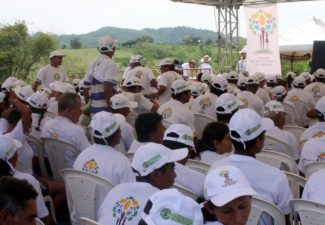
We intervened before the Constitutional Court litigating the unconstitutionality of the formulated expression “free of blame” of the evidenciary standards of good faith, contained in the Law 1448 of 2011 (Victims and Land Restitution Law) that is a requirement to access economic compensation.
Read MoreWhat should the mining licensees prove, which are opponents of land restitution processes of ethnic communities, to show good faith free of guilt?

We presented an amicus curiae in the land restitution process in support of the Cocomopoca afro-descendant community.
Read MoreCitizen Intervention in Favor of Changed Introduced by the Balance of Powers Reform regarding Presidential Re-election
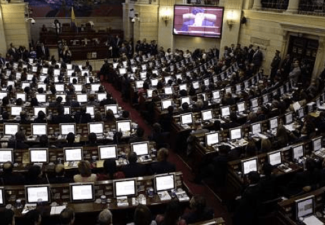
The Balance of Powers Reform excluded in regards to presidential re-election the other mechanisms of constitutional reform that are included in the Constitution: legislative act and constitutional referendum of a governmental initiative. Dejusticia argues that this is not unconstitutional.
Read MoreCitizen Intervention Litigating the Unconstitutionality against Legislative Act, Which Reforms Military Tribunals

Our intervention highlighted that although International Humanitarian Law specifically regulates contexts of war, this does not mean that, from the standard of specialty, the reform introduced by the Legislative Act 02 of 2015 exclude International Human Rights Law standards.
Read MoreIntervention before the Constitutional Court in Writ of Constitutional Protection that Seeks to Protect a Wetland in Santander from Large-Scale Ranching

We intervened in the revision process of a writ of constitutional protection requested by a citizen of Satander that seeks to protect a wetland that has been affected by large-scale ranching of an agricultural actor in the area.
Read MoreIs the new judicial governance model adopted by the Legislative Act 02 of 2015 or “Balance of Powers Reform” constitutional? Rodrigo Uprimny intervenes in public hearing before the Constitutional Court
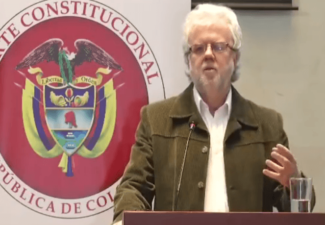
On September 9th, 2015 Rodrigo Uprimny participated in a public hearing called by the Constitutional Court during the process of assessing the constitutionality of the Legislative Act 02 of 2015 or the “balance of powers reform.” In his intervention, Rodrigo Uprimny argues that the balance of power reform did not replace the fundamental pillar of judicial independence by modifying the 1991 Constitution’s model of judicial governance.
Read More