


Issue-Anti-discrimination
Sexual violence in the Special Jurisdiction for Peace: more penalties do not mean more truth
More important than the symbolic message that Congress intended to give by increasing the penalties for sexual violence against children is that truth and justice do in fact exist.
Read MoreProfessional secrecy in abortion cases: the inhumane dilemma between prison and death

The protection of professional secrecy in abortion cases is a fundamental guarantee for women to exercise their right to terminate a pregnancy. If doctors continue to violate professional secrecy and report on abortion cases, women will continue to be subjected to an inhumane dilemma, having to choose between prison or death.
Read MoreThe Independence of Festivities
The Independence Festivities of Cartagena affirm our identity and foster the social fabric. Thus, they must remain separate from the National Beauty Contest that obscured them with its media strength.
Read MoreFeeling vulnerable
Many men have difficulty understanding the fears that many women experience when facing the threat of harassment. We fail to understand the vulnerability that women feel in situations that men consider safe and banal, such as walking through certain places.
Read More#MeToo
You do not have to be perceptive to guess that in the country championing cosmetic surgery, entertainment or advertising, these are not the only sectors where there is harassment, or where there is a fine line ranging from lascivious compliments and misogynistic jokes to workplace abuse and sexual violence.
Read MoreTogether: a message for LGBTI activism
“Juntas” tells the story of the first female couple who married in Latin America and who, after two decades of living outside Colombia, return to the country to remember. A delicate and intimate film that leaves us many lessons for activism in the region.
Read MoreParamilitary homophobia in San Onofre
In Sucre, the Montes de María paramilitary bloc forced gay men to star in boxing fights, only to publicly humiliate them. This is proof of why the peace process and its implementation should have a gender focus.
Read MoreGuerillian homophobia in Vistahermosa

The FARC should apologize to all LGBTI people for violating the human dignity of a historically discriminated population, and to explain if this was an institutional policy.
Read MoreIndolence against femicide

According to Forensic Medicine, of the 50,707 case of domestic partner violence registered in 2016, 86% were for violence against women, violence that in many cases ended in femicides.
Read MoreThe Pope’s message
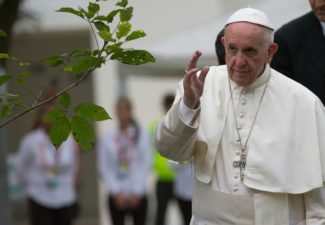
Francis has a powerful message of unity, not only for Catholics, but for all; a message based on a simple, basic morality of brotherhood, solidarity and respect.
Read MoreDejusticia Intervenes in IACHR Public Hearing regarding Measures to Reduce Pre-Trial Detention in Latin America

This Tuesday April 5th 9AM Dejusticia, alongside other organizations, will intervene regarding the issue of women, prisons, and drug offenses.
Read MoreImpunity for Sexual Violence Associated with the Armed Conflict Persists

This is the conclusion of the Sixth Monitoring Report of the Constitutional Court’s Ruling 092 of 2008 and Ruling 009 of 2015.
Read MoreThe Council of State Maintains in Force the “Trans Decree” for the Correction of People’s Gender in the Civil Registry
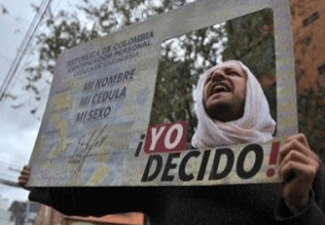
The Court ruled to maintain the fast and easy procedure that the Decree 1227 of 2015 established.
Read MorePublication: Women, Drug Policy, and Imprisonment
Jailed women rarely are really a threat to society.
Read MoreDejusticia and Racial Discrimination Watch Join Alliance for Diversity and Inclusion in Public Employment
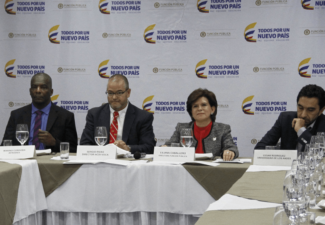
Dejusticia and Racial Discrimination Watch will join The Administrative Department of Public Employment and the ACDI VOCA.
Read MoreOpen Call for Altocontraste Photography Contest
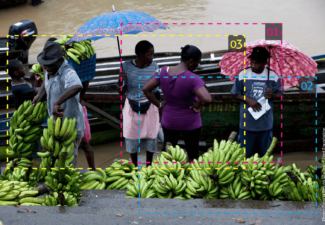
Commemorating Racial Discrimination Watch’s 10 years. Submissions welcome from both professional and amateur photographers. Open until May 6th, 2016.
Read MoreDejusticia’s Director Appears before the Inter-American Court as Expert in Modern Slavery Case in Brazil
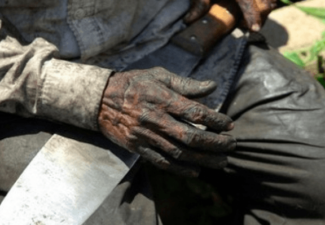
This Thursday February 19th César Rodríguez Garavito, Dejusticia’s executive director, will intervene as an expert in the first case that considers forced labor in the Americas, regarding a complaint about slave work in Brazil.
Read MoreWhat Should Judges Do When the Right to an Abortion Is Infringed?
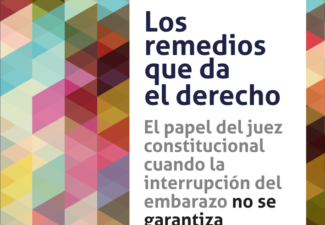
Dejusticia recently published the book “Legal Remedies. The Role of Constitutional Judges when Abortion Is Not Guaranteed” written by the lawyers Diana Guzmán and Nina Chaparro.
Read MoreHuman Rights Organizations Demand Justice for the Victims of Bagua and a Fair Trial for the Defendants
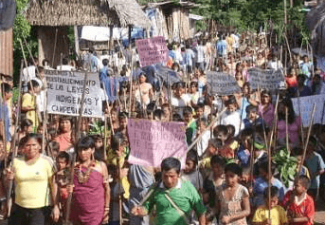
In the coming days, it is expected that a judgment will be rendered in the so-called “Devil’s Curve” trial against 53 people.
Read MoreConstitutional Court Reaffirms Right to Health of Sexual Assault Survivors, Including Abortion

From today the government is obliged to guarantee, without need of a legal complaint, access to free, immediate, confidential, dignified, and holistic services.
Read MorePublic Order and Racial Profiling: Afro-Colombian Experiences with the Cali Police
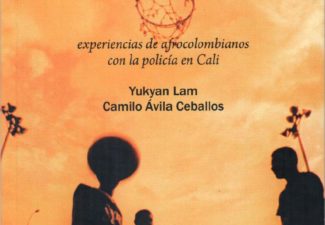
This book documents the Police Forces’ treatment of the Afro-Colombian population in Cali.
Read MoreAmicus about the Rights of Indigenous Populations
Dejusticia, the Global Justice and Human RightsProgram at Universidad de los Andes, and the Law School Clinics at the Pontificia Universidad Católica de Perú and Stanford presented an amicus curiae challenging the constitutionality of guidelines regulating the Official Data Base of Indigenous and Native Peoples in Peru.
Read MoreLawsuit against the designation of the Superintendent of Vigilance and Private due to the noncompliance of the Quota Law
Dejusticia, Sisma Mujer and the Red Nacional de Mujeres challenged the selection of the Superintendent of Surveillance and Private Security as a violation of the Quotas Law, arguing that the President had an obligation to appoint a woman for the post, and yet appointed a man.
Read MoreIntervention in constitutional challenge to article 44 of Law 1551 of 2012
The challenge requests that article 44 of Law 1551 of 2012 be declared unconstitutional because the norm violates various norms related to prior consultation of indigenous groups, the right to self-government, and creates a new territorial division and authority not contemplated in the Constitution.
Read MoreChallenge to the appointment of the Superintendent of Health for failure of President Juan Manuel Santos to fulfill the quota law
Dejusticia, Sisma Mujer and the Red Nacional de Mujeres challenged the appointment of the Superintendent of Health for violation to the quota law.
Read MoreChallenge to the appointment of the Director of Colciencias due to noncompliance with the Quota Law
Challenge to the appointment of the director of Administrative Department of Science, Technology and Innovation (Colciencias) for violation of the Quotas Law.
Read MoreGoodbye river: The Dispute over Land, Water and the Rights of the Indigenous living near the Urrá dam
This books tell the story of the dam of Urrá through the central themes of violence and the dispute for land and the natural resources in Colombia.
Read MoreIntervention before the IACtHR regarding Costa Rica’s prohibition of invitro fertilization
Dejusticia presented an amicus before the Inter-American Court of Human Rights regarding Costa Rica’s prohibition of in vitro fertilization.
Read MoreIntervention in the writ for constitutional protection (tutela) for violation of the right to public information.
Dejusticia intervened before the Constitutional Court supporting tutela filed by Monica Roa and other women against officials of the Inspector General’s Office for violating their right to information and consequently their sexual and reproductive rights, among others
Read MoreEthnicity.gov: Natural resources, Indigenous Peoples and the Right to Prior Consultation
This book analyzes the origins, practice, and effects of the right to prior consultation for indigenous peoples.
Read MoreChallenge to the appointment of three government ministers (Housing, Interior, and Transportation) for violation of the Quotas Law by President Santos.
Dejusticia, Sisma Mujer y la Red Nacional de Mujeres challenged the appointment of the Ministers of Housing, Interior and Transportation, because in nominating men for these positions, President Santos led to a violation of Ley 581 of 2000 (Quotas Law) which requires that at least 30 percent of Ministries are led by women.
Read MorePrior Consultation: Dilemmas and Solutions
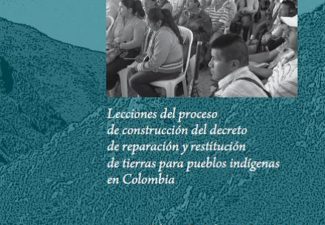
The book provides lessons from the drafting process of the Reparations and Restoration of Land to Indigenous Peoples decree in Colombia.
Read More13th Discussion Document: Quota Law in Colombia: Progress and Challenges. Ten Years of Law 581 of 2000
In 2000 the Colombian legislature approved a law aimed at promoting equal participation of women in high-level state offices through the adoption of a quota system that orders that at least 30% of public offices are occupied by women.
Read MoreWeaving Rights 1: Prior Consultation and Free, Prior, and Informed Participation

The first book of the collection is about the rights to prior consultation and free, prior and informed participation.
Read MoreWeaving Rights 2: Reparation for Indigenous Peoples
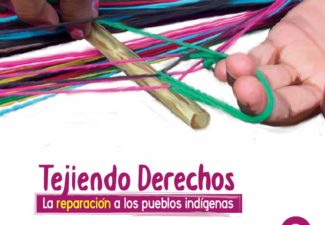
The second book in the collection is on the right to reparations for indigenous peoples
Read MoreIntervention in tutela proceedins for protection of rights concerning discriminatory speech
Dejusticia and Racial Discrimination Watch intervened before the Constitutional Court in a tutela proceeding filed by a student of the University Distrital Francisco José de Caldas who alleged he was the victim of racial discrimination because of racist remarks of a teacher during class.
Read MoreEthno-Reparations: Ethnic Collective Justice and Reparations for Afro and Indigenous Communities in Colombia
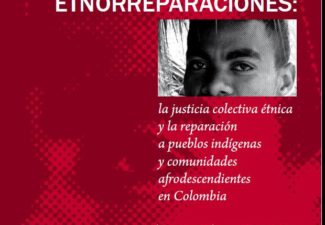
This text begins by explaining the concept of “collective ethnic justice” and then offers practical guidance on how it can be achieved in practice by describing relevant principles and criteria found in Colombian and international law.
Read MoreAmicus in tutela proceeding regarding a voluntary interruption of pregnancy due to the risk to the mental health of the woman.
Dejusticia intervened to support the protection of the fundamental rights of a woman who was denied the right to terminate her pregnancy, although her situation fit into one of the three circumstances in which abortion is permitted, namely, the risk to the women’s mental health.
Read MoreRace and Human Rights in Colombia. Report on Racial Discrimination and Rights of Afro-Colombians
This work questions the myth of racial democracy in Colombia and is the full version of the Report on Racial Discrimination and Rights of Afro-Colombian population.
Read MoreUnequal Justice? Gender and Victim Rights in Colombia
The chapters in which members of Dejusticia participate are number 4 (Gender violence and constitutional justice in Colombia by Julissa Mantilla Falcón and Rodrigo Uprimny Yepes) and 5 (Reparations with a gender focus: the potential to transform discrimination and exclusion by Diana Esther Guzmán).
Read More