


Issue-Anti-discrimination
Silences

Women who have the courage to denounce sexual harassment are often revictimized when faced with numerous obstacles to access justice. In addition, their versions of the events are rarely trusted, when they are not publicly threatened and denigrated. In light of these situation, no one has the right to question the silence of women who have been raped.
Read MoreLas heridas de la mente

La mentira siempre ha estado presente en las relaciones sociales y ha sido parte fundamental del ejercicio del poder, sea este político, religioso, económico u otro. Necesitamos un manual de defensa intelectual; un manual para aliviar el desatino y la sinrazón que vemos en las redes sociales, en las elecciones y en los debates públicos.
Read MoreCongress elections will be men’s business
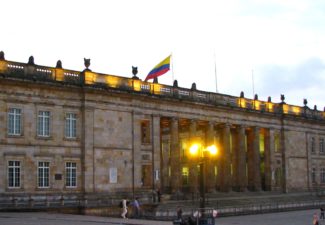
A pesar de haber sido un aspecto clave del Acuerdo de paz firmado entre el Gobierno y las FARC, Colombia enfrenta un déficit frente a la participación política de las mujeres. Solo en la inscripción de candidatos al Senado, el 32.9% corresponden a mujeres.
Read MoreThe world is still wide and alien
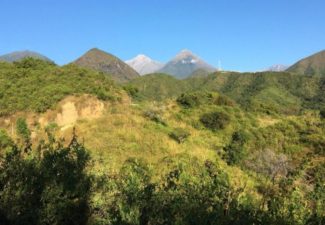
The unforeseen incidents of bringing together a handful of indigenous leaders from around the world to Colombia for the First Global Workshop for Indigenous Leaders.
Read MorePoor census
The census that began to run electronically this week is characterized by improvisation, smallness and inequity.
Read MoreA census without peasants?
How is the State going to take peasants into account in its policies if it does not count them in its main instrument for collecting information, which is the census? The request of peasants is fair because this population has historically suffered from structural discrimination. A single piece of data shows that: rural poverty (45%) is approximately three times higher than urban poverty (15%).
Read More“Incluidas” and “incluidos?”
Language has a political and symbolic dimension and that is why it is an important space to look for cultural transformations.
Read MorePoverty, inequality and discrimination in Latin America
When governments are seeking to reduce poverty based on discrimination and increase rights protection, policies must also aim to reduce discrimination due to historical factors. The latter has created the very own elements that facilitate the impoverishment of various social groups.
Read MoreThe balm of language
It is not language that is to blame, but the culture behind language. Words, says Rosa Montero, are like the skin of the social body: they reflect the movement of that body. If that movement is changed, the words change their meaning.
Read MoreThe sexist cartel of the robe
To break the silence of sexual violence it is necessary to “begin by believing” the victims. Also by applying international standards such as the Rome Statute against gender violence, which make it clear that silence or lack of resistance do not imply consent to abuse.
Read More“Do not mess with my kids: No to gender ideology”
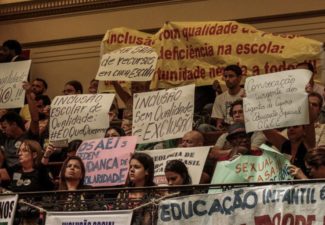
Leaders of Christian churches, conservative sectors, and parents worried about the influence of the State on their children’s sexual education have taken to the streets to defend traditional family values across Latin America.
Read MoreWhat are the effects of prior consultation processes in the life of indigenous peoples?
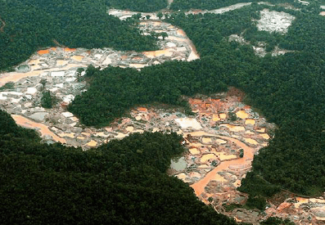
That indigenous peoples can discuss with the government at the same level: this and other effects of prior consultation in the following video.
Read MoreThe first four books of the “Ideas for Peace Building” collection are already available

The series, which will have a total of ten texts, seeks to provide thematic documents that offer diagnoses and proposals on some of the post-agreement challenges.
An organization with collective leadership: our history reviewed in the Leader Network
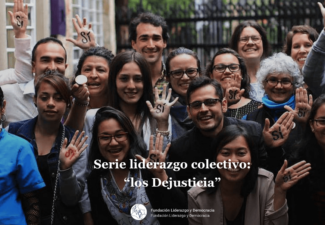
The Leader Network chose Dejusticia to initiate the series of profiles on collective leadership. The profile published in Silla Vacía investigates three fundamental measures of leadership: vision, example and results.
Read MoreFirst Global Workshop on Human Rights Strategies for Indigenous Leaders in the Global South
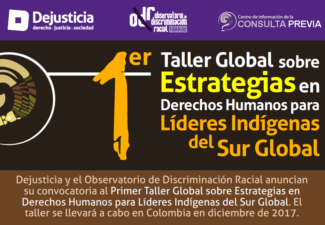
Dejusticia and the Racial Discrimination Watch opens their call to the First Global Workshop on Human Rights Strategies for Indigenous Leaders in the Global South. The workshop will be held in Colombia in December 2017. The call for proposals is open until June 10th.
Read MoreThe State Council’s decision did NOT change the rules for safe and timely abortion services

The high court, which for the first time recognizes the voluntary interruption of pregnancy as a fundamental right, also did not authorize the objection of institutional conscience for clinics or hospitals.
Read MoreSeminar: 5 years after the Law of Victims and Restitution of Collective Territories – Impact On Indigenous and Afro-Descendent Communities
5 years after the Victims’ and Collective Territories Restitution Law was passed a seminar evaluates its impact on indigenous and Afro-Descendent communities in Colombia.
Read MoreMarriage Equality Approved
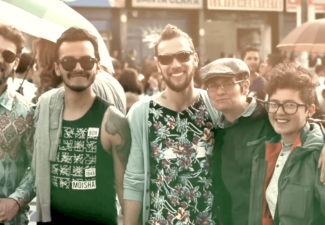
The Constitutional Court approved marriage equality. Congratulations! Here are some of the arguments that Dejusticia has presented over time.
Read MoreInternational Conference on Diversity in Public Employment

This conference seeks to encourage training and exchange of experiences about the benefits garnered by understanding the management of diversity in public employment as a strategic value that improves the public administration of a country.
Read MoreThe Depenalization of Abortion in Colombia: Ten Years of a Right Unfulfilled

Ten years have passed since the ruling depenalizing abortion and the paronama in Colombia has not changed significantly. Dejusticia has always been committed to this issue and continues to work to overcome the obstacles that have presented themsleves in the execution of this ruling.
Read MoreInterventions at Marriage Equality Public Hearing
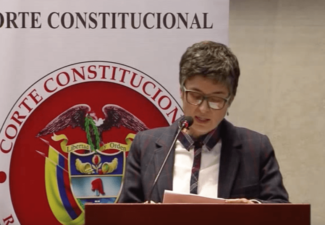
By Colombia Diversa and Dejusticia’s request, the Constitutional Court ordered a public hearing on July 30th, 2015, regarding the cases of constitutional writ of protection petitions from same-sex couples in review by that Court.
Read MoreIntervention before the Constitutional Court Regarding Legal Regulations on Obligatory Military Service and Its Application to Trans* People

Dejusticia intervened in a lawsuit arguing the unconstitutional nature of laws that regulate military service for trans people. For the plaintiffs these laws ignore their gender identity. Dejusticia has asked the Court to declare itself inhibited from releasing a substantive ruling.
Read MoreThe Constitutional Court Decides in Constitutional Writ of Protection Case about Changing Gender on Official Identification Documents for Trans People– Intervention by Dejusticia

The Constitutional Court in the T-063 Decision of 2005 protected the fundamental rights to human dignity, free development of personality, sexual and gender identity, and the legal personhood of trans women, who they previously asked to use a judicial process and present a medical certificate in order to change one’s sex on official identification documents.
Read MoreWe Presented an Amicus Curiae before the Constitutional Tribunal Asking for the Preservation of the Reform that Allows for Abortion
We presented an amicus curiae before the Constitutional Tribunal of the Dominican Republic in favor of the depenalization of abortion in the process that this court is considering to determine whether to preserve the reform to the Criminal Code that allows for abortion in three circumstances, thus protecting the life and integrity of Dominican women.
Read MoreColombia Diversa and Dejusticia Registered a Citizen Petition in LDM and RPA’s Writ of Constitutional Protection Process, Acting in Their Own Name and in Representation of their Children S and SVP
Submitted with Mauricio Albarracín Caballero, Eliana Robles Pallares y Mávilo Nicolás Giraldo, Colombia Diversa’s executive director and members of the litigation team.
Read MoreAmicus Curiae for Mr. President of the Transitory Liquidating Criminal Court
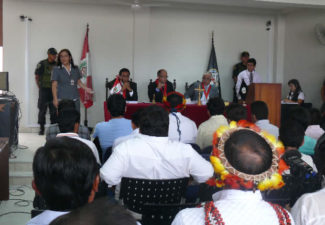
Presented by the Due Process of Law Foundation, Human Rights Center of the Pontifical Catholic University of Ecuador, the Center for the Study of Law, Justice, and Society- Dejusticia.
Read MoreDejusticia Asks the Court Not to Annul Its Ruling About Women’s Right to Voluntary Pregnancy Interruption, Following a Request from the Public Prosecutor’s Office
The Constitutional Court has announced that if one of its rulings constitutes an ostensible, proven, significant, and transcendental violation of due process, it itself will proceed to declare the annulment of that decision.
Read MoreDejusticia and Colombia Diversa Intervened before the Constitutional Court to Ask That Adoption Laws Do Not Exclude Same-Sex Couples
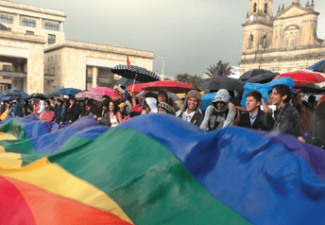
Mauricio Albarracín Caballero, Jaime Ardila Salcedo, Daniel Gómez-Mazo, Alejandro Lanz Sánchez, Olga Patricia Velásques Ocampo, Juan Felipe Rivera Osorio y María Paula Hoyos Sánchez, executive director and members of Colombia Diversa, are also authors of this intervention.
Read MoreIntervention in the Case of Belo Monte
The Inter-American Association for Environmental Defense (AIDA), the Center for the Study of Law, Justice and Society (DEJUSTICIA), the Socio-Environmental Institute (ISA), The Yudjá Mïratu da Volta Grande do Xingu Indigenous Association (AYMÏX) and the Indigenous Missionary Council (CIMI) presented before the Supreme Federal Court of Brazil written memo that shows the illegality of the Congressional permit for the Belo Monte dam.
Read MoreLegislating and Representing? Female Senators’ Agenda in Congress (2006-2010)
In this book we hope to contribute empirically to the issue of women’s political representation in Colombia. Additionally, the book brings attention to the necessity to develop intermediary theoretical proposals that can open the conceptual debate regarding the inclusion and representation of women in the political arena.
Read MoreSecurity, Police and Inequality: Citizen Survey in Bogotá, Cali, and Medellín
This survey seeks quantitative evidence about how people experience and perceive various aspects of the security policy, in particular policing practices. It also explores whether security policies disproportionately effect vulnerable groups.
Read MoreAccess to Justice: Women, Armed Conflict, and Justice
This document examines the situation of female victims of human rights violations due to the Colombian armed conflict and their ability to effectively access justice.
Read MoreLand Restitution and Gender Perspectives
In this document the authors explore why the focus on gender is important to the integral restitution of land. It also shows that this focus is both useful and necessary to the full, effective and respectful restitution of human rights of the victims.
Read MoreThe Implementation of the Partial Decriminalization of Abortion in Colombia
This document identifies some of the biggest obstacles that the partial decriminalization of abortion faces in Colombia.
Read MoreFar from the Law: Voluntary Interruption of Pregnancy in the Colombian Health Care System
This study intends is contribute to the empirical research on voluntary interruption of pregnancy (VIP).
Read MoreIntervention: Tutela Writ Against the Artistic Project “Blanco Porcelana”
The Constitutional Court invited us opine on the tension between freedom of expression and artistic creation, and the right to privacy and the reputation, in the context of artwork that addresses racial discrimination.
Read MoreThe Regulation of Voluntary Interruptions of Pregnancy in Colombia

This document describes the current status of voluntary interruption of pregnancy (VIP) regulation in Colombia.
Read MoreRacial Discrimination at Work: an Experimental Study in Bogotá
The denial of the racial discrimination in Colombia and the lack of measures to combat it, is partly due to the lack of reliable data on the disadvantages the afro-colombian population face in the workforce, the education system and in housing.
Read MoreRacial Discrimination in the Labor Market: An Experimental Study in Bogotá
This paper documents the first Colombian quantitative study on racial discrimination in the labor market, specifically in Bogotá. The study finds that the skin color has a direct and negative effect on the chances of finding a job.
Read MoreBetween Stereotypes: Labor Trajectories for Men and Women in Colombia
This document explores the labor trajectories of men and women. It finds that strategic decisions, as well as formal and informal labor market norms, are based on images, stereotypes and ideas about gender that leads to a division of labor by gender.
Read More