


Issue-Anti-discrimination
Ask yourself: would you hire a d ex-combatant?
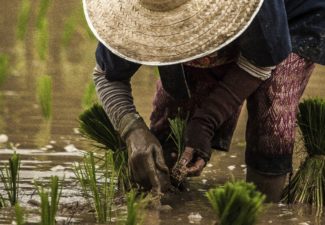
I asked people I knew what they thought and I realized that there was a gender difference. They told me “I would not hire a man. But I would hire a woman.”
Read MoreIn Search of Lost Treasures: Indigenous Peoples and Seized Culture

Global South countries have an obligation to set pathways to find lost treasures in museums and private collections around the world. Therefore, it is essential that indigenous peoples are taken into account when determining the use and destination of the cultural material that has been expatriated for centuries.
Read MoreThe place that female coca growers deserve

Women have been central in sustaining life in cocalero territories. Today more than ever, in the midst of substitution processes, that role must be protected.
Read MoreWomen and science

Women’s Day, which was celebrated on March 8th, is a good time to reflect on the stereotypes and discrimination that women continue to face and that must be overcome.
Read MoreCounting farmers
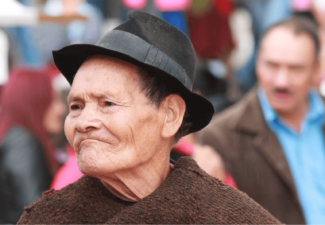
The opportunity to include peasants in the population census is gone, but the tools that the Supreme Court ordered remain. As proposed in the lawsuit filed, farmers have special constitutional protection and a specific cultural identity, distinct from others.
Read MoreWill Candelaria go to school? Barriers to access education for Venezuelan migrant children

Although there are no exact figures on the magnitude of the Venezuelan exodus and much less on its demographic characteristics, studies estimate that during this year, about 15% of the population will have left the country. How is Colombia securing the rights to education of the boys and girls who have arrived?
Read MoreThe Supreme Court rules in favor of peasants
Regarding the legal action that 1,770 peasants filed to be included in the census, the court ordered the Government to define the concept of peasant, to include this population in the census, and to advance public policies that ensure their material equality.
Read MoreA campaign against hate
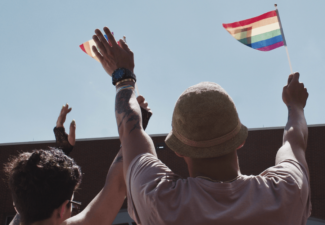
A few months before the elections, the political context is being shaken up with hatred towards the LGBTI population. Reacting to hate is not easy, we need irony, the weight of reality and allies on the other side.
Read MoreCiro and us
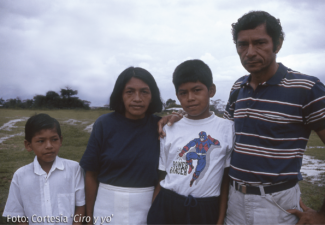
Ciro Galindo, protagonist of the documentary ‘Ciro y yo’, came to remind me where I come from, so I take his story personally. Ultimately, we are children of the same Colombia.
Read MoreBankers and garbage collectors
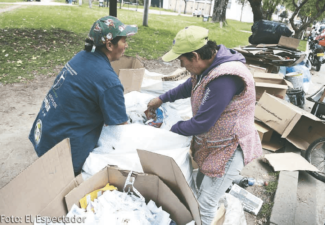
In the midst of the garbage crisis, we must rethink the treatment that, as a society, we give garbage collectors.
Read MoreSexual violence in the municipalities prioritized for peace

It is a priority to establish public policies that demilitarize everyday life and dismantle practices that promote sexual violence in post-conflict scenarios.
Read MoreBefore the Supreme Court of Justice, Peasants Demand That They Be Counted in 2018 Census

Peasants appealed the ruling by the the Superior Tribunal of Bogotá. The ruling recognized the importance of having statistical information on the peasantry, as well as the duty of the State to meet their needs, but did not order the institution in charge, the DANE, to change the form for the next year’s Census.
Read MoreDejusticia and other organizations support the case brought before the United States Supreme Court to protect the right to non-discrimination of same-sex couples

The United States Supreme Court will hear the case of a same-sex couple in Colorado who was denied a cake for their wedding by a pastry chef claiming religious (specifically Christian) objections. In an intervention presented before this Court, Dejusticia and other organizations of the INCLO network supported the couple’s right not to be discriminated against.
Read MoreWith tutela, 1,700 male and female peasants ask to be included in the census
“For peasants to count, they have to be counted,” is the slogan of the plaintiffs who have been rejected by the government during the last two years after asking to be identified in the 2018 census.
Read MoreFocal Points for a Global Conversation
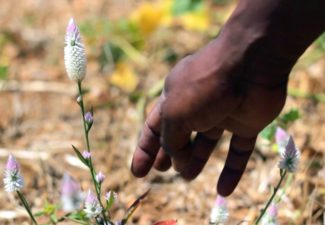
Currently, there is a lot of hope in promoting the common points of a global agenda of indigenous peoples, which combines questions and actions on identity, land, and development. Here are some insights from my conversations with over 50 indigenous leaders from around the world.
Read MoreThe Agreements for the Substitution of Illicit Crops must have a gender perspective
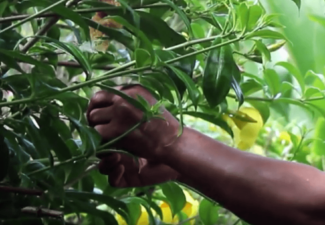
GPaz and Dejusticia presented contributions for the inclusion of the gender approach in the route to the formulation and implementation of Collective Agreements within the framework of the National Comprehensive Substitution Plan.
Read MoreThe national government geographically isolated Chocó

We intervened to support a tutela that requires the government to pave the
Quibdó-Medellín and Quibdó-Pereira roads: a promise that has historically been unfulfilled.
The migratory wall facing refugees

What is it like to migrate to Colombia and the United States? The stories of Johan and Sonia, two of the 65.6 million people who have been forcibly displaced around the world.
Read MoreInter-American Comission on Human Rights wants to investigate police abuses during the Buenaventura strike

During a hearing in Lima, Peru, organizations working to protect the rights of the Afro-Colombian population claimed that the government and the FARC are ignoring this population in the implementation of the Peace Accord.
Read MoreNo one responds to racial discrimination at work in Colombia
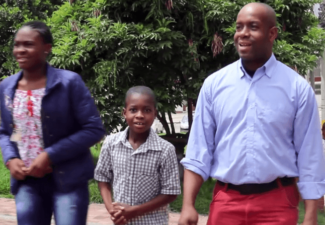
The Constitutional Court is about to end the legal struggle that Jonh Jak Becerra undertook six years ago, after being a victim of racial discrimination at work. Dejusticia and Cimarrón intervened before the Court, calling for the protection of the rights to equality, non-discrimination, decent work and due process.
Read MoreDejusticia’s intervention on the prohibition of arbitrary detention and discriminatory conduct against women who engage in prostitution

Dejusticia conducted a citizen intervention before the Constitutional
Court regarding the tutela action interposed by two women who engage in
prostitution who were accompanied by Pairs in Action and Reaction Against
Social Exclusion (PARCES) and who asked for the protection of their right on
individual liberty and free circulation, to the vital minimum for subsistence, personal
integrity and work after being taken by police agents in the Butterfly Plaza in
San Victorino in Bogotá.
Dejusticia and other organizations intervene in protection case on behalf of Wayúu children
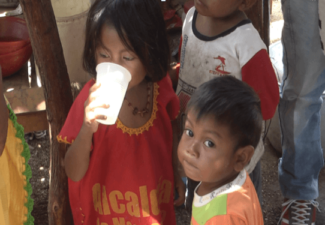
on 19 july, Dejusticia, along with the National Indigenous Organization of Colombia (ONIC), the Civic Committee for the Dignity of La Guajira, and the Committee of Support for Popular Communities (CODACOP), and several leaders of the Wayúu peoples, sent to the Supreme Court of Justice of Colombia a brief in support of the citizen-led protection case on behalf of Wayúu boys and girls, who are facing grave danger due to a widespread situation of hunger and lack of drinking water in the department of La Guajira.
Read MoreDejusticia Intervenes in Favor of Migrant Woman in Bolivia who Was Sterilized without Her Consent

Dejusticia intervenes before the Inter-American Court on Human Rights in the case of a migrant woman in Bolivia who was sterilized without her informed consent.
Read MoreCitizen Intervention about the Constitutionality of the “Beginning at Birth” Language of Civil Code’s Article 90

Dejusticia intervened before the Constitutional Court to respectfully request that it declares the constitutionality of the “beginning at birth” language of the Civil Code’s article 90.
Read MoreCitizen Intervention Litigating Unconstitutionality of Criminal Code’s Regulation 599 of 2000
Intervention claims unconstitutionality of Criminal Code regulations that do not consider gender identity in offenses and cannot justify harsher sentences due to discrimination and harrassment.
Read MoreLegal Remedies. The Role of Constitutional Judges when Abortion Is Not Guaranteed
This text, which at first seems to broach simply a legal debate, is truly about how to resolve the human drama of what to do when women attempt to access legal abortions, but face innumerable obstacles which end up limiting it.
Read MoreExercising the Right to Voluntary Interruption of Pregnancy in the context of armed conflict
One of the central aims of this text is to overcome, in a first attempt, the lack of data regarding abortions and the armed conflict, and the obstacles women face when trying to access this procedure in those contexts.
Read MoreWhat should the mining licensees prove, which are opponents of land restitution processes of ethnic communities, to show good faith free of guilt?
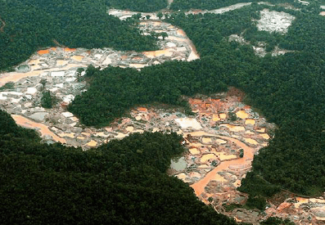
We presented an amicus curiae in the land restitution process in support of the Cocomopoca afro-descendant community.
Read MoreIntervention before the Constitutional Court in the Writ of Constitutional Protection Revision Process that Demands Protection of the Arauco Indigenous Community
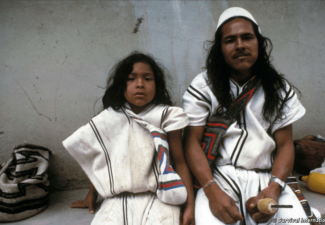
We intervened in the writ of constitutional protection instated by Mission Colombia Foundation in representation of the Arhuaco indigenous community due to the harms caused by the construction of a military base and more than 480 communication antenas and facts regarding this community’s ancestral territory.
Read MoreAmicus Curiae in Favor of the Right to Prior Consultation of Mayan Communities in Mexico

This amicus curiae seeks to support the actions of the Mayan communities from Pach-Chan and Canabchen to ask that their right to prior consultation be respected in the case against Monsanto’s genetically modified soy crops.
Read MoreRodrigo Uprimny’s Intervention before the Inter-American Court
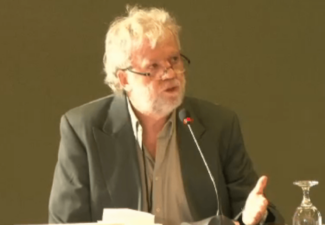
See the recording of the public hearing regarding the case against Colombia due to discrimination based on sexual orientation.
Read MoreDejusticia Supported Public Hearing Request by Indigenous Organizations in Constitutional Court regarding Decree that Regulates Indigenous Territories
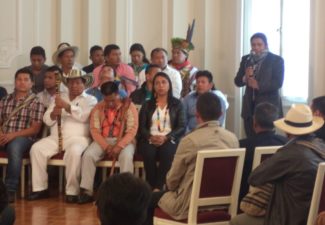
This past September 11th, Dejusticia presented before the Constitutional Court a request for it to hold a public hearing regarding the case of the decree that regulated indigenous territories (Decree 1953 of 2014).
Read MoreRecognition with Redistribution: Ethno-Racial Law and Justice in Latin America

This Dejusticia book presents an analytical framework and an empirical panorama of the reality of indigenous and afro-descendant rights throughout the region. To this end, it traces trends, advances and tensions in the regulation of cultural diversity and ethnic-racial justice through the analysis of four themes
Read MoreTraining on Issues on Sexual Violence in the Armed Conflict: A Methodological Proposal for Public Servants

We contribute some pedagogical materials to develop a training program on this topic. We hope its implementation will contribute to an improvement in the attention given to survivors, and the investigation and judicialization of sexual violence committed in the armed conflict with the goal of reducing impunity for these crimes and increasing survivors’ access to justice.
Read MoreDo Not Interrupt the Law: The National Health Superintendency’s Purview on the Right to Choose

This document seeks to contribute new arguments to advance the debate about the implementation of guarantees to the right to choose in Colombia, overcoming the two obstacles outlined in the report.
Read MoreBefore the Courts: Judicial Needs and Access to Justice in Colombia

This book aims to be the most comprehensive diagnosis of legal needs and access to justice conducted in Colombia.
Read MoreCongressional Women’s Caucus: A Story to Tell

Legislators formed the Congressional Women’s Caucus during the legislative period 2006-2010. This text seeks to give visibility to this process through the reconstruction of its history, challenges, and achievements.
Read MorePolitical Participation of Women and Political Parties after the 2011 Political Reform
This document analyzes the possible reach and limitations of two of the key requirements of Law 1475 of 2011 in order to identify strategies that will encourage the political participation of women in party politics. Historically, they have suffered from discrimination in their attempts to participate politically.
Read MoreSeparate and Unequal: Education and Social Class in Colombia
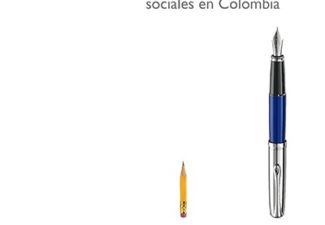
Using empirical evidence from state-administered exams, this book shows how public education in Colombia is a segregated system. It is a system that is separate and unequal, violating the right to non-discrimination and equal opportunity enshrined in Colombia´s Constitution.
Read MoreRace and Housing in Colombia: Residential Segregation and Life Conditions in Cities
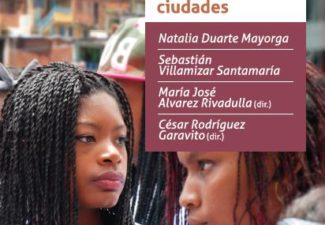
This report presents the results of a study on living conditions and residential segregation in twelve cities of Colombia
Read More