


Issue-Environmental Justice
Our “common home”

In his encyclical, Pope Francis makes an invitation to seek other ways of understanding the economy and progress, to explore a new vision of development that respects our house and allows believers and non believers to live in equality.
Read MoreFrancis, extreme environmentalism?

To take seriously the visit of Pope Francis is to take seriously his message on the environment. The central idea of Francis’ ecological encyclical is as simple as it is conclusive: everything is interconnected.
Read MoreThe dark side of conservation
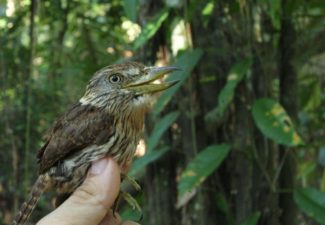
The conservation of nature and biodiversity is a legitimate goal, but what are the costs and power dynamics behind the traditional idea of “conservation”? Who is it benefiting and who is carrying the costs?
Read MoreThe fantasies of “homo sapiens”
After having beaten its competitors and almost all other species, today humanity’s main enemy is itself.
Read MoreColombia must not cry another avoidable tragedy
In Colombia, climate change and risk mitigation issues do not escape the political struggles in which almost all the issues on the national agenda end up. It is common to see how public policies approaches do not respond to the need of the territories.
Read MoreThe Persistent Sediments of Mercury

The Minamata Convention, aimed at protecting our health and the environment from the ravages of mercury pollution just entered into force, but if it is to make a difference at all, we must demand that its implementation be measured in terms of the quality of life and health conditions of those at risk of exposure.
Read MoreThe Constitutional Court has the last word to save the Ciénaga Grande of Santa Marta
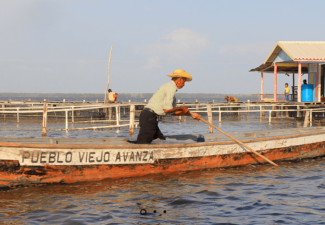
The environmental crisis of this ecosystem led fishermen to pursue a legal battle that reached the High Court. In this intervention, we support their demand that environmental authorities take urgent measures to stop the disaster and thus, protect their rights to healthy environment, dignified life and work.
Read MorePayments for environmental services: a conservation tool or nature’s commodification?
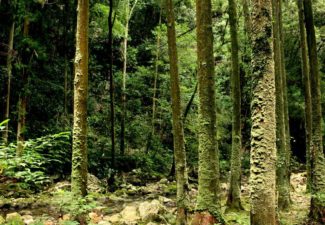
Clean air, fresh water, food production, climate regulation, biodiversity protection and carbon storage are just a few of the ecological benefits we receive from nature. Should we pay for those services? How do we value them? Should we pay for the fact of preserving or because it helps humans?
Read MoreIt is not enough to say “no”
Given the inability of the national government to organize development in order to make mining compatible with the environment and other economies, popular consultations are a democratic step to try to do so.
Read MoreAsbestos: the unpunished killer

Latin American countries need to strengthen both their legislation and access to justice mechanisms, particularly those involving civil and consumer rights, in order to stop the use of asbestos and similarly harmful substances.
Read MoreA hint of cosmopolitanism
Perhaps the next great revolution in the history of mankind will no longer happen in a country (as in Russia in 1917 or in France in 1789), but throughout the world and be the result of the coordination of actions of millions of people.
Read MoreMilitant hope
Hope should not only be cautious but militant: young people around the world should mobilize against politicians like Trump who are willing to damage the world in which they, the young, will live tomorrow.
Read MoreHumboldt vs. Trump
In times of egos enlarged by social media, such as Trump’s, we lack the cosmic vision of Humboldt, where everything is interconnected.
Read MoreThe first four books of the “Ideas for Peace Building” collection are already available

The series, which will have a total of ten texts, seeks to provide thematic documents that offer diagnoses and proposals on some of the post-agreement challenges.
An organization with collective leadership: our history reviewed in the Leader Network
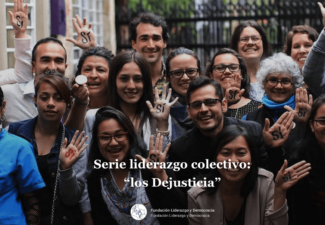
The Leader Network chose Dejusticia to initiate the series of profiles on collective leadership. The profile published in Silla Vacía investigates three fundamental measures of leadership: vision, example and results.
Read MoreThe Constitutional Court confirms decision that allows mayors to veto mining projects
The Constitutional Court has confirmed the ruling that allows the country’s mayors to veto mining projects in their municipalities if they consider that they can affect the environment.
Fisherfolk file a tutela to save Santa Marta’s Ciénaga Grande
The environmental crisis of this ecosystem, which has caused massive fish deaths, inspired a group of citizens to engage in a judicial battle to claim the protection of their right to a healthy environment, decent life, and work.
Read MoreExtractivism versus human rights: chronicles of the mined fields in the Global South
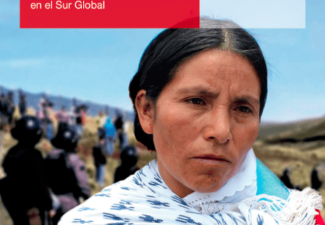
This book and Dejusticia’s initiative that originated it propose a new type of human rights approach that is characterized by three traits. First, it is about reflective writing whose authors are the very own activists that work directly in the organizations on the ground and stop to think about the potential, achievements and challenges of their knowledge and practice.
Read MoreWe presented a tutela in defense of the Great Ciénaga of Santa Marta

On November 10th, we presented a tutela action regarding the environmental degradation situation that affects the Great Ciénaga of Santa Marta. The ciénaga is a strategic ecosystem composed by a collection of lakes and wetlands, declared Biosphere Reserve by UNESCO and protected by the RAMSAR Convention.
Read MoreThe Constitutional Court decides on popular consultation processes in favor of public participation
The Constitutional Court recognizes that popular consultations on mining are legal and that municipalities can prohibit mining in their territories.
Read More