


Home_Internacional
CELAC-EU: Cooperation Trapped in Prohibitionism

Drug policy dominates the CELAC-EU Summit. We analyze the asymmetry in cooperation and the call to replace prohibitionism with financial traceability.
Read MoreLeveraging the CELAC–EU Summit in Colombia to promote a fair fiscal agenda

Can the CELAC-EU Summit promote tax justice? The challenge is to connect the PTLAC and the UN Convention to finance sustainable development and human rights.
Read MoreTransformative bi-regional cooperation for a just energy transition

The CELAC-EU Summit promotes energy transition. How can we achieve a just transition and avoid “green extractivism” in Latin America?
Read MoreCare as a human right: a bi-regional agenda for the sustainability of life

The bi-regional pact on care will be key at the CELAC-EU Summit. We analyze how it seeks to recognize care as a right and reduce gender inequality.
Read MoreCELAC–EU: an alliance to defend democracy, rights, and multilateralism in difficult times

Analysis of the CELAC-EU Summit in Santa Marta. The EU-Latin America alliance faces key challenges in democracy, multilateralism, and green transition.
Read MoreThe critical review of the coca leaf: an opportunity to reevaluate the agricultural product and its potential uses

This moment of critical review allows us to place the potential uses of coca leaf in the food, textile, dye, pharmaceutical, and nutraceutical industries in a global context.
Read MoreBeyond critical review… What do we do with the coca leaf in Colombia?

The ambiguity arises because in Colombia the coca leaf has a dual legal status: it is both controlled and protected.
Read MoreWhat’s next for coca?

Maintaining the status quo on coca leaves sends a discouraging message about the international drug system.
Read MoreCoca as seen by the WHO: will the error be corrected?

The prohibition of coca itself has created obstacles to the careful study of its uses and the nutritional benefits of the plant.
Read MoreThe cracks of a system in crisis and the coca leaf on the move

As a plant linked to indigenous cultural practices, it must be protected under international law.
Read MoreMigrants and Work: Lessons from Lebanon
Before the innumerable challenges that come with Venezuelan migration, we don’t need to improvise. We need to learn from countries like Lebanon that have already tried.
Read More#PeasantsRightsNow
Protecting the rights of peasants and rural workers implies the protection of the fundamental rights guaranteed to the rest of the population, including those in urban areas, given the impact that food production has on the rights to health and a healthy environment.
Read MoreNot Pretty in Pink: The Undisclosed Fashions of Farmed Salmon

People often choose cuts with bright pink to reddish hues, under the impression that these are fresher, tastier, and of better quality, thus warranting premium prices. The reality, however, is that “color does not affect these characteristics” and, in the case of farmed salmon, this color is actually manufactured.
Read MoreTongue Twisters of the State
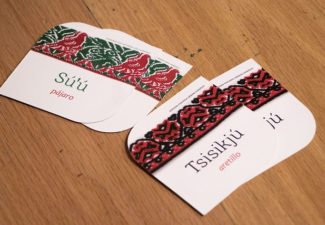
Around 97% of the world’s population speaks approximately 4% of the world’s existing languages. Put differently, around 96% of languages are spoken by about 3% of the global population. Linguistic diversity is being preserved by only a handful of people.
Read MoreVacillation towards migrants
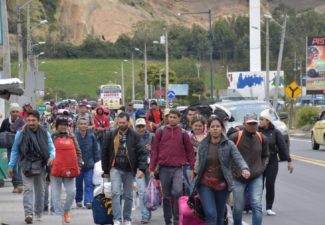
The situation of Venezuelan migrants is too serious and urgent to equivocate on good faith and sway with the changing political circumstances of each government.
Read MoreJuan Pedro Lares: The freed prisoner that never was
Juan Pedro Lares, a 24-year old Colombian-Venezuelan young man, who was abducted by a hundred civilian-dressed members of the Venezuelan Intelligence, the National Guard, the police, and armed civilian groups from his family’s home in July of last year was finally set free . But a feeling of injustice still lingers.
Read MoreVenezuela in a spiral
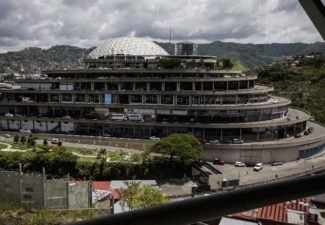
El Helicoide gets its name from the geometric shape of the building that houses the prison, which resembles a spiral. The crisis in the prison and the elections this Sunday could worsen the spiral of Maduro’s regime towards arbitrariness.
Read MoreIn Venezuela, cancer patients are dying without access to morphine
The shortage of medicine in Venezuela has generated a humanitarian crisis that impacts thousands of patients. According to approximated statistics, only 10% of patients with terminal and/or chronic illnesses that require medication like morphine actually enjoy access to such. They face a dilemma of having to choose between hunger and pain.
Read More#VenezuelaBienvenida
Citizen-led initiatives like #VenezuelaBienvenida (#VenezuelaIsWelcome in English) are reassuring, which calls on the country to get involved in the crisis on the side of human rights, to open channels of conversation, while promoting research and action to avoid the festering social rejection of Venezuelans.
Read MoreAttention to GAFA (II)

It was thought that what was good for the GAFA was good for the world. It was believed that for the benefits of technology to reach everyone, it would be best to let companies self-regulate.
Read More