


The environmental dimension of the peasantry: a constitutional remedy against the boomerang of climate maladaptation
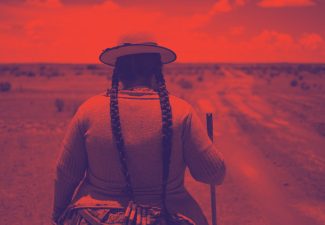
However, with the recognition of the environmental dimension of the peasantry, Colombian constitutionalism offers the world a formula for integrating peasant rights into conservation policies.
Read MoreGreen Grabbing in the Galilea Forest?

For several generations the peasants of this region, not far from Bogotá, have fought for the recognition of their right to land.
Read More“One can live naked, without light, but no one survives without food”

Says Elsa Nury Martínez, president of the Federación Nacional Sindical Unitaria Agropecuaria (FENSUAGRO) and secretary of the Americas region of La Via Campesina, for whom this voice has only begun to echo through international actions.
Read MorePeasant rights: the recognition of an excluded actor
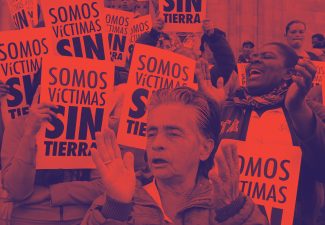
The struggle of the Colombian peasantry is relevant to international debates, both because of the injustices and violence it has faced and because of the progress it has made in recent years in defending its rights.
Read MoreThe Right to Defend Rights in Colombia and Latin America
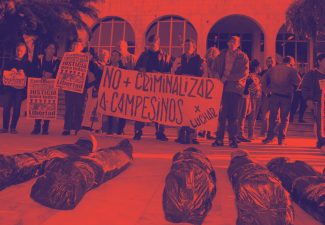
It is not possible to speak of the validity of human rights if States do not recognize and protect the possibility of promoting and defending them.
Read MoreLa Oroya: Lessons for litigation on air quality and public health in Latin America
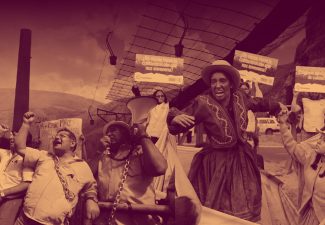
There are many aspects that can be highlighted from this ruling and that have been pointed out in other blogs, we will focus on three key points for the litigation of cases affecting public health in the Latin American context.
Read MoreCoordinated solutions to complex problems: the Enlaza programs

With this and other similar programs, Dejusticia’s commitment is to continue working hand in hand with other organizations to build a civil society with a strong, inclusive and well-informed voice.
Read MoreHosting as Solidarity: Our Fellowship Program for Activists and Human Rights Defenders from the Global South
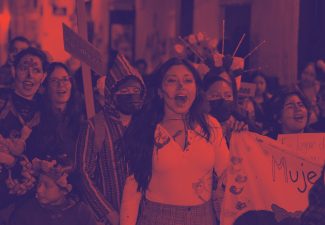
This cross-learning enriches the work of those who arrive, as well as that of those who receive them, and strengthens a broader understanding of problems that affect communities in different parts of the world in particular ways.
Read MoreAn Amphibious Approach to Solidarity in the Field of Human Rights
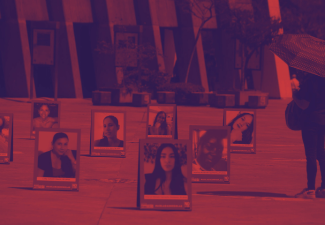
For those of us who work in defense of human rights, issues related to solidarity are both theoretical questions and constant practical concerns.
Read MoreShockwaves of the war in Gaza: rights to speech, protest and information must be guaranteed globally to fight antisemitism and islamophobia
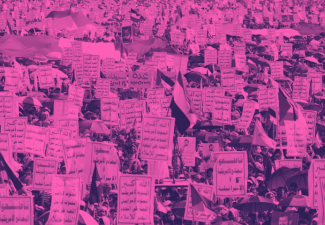
Now more than ever, upholding these rights and safeguarding the exchange of information and expression about this conflict is vital, if there is to be any hope of a peaceful resolution through necessary and meaningful dialogue.
Read MoreThe cost of rights
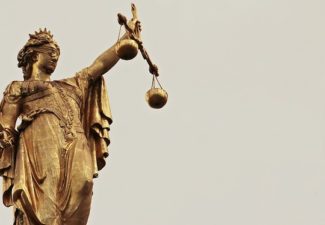
One dimension that critics of the Constitutional Court often forget is that all rights involve some spending. That is why we must take into account both the costs and the benefits of a judicial decision.
Read MoreLessons on transparency

Transparency has become central in the new agenda of democracy and the anti-corruption fight. However, by itself, transparency can be useless and become an empty discourse. This is why civil society groups and citizens should promote not only access to information, but also the active use of it.
Read MoreCounting farmers
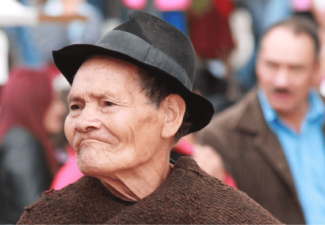
The opportunity to include peasants in the population census is gone, but the tools that the Supreme Court ordered remain. As proposed in the lawsuit filed, farmers have special constitutional protection and a specific cultural identity, distinct from others.
Read MoreElections for Congress and parliamentarism
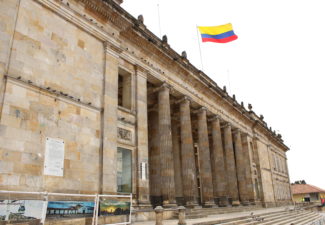
Many Colombians think, wrongly, that voting for Congress has little importance because the presidential election is the decisive one. A person who has all the virtues to be a great president but who does not have solid majorities in the chambers can hardly have a good government.
Read MoreAttention to GAFA (II)

It was thought that what was good for the GAFA was good for the world. It was believed that for the benefits of technology to reach everyone, it would be best to let companies self-regulate.
Read MoreDemocracy in Colombia lacks streets, but has plenty social networks

How to counteract the centrifugal force with which social networks have co-opted social interaction and public debate?
Read MoreWill Candelaria go to school? Barriers to access education for Venezuelan migrant children

Although there are no exact figures on the magnitude of the Venezuelan exodus and much less on its demographic characteristics, studies estimate that during this year, about 15% of the population will have left the country. How is Colombia securing the rights to education of the boys and girls who have arrived?
Read MoreGestures that kill or save lives
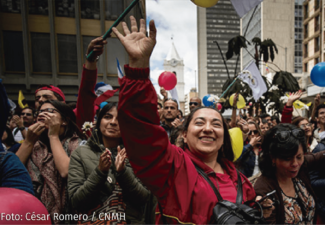
We are entering a turbulent and dangerous electoral period. Our political leaders have an enormous moral and political responsibility, which cannot be avoided.
Read MoreHappy and developed countries
I am writing these lines as I think about the tragedy that happened this week in Florida, where, once again, a man massacred several children in a school, shocking parents and the entire country.
Read MoreA campaign against hate
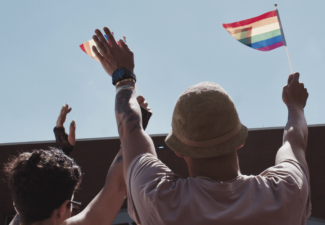
A few months before the elections, the political context is being shaken up with hatred towards the LGBTI population. Reacting to hate is not easy, we need irony, the weight of reality and allies on the other side.
Read MoreCongressional Women’s Caucus: A Story to Tell

Legislators formed the Congressional Women’s Caucus during the legislative period 2006-2010. This text seeks to give visibility to this process through the reconstruction of its history, challenges, and achievements.
Read MoreIn Search of Rights: Drug Users and Governments Response in Latin America
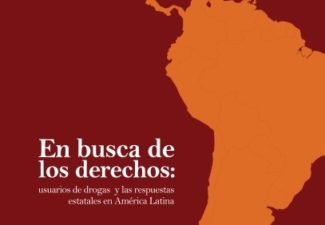
The Drugs and Rights Studies Collective published a new report that examines government responses to the consumption of illicit drugs in eight countries in Latin America: Mexico, Colombia, Peru, Ecuador, Brazil, Argentina, Uruguay and Bolivia.
Read MorePolitical Participation of Women and Political Parties after the 2011 Political Reform
This document analyzes the possible reach and limitations of two of the key requirements of Law 1475 of 2011 in order to identify strategies that will encourage the political participation of women in party politics. Historically, they have suffered from discrimination in their attempts to participate politically.
Read MoreLegislating and Representing? Female Senators’ Agenda in Congress (2006-2010)
In this book we hope to contribute empirically to the issue of women’s political representation in Colombia. Additionally, the book brings attention to the necessity to develop intermediary theoretical proposals that can open the conceptual debate regarding the inclusion and representation of women in the political arena.
Read MoreRace and Housing in Colombia: Residential Segregation and Life Conditions in Cities
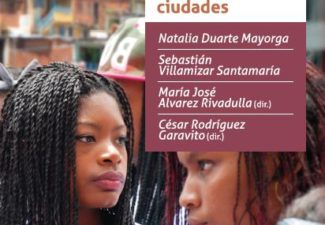
This report presents the results of a study on living conditions and residential segregation in twelve cities of Colombia
Read MoreSeparate and Unequal: Education and Social Class in Colombia
Using empirical evidence from state-administered exams, this book shows how public education in Colombia is a segregated system. It is a system that is separate and unequal, violating the right to non-discrimination and equal opportunity enshrined in Colombia´s Constitution.
Read MoreIrrational Efforts: Criminal Investigations of Homicide and other Complex Crimes

The Colombian Attorney General’s Office´s quantitative records show that investigative efforts are employed irrationally. The absence of a strategic prioritization policy —as opposed to the unclear and arbitrary way officials currently process cases— does not allow criminal policy efforts to focus on investigating the most important cases.
Read MoreSecurity, Police and Inequality: Citizen Survey in Bogotá, Cali, and Medellín
This survey seeks quantitative evidence about how people experience and perceive various aspects of the security policy, in particular policing practices. It also explores whether security policies disproportionately effect vulnerable groups.
Read MoreLand Restitution and Gender Perspectives

In this document the authors explore why the focus on gender is important to the integral restitution of land. It also shows that this focus is both useful and necessary to the full, effective and respectful restitution of human rights of the victims.
Read MoreAccess to Justice: Women, Armed Conflict, and Justice
This document examines the situation of female victims of human rights violations due to the Colombian armed conflict and their ability to effectively access justice.
Read MoreIntervention: Legislative Proposal on transparency and access to public information
The “More Information, More Rights Alliance,” in which Dejusticia participates, intervened before the Constitutional Court regarding proposed legislation on transparency and access to public information.
Read MoreIntervention before the IACtHR regarding Costa Rica’s prohibition of invitro fertilization
Dejusticia presented an amicus before the Inter-American Court of Human Rights regarding Costa Rica’s prohibition of in vitro fertilization.
Read MoreChallenge to nullify the election of Gregorio Eljach Pacheho as Secretary General of the Senate
Dejusticia, with the Misión de Observación Electoral (MOE), presented a request to nullify the election of Gregorio Eljach Pacheco as Secretary General of the Senate. The request argues that voting should have been public, and that Eljach did not obtain the number of votes required by the Constitution.
Read MoreIntervention in the writ for constitutional protection (tutela) for violation of the right to public information.
Dejusticia intervened before the Constitutional Court supporting tutela filed by Monica Roa and other women against officials of the Inspector General’s Office for violating their right to information and consequently their sexual and reproductive rights, among others
Read MoreChallenge to the appointment of three government ministers (Housing, Interior, and Transportation) for violation of the Quotas Law by President Santos.
Dejusticia, Sisma Mujer y la Red Nacional de Mujeres challenged the appointment of the Ministers of Housing, Interior and Transportation, because in nominating men for these positions, President Santos led to a violation of Ley 581 of 2000 (Quotas Law) which requires that at least 30 percent of Ministries are led by women.
Read MoreLawsuit against the constitutional reform that eliminates the conflict of interests of congressmen in the processing of legislative acts.
Dejusticia challenged Legislative Act No. 01 of 2011, which establishes that there is no conflict of interests when members of Congress process legislative acts. We argue that by issuing this reform, the Congress altered an essential element of the democratic principle that establishes that Congress must always act in pursuit of general interests and not private interests.
Read MoreIntervention on the constitutionality of the victims law (Land restitution)
DeJusticia addressed the Constitutional Court in regards with a law suit established against the Victims Act. We support three charges of the lawsuit: the first one, to include in various articles of the Act the grounds of “forced abandonment”; the second one, to declare unconstitutional the penalty to victims who, through non-legal recourse’s, occupy the lands awaiting to be restored; and the third one, to declare unconstitutional the presumption the law brings for the opposing party.
In another charge we differ from the applicants regarding the Abandoned and Forcefully Stripped Land Registry, because we believe that it does need to be a procedural requirement for the restitution action.
Read MoreIntervention regarding the scope of the expression “due to the armed conflict” of the Victim’s Law
Dejusticia supported claim of unconstitutionality, arguing that the term “due to the armed conflict” of the Victim’s Law be understood in its broadest sense.
Read MoreIntervention in the challenge the proposed statute of intelligence and counterintelligence
Dejusticia and the Foundation for Press Freedom -FLIP- argues for the application of standards that should be applied to protect rights frequently violated by intelligence activities and, at the same time, ensure their effectiveness.
Read MoreIntervention in motion for legal protection of fundamental rights concerning blood donation by men involved in same sex relationships.
Dejusticia addressed the Constitutional Court in a motion for the legal protection of fundamental rights which examined whether a Clinical Laboratory had discriminated against a gay man by rejecting him as a blood donor
Read More