


From disarmament to inclusive reintegration: lessons from Colombia and El Salvador

Addressing the challenges related to the reintegration of female ex-combatants and adopting a comprehensive approach is crucial to ensure the non-recurrence of conflict.
Read More5 urgent actions to solve the serious humanitarian crisis in Palestine

Together with 185 international civil society actors, we call on senior officials of the UN, the European Union and the International Committee of the Red Cross to exert all possible pressure on the Israeli government to end the siege of Gaza.
Read MoreGlobal drug policy: the transition from “crime and punishment” to safeguarding human rights

We were in Geneva at the presentation of the report of the Office of the United Nations High Commissioner for Human Rights. One of the recommendations was the responsible and progressive regulation of drug markets.
Read MoreIs it impossible to pay reparations? The case of the reparations policy for survivors of sexual violence and victims of the armed conflict in Colombia

This paper provides elements for reflection and analysis on the political economy of reparations by analyzing the Colombian case since 2011, when the policy for victims of the armed conflict was created through Law 1448.
Read MoreThink twice: a reflection on menstrual data, privacy, and non-discrimination

While misuse of menstrual data in the US is the current worrisome privacy issue, awareness and understanding of the handling of one’s intimate information is vital to safeguarding human rights, and will only become more urgent as more and more data is collected and stored by various entities.
Read MoreSentiido: good journalism at the service of diversity

This organization, which began as a degree project and is now a benchmark in the field, has been using creativity and the tools of good journalism for 12 years in an effort to reduce prejudice against LGBTIQ people.
Read MoreWomen’s football shone at the World Cup, and so do inequalities

The Colombian Women’s Football Team achieved a feat by reaching the quarterfinals of the World Cup, but the path to achieve it has been full of discrimination, precariousness, sexual harassment and vetoes. Women have fought to enter a historically masculine place.
Read MoreBaudó AP: a river of stories

In the face of misinformation and the hegemonic power of the media, a public agency has emerged that puts community journalism at the center of the stories.
Read MoreFarmers’ markets: from the countryside to the city without intermediaries

We took a tour of the Fontibón farmers’ market and got to know Agrocomunal. Among the stalls selling fruit, vegetables, snacks, and traditional foods, we heard the stories of at least 350 producers who, thanks to this organization, can sell their harvest directly to consumers in the capital.
Read MoreCorporación Vínculos, two decades committed to alleviating the emotional suffering caused by war

Since 2003, Corporación Vínculos has created strategies for care, listening, and rights training to accompany victims of armed conflict and thus contribute to alleviating the pain caused by war.
Read MoreHuman Rights and the Practical Power of Art

At a time when the human rights movement is facing great challenges, and at a moment when there is a widespread recognition that the human rights movement must be more interdisciplinary, and locally connected, human rights advocates should be more purposeful in integrating art, in addition to social sciences, into our practice.
Read MoreWhat structure for the Special Jurisdiction for Peace?

The Colombian high courts have had strong offices for each magistrate while the institution in itself is relatively weak. The JEP should not copy this model because given its large size, the risks of incoherence and lack of coordination would increase.
Read MoreThe other war

In Colombia, about four thousand people are killed each year in motorcycle accidents. Motorcycles are leaving behind a tragedy of the dead and the disabled, which responds to the lack of education and effective regulation.
Read MoreThe time for climate change litigation

Cities like New York and San Francisco have sued large oil companies for their contribution to climate disasters. It’s time for that trend to reach Latin America.
Read MoreA new opportunistic cartel
The Prosecutor’s Office should provide information on negotiations such as those made with former Governor Lyons to assess whether they are effective and prevent another cartel from forming.
Read MoreThe world is still wide and alien
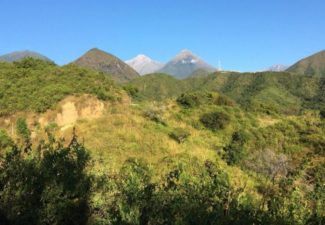
The unforeseen incidents of bringing together a handful of indigenous leaders from around the world to Colombia for the First Global Workshop for Indigenous Leaders.
Read MoreInsecurity: desperate measures
Justice through people’s own hands and the deaths in neighborhoods fights show the failure of the State in several sectors of the city, especially those that are outside the tourist circuit.
Read More“La señorita María” will not make part of the census
The census that began this week does not have the questions to properly account for the LGBT population, or the peasant population, or to evaluate multidimensional poverty.
Read MorePoor census
The census that began to run electronically this week is characterized by improvisation, smallness and inequity.
Read MoreA census without peasants?
How is the State going to take peasants into account in its policies if it does not count them in its main instrument for collecting information, which is the census? The request of peasants is fair because this population has historically suffered from structural discrimination. A single piece of data shows that: rural poverty (45%) is approximately three times higher than urban poverty (15%).
Read MoreExperiences in Latin American Countries on the Investigation of Complex Crimes
In this document we describe some of the experiences in the region’s countries regarding the investigation of complex crimes.
Read MoreThe States of the Country: Municipal Institutions and Local Realities in Colombia
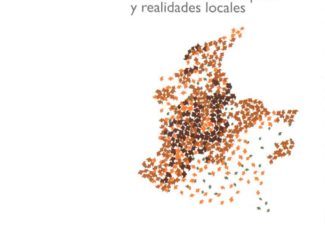
This book studies the Colombia’s social reality through local institutions.
Read MoreWeaving Rights 2: Reparation for Indigenous Peoples
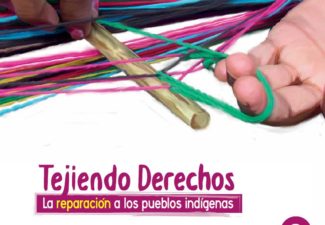
The second book in the collection is on the right to reparations for indigenous peoples
Read MoreWeaving Rights 1: Prior Consultation and Free, Prior, and Informed Participation

The first book of the collection is about the rights to prior consultation and free, prior and informed participation.
Read MoreEthno-Reparations: Ethnic Collective Justice and Reparations for Afro and Indigenous Communities in Colombia
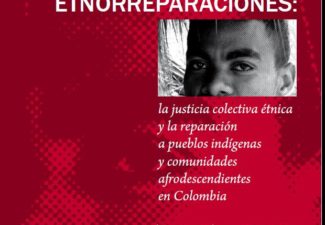
This text begins by explaining the concept of “collective ethnic justice” and then offers practical guidance on how it can be achieved in practice by describing relevant principles and criteria found in Colombian and international law.
Read MoreAccess to Justice: Cases of Business Human Rights Abuses
Access to justice and effective remedy have become a crucial element in the protection of human rights within the context of business activities, as well as an area of fundamental importance to judges and lawyers who aim to promote the rule of law and human rights.
Read MoreSystems Overload: Drug Laws and Prisons in Latin America
This paper demonstrates how drug policy in the country tended to a progressive hardening along the twentieth century and, notwithstanding, failed to be effective in reducing supply and in combating organized crime networks dedicated to trafficking.
Read MoreAltered State: Clientelism, Mafias and Institutional Weakness in Colombia
This book articulates a comprehensive vision of not only the the social and political effects of the paramilitary phenomenon in Colombia, but also of the institutional and legal weaknesses of the Colombian government, which has been captured by mafias and political actors.
Read MoreIn Search of a Transformative and Participatory Concept of Reparations in the Context of Transitional Justice
This article aims to help overcome some of the limitations of the prevailing transitional justice approach.
Read MoreAnd they refounded the homeland… On how the mafia and politicians reconfigured the Colombian State
This publication discusses the implications of the capture of the Colombian State by illegal armed groups.
Read MoreChallenge to the request for annulment of the decree that regulates the provision of services for voluntary interruption of pregnancy
Dejusticia requests the Council of State refuse the request for nullity of the decree that regulates the provision of services for voluntary interruption of pregnancy. We argue that this regulation is legitimate as Act 100 of 1993 establishes that the National Government is the competent authority to regulate the provision of health services.
Read MoreMotion for legal protection due to a decree that restricts freedom of expression and access to information during presidential elections
The Center for the Study in Law, Justice and Society – Dejusticia, the Electoral Observation Mission – MOE, Media for Peace, the Association of Colombian Newspapers – Andiarios, and the Foundation for Press Freedom – FLIP interposed a motion for legal protection against the Interior and Justice Ministry for the issuance of the decree regulating public order during the first and second rounds of presidential elections, considering that some articles violated the freedom of expression and access to information.
On May 24, 2010 the decree 1800 which “sets out regulations for the preservation of public order during the presidential elections” was issued. The decree, which is the same that has been used since the elections of 1994, restricts journalists freedom of expression and information on the day of presidential elections.
These restrictions require the media to convey information relating to public order only when it has been confirmed by official sources. It also forbids the media to publish any information on the election results that is different to the one released by electoral authorities. Additionally, it orders the media to give priority to the messages issued by these authorities in the electoral process.
After doing a legal review of these standards, the organizations find that the Ministry is violating the fundamental rights of journalists since it ignores the principle of non-censorship, makes unreasonable restrictions, and, moreover, is dealt with by a decree when the Constitution is clear in giving regulatory power to statutory laws.
Read MoreConstitutional claim for victims of forced disappearance to be recognized as victims of political violence to access humanitarian aid.
This claim, submitted jointly by the Nydia Erika Bautista Foundation and Dejusticia, aims to correct this legislative omission so that victims of forced disappearance are recognized as victims of political violence and so that they have access to humanitarian aid without having to undertake the process of obtaining a presumption of death declaration.
Read MoreCitizen Intervention: tutela against the Ministry of Transport and others for violations of the right to prior consultation and territory
In this amicus, support for the arguments advanced by the Colombian Commission of Jurists in order to suspend the construction of a road that crosses indigenous reservations as well as gold mining exploration such until the indigenous peoples affected (Embera, Katío y Embera, Dobida) have been consulted with.
Read MoreIntervention on the constitutionality of the declaration of state of emergency.
Dejusticia requests that in the case that the Court find that the health system suffers from a financial crisis that affects its immediate stability, the Court declare inapplicable all unconstitutional reasons for the declaration of emergency contained in Decree 4975 of 2009, as they attempt to permit a structural reform of the Health System, which may only be undertaken by Congress.
Read MoreAmicus curiae in tutela for protection of the right to mental health of victims of forced displacement
Dejusticia supports the tutela to ensure the right to health of four women who have not received comprehensive care for the serious mental and emotional disorders they suffer following their forced displacement due to violence of the armed conflict
Read MoreIntervention on the constitutionality of Art. 113 of the Civil Code regarding civil marriage
Dejusticia supports plaintiffs which challenge Article 113 of the Civil Code that establishes marriage only for heterosexual couples and defines procreation as one of its purposes
Read MoreIntervention on the constitutionality of the re-election referendum
Intervention in challenge to the constitutionality of the re-election referendum. The intervention requests the Court to declare unconstitutional the law that calls for the aforementioned referendum.
Read MoreIntervention on the law of freedom of slaves
Dejusticia, member of Racial Discrimination Watch, intervened in the challenge to Law 21 of 1851 (Freedom of slaves), arguing that the Court should declare the case admissible and guarantee integral and collective reparation for the Afro-Colombian population who suffered the crime of slavery.
Read MoreIntervention relating to free primary education
Dejusticia intervened in a lawsuit to declare charging fees for public primary schools unconstitutional.
Read More