


The struggle of Afro-Colombian women in northern Cauca is told in songs

Singing and music are some of the many tools used by ASOM, an organization that has existed since 1997, to prevent gender-based violence and empower a group of 230 members with skills and autonomy.
Read MoreA feminist commitment from northern Cauca

Since 2009, the Corporation for the Promotion of Political Culture has come to the conclusion that changing the world is possible, and it is not done through extraordinary actions, but through the greatness that lies in those who inhabit the territory being able to feel good, speak out loud, and do so without fear.
Read MoreAn island with heart

Without a mayor or police force, through alliances, dedication, and passion, the Orika Community Council achieved a very difficult first collective land titling for Afro-Caribbean communities.
Read MoreThe space that decentralizes peace from the Montes de María

For more than 10 years, the Montes de María Regional Peace Building Space has managed to forge bonds of affection and community trust. Through the sustained work of its monthly meetings and the Reconciliation Festival, it has positioned dialogue and territorial identity as a condition for peace, becoming agents of hope for the entire region.
Read MoreThe struggle of Colombian farmers to be recognized and counted

Through a historic legal action, ACIT, together with other social organizations in the country, achieved a milestone in the struggle of farmers in Colombia: forcing the state to conduct a census of farmers in order to characterize and recognize them, and thus gather information that will help create public policies that benefit them.
Read MoreThe center is the periphery: a circle of words at the FUCAI Foundation

Members of the Caminos de Identidad Foundation (FUCAI) have learned from indigenous peoples that problems contain solutions, that the closer we get to our ancestors, the more innovative we become, and that there is abundance where some only see scarcity.
Read More“A person with autism does not live in their own world”: 13 years breaking down stigmas

Sebastián is co-founder of the Colombian Autism League (LICA) and also a person with autism or autism spectrum disorder. Being part of the organization has allowed him to break down prejudices associated with people with autism and, instead, empower their autonomy and self-determination.
Read MoreBeing a feminist organization is quite a challenge in Riohacha

The work for nonviolence and gender equality in Riohacha (La Guajira), led by a group of women from this city, went from being a citizen campaign to becoming the Evas y Adanes Association, an organization that is committed to education and strategic communications to transform the machismo typical of La Guajira into inclusion and equality.
Read MorePintadillo con primitivo: women who preserve black tradition in Caquetá

Caquetá is thought of as an indigenous department, but it also has a black population. Many came to work as teachers in the 1980s, when coca was such a lucrative business that few wanted to do anything else and school teaching positions remained unfilled. Today, the Ubuntu Afro-Amazonian Women’s Network Foundation, made up largely of these teachers or their daughters, seeks to resist new threats from within its tradition.
Read MoreAn organization that supports the Awá

The Nariño-based organization Corporación Chacana has sought to work toward the empowerment of indigenous communities in the area, especially the Awá, an ethnic group in danger of extermination due to the violence of the armed conflict.
Read MoreUnlikely dialogues
Human beings tend to chat and debate with those who think and feel similarly. These conversations between peers are pleasant but are often unproductive because they reinforce our prejudices.
Read MoreThe balm of language
It is not language that is to blame, but the culture behind language. Words, says Rosa Montero, are like the skin of the social body: they reflect the movement of that body. If that movement is changed, the words change their meaning.
Read MoreMourning
Last week, two young students resolved a seemingly unimportant dispute with arms. Hopefully the collective mourning for these two boys, their families, and for society itself serves to recognize the marked setback in educational policy, a product, among other reasons, of Ministry of Education’s politicization.
Read MoreThe moralist mind in 2018
Recognizing the visceral roots of political opinions should lead to less unequivocal, less moralistic judgments, on the opposite 50%.
Read MoreRecipes against climate change

The solutions to combat climate change are closer than you think. There are small, everyday actions that citizens can contribute to, starting from something as simple as being more aware of what we serve on our plates.
Read MoreSweet sophisms?
Not adopting a tax on sugary drinks as an initial step for a more comprehensive health strategy is tantamount to saying a few years ago that the seat belt should not be mandatory since the problem of traffic accidents is too complex and requires more comprehensive measures.
Read MoreMinimalist peace and robust peace
The first conclusion is that minimalist peace is the only possible peace with the State and the political class that we currently have. Robust peace will only be viable with changes in power and the political system, driven by civil society, movements and parties, beginning with parliamentary and presidential elections next year.
Read MoreColombia Peace Agreement: participation and protest
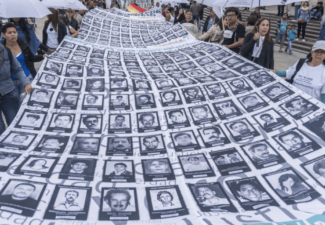
The 2016 Peace Agreement between the Colombian government and FARC includes explicit aims to improve democratic participation and protect the right to protest. But how are these goals being threatened?
Read MoreCruelty towards the victims
It is sad that Congress did not massively approve the 16 special circumscriptions of peace. It is sad that the resistance of certain political parties to expanding democracy is so great that today we are making these calculations and arguments. What cruelty towards the victims!
Read MoreNeoliberalism
It is true that neoliberalism, like any influential ideology, would not have lasted so long if it did not have a core of truth. The problem is the combination of those truths with dogma and fantasy.
Read MoreIs The Free Trade Agreement between the United States and Colombia Constitutional?
The article offers and analysis of the impacts of the Free Trade Agreement between the United States and Colombia.
Read MoreSix Cities, Four Countries, One Law: A Comparative Analysis of Educational Politics
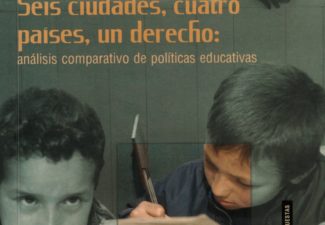
This book offers a collection of essays that analyze and compare the educational public politics of Bogotá with those other cities and other countries in Latin America.
Read MoreSocial Rights Taken Seriously: Towards a Dialogue Between Rights and Public Policy
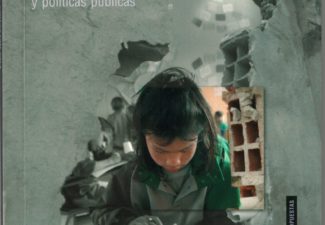
The book investigates the application of various social rights with an emphasis on the right to education.
Read MoreThe Right to Health
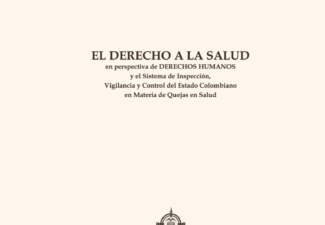
This report is the result of an investigation that assessed the Colombian health system from a human rights perspective.
Read MorePractical Guide of the International System of Protection of Human Rights
The guide is an effort to improve the quality and availability of the information regarding the systems in place to protect human rights. It serves as a reference for individuals interested in the relation of justice, conflict, law and order to human rights.
Read MoreRecommendations
This book focuses on different themes regarding the right to truth, justice and reparation of women victims of the armed conflict in Colombia.
Read MoreThe Free Trade Agreement, Is It Constitutional?
This book presents a systematization of the debates that transpired at the forum, “The Free Trade Agreement, Is It Constitutional?”
Read MoreSilence is Not Possible Anymore
The right to communication means the collective enunciation of the message. Actually, we are all message producers, due to our will, technologies and politics. The reader will find in “Silence is not possible anymore” the celebration of communication as part of the political imagination.
Read MoreThe Letter and Spirit of the Law
This book seeks to revive the practical and academic discussion that lawyers have with the relation between the “methods of interpretation” of law.
Read MoreRacial Discrimination and Human Rights in Colombia
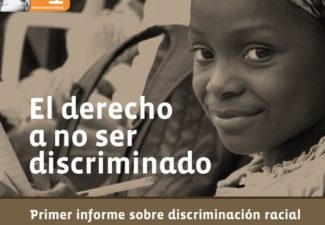
This unprecedented work offers a thorough analysis of the current situation of Afro-Colombians, providing a sociological and legal basis to advocate for the promotion of their rights.
Read MoreLaw of Justice and Peace
Public action of unconstitutionality against articles 2, 4, 47, 48, 49, 71 & 72 of Law 975 of 2005.
Read MoreSocial Security: Same-Sex Couples
Lawsuit challenging the normas of article 1 of Law 54 of 1990 and articles 47, 74 & 163 of Law 100 of 1993, which restrict social security benefits to heterosexual couples.
Read MoreLawsuit Against Discriminatory Norms against Same-Sex Couples
Challenge to a series of norms that exclude homosexual couples. Dejusticia alleges violations of articles 1, 13 & 16 of the Constitution and in some cases articles 2, 12, 13, 15, 16, 18, 24, 29, 40, 48, 49, 51, 58, 64, 66, 93, 95, 100, 123, 126, 209, 229, 250 numbers 6 and 7 of the Constitution.
Read MoreRights of the Black Communities
The Community Counsel of the Islands of Rosario filed a tutela against INCODER, arguing that the State has violated its rights of petition and due process, as well as the prior consultation rights of the community, and the existence, and cultural integrity of the community.
Read MoreElectoral Code
Public action of unconstitutionality against articles 10 and 102 in their entirety and partially against articles 12, 26, 32, 40, 47, 75, 79, 85, 101, 149 & 157 of Decree 2241 of 1986 (Colombian Electoral Code).
Read MoreHealth: Same-Sex Couples
Citizen intervention in challenge to the constitutionality of Law 100 of 1993, which limits health benefits to heterosexual couples.
Read MoreLimits to Freedom of Expression: Patriotic Union
Dejusticia filed an amicus in the tutela action against Dr. Fabio Echeverri Correa, manager of the re-election campaign for Presidential Candidate Álvaro Uribe Vélez, for violating the fundamental rights of honor and good name, physical integrity and life.
Read MorePatrimonial rights: Same – sex couples
Citizen intervention in the challenge to Article 1 of the Law 54 of 1990 and Article 2 of the Law 54 of 1990 modified by the Law 979 of 2005, which limit patrimony laws to heterosexual couples.
Read MoreRespect for the Law of Quotas
Dejusticia challenges the election of Dr. Nilson Pinilla Pinilla as new Judge of the Constitutional Court, due to violations of the Quotas Law and the restriction on voting for Dr. Pinilla by judges Dr. Pinilla had appointed.
Read MoreAbortion
Dejusticia intervened in Nicaragua, Mexico and Colombia arguing for the legalization of abortion in these countries.
Read More