


#SOSPeru: The repeated script of repression in Latin America

The stigmatization of social protest by Peru’s interim government has put civil society and the media in demanding guarantees for a dialogue that allows for political transition without violence.
Read MoreIs Democracy in Brazil at stake?

Following what some consider a coup attempt on January 8, Brazil’s federal powers are taking action against the far right. Will they be able to act decisively without undermining the institutions they defend?
Read MoreNew Report: Misuse of Technologies in Emergency Responses

Three years after the begin of the Covid-19 pandemic, the ECNL, INCLO, and Privacy International published a report on how states use surveillance technologies to weaken Human Rights within their territories with the excuse of the fight against the virus.
Read MoreHow can science and statistics guarantee the right to truth?
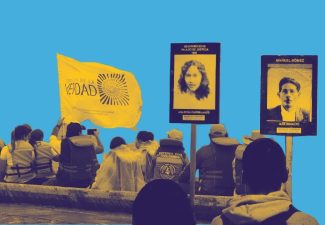
Presentamos un nuevo documento sobre develación de patrones de violencia por medio de métodos estadísticos en comisiones de la verdad. Destacamos cinco lecciones que nos deja esta investigación.
Read MoreAre Human Rights Still Effective?
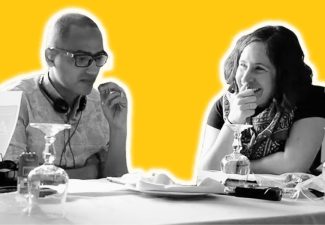
In 2018, we brought together activists from 11 Global South countries to reflect on the importance of human rights in contexts where their effectiveness has been questioned. Their conclusions were compiled in the book Reimagining the Future of Human Rights.
Read MoreWe stand in solidarity with palestinian human rights organizations
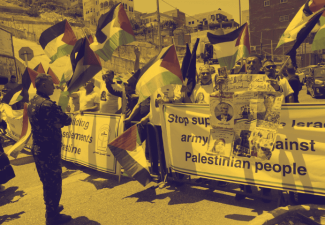
Israeli government declared palestinian human rights organizations as terrorist groups. INCLO members call Israel to desist from persecution campaign
Read MoreEl Salvador: State of Exception and Attacks against Human Rights Defenders and Organizations Facilitate State Abuses
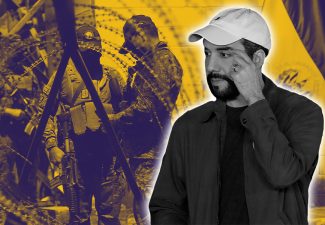
We call on the government of El Salvador to comply with its international commitments on human rights and cease attacks against national and international civil society organizations that work for the protection of fundamental rights.
Read MoreINCLO condemns Russia’s invasion of Ukraine and joins calls for an immediate cease fire
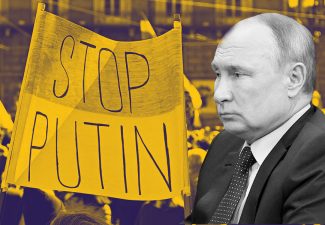
As INCLO members, we raise our collective voice to condemn Russia’s invasion of Ukraine, its violation of international law, and the war crimes and human rights violations being committed against the people in Ukraine.
Read MoreGet involved! Our fellowship program for human rights defenders from the Global South is now open!
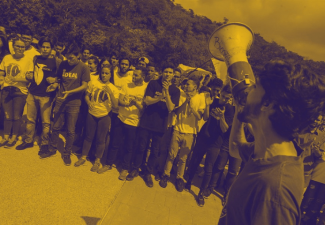
If you belong to an organization that defends human rights in a country in the Global South that is in an emergency or high risk context, we invite you to participate in our fellowship program so that, with our support, you can develop your projects.
Read MoreDigital technologies and political campaigns: a risk for the 2022 elections?

We investigated micro-segmentation of potential voters on social media in Colombia and questionable company actions. Here are five findings.
Read MoreInabilities in the Special Jurisdiction for Peace
The Senate’s decision to prohibit people who have litigated human rights cases against the State from becoming JEP (Special Jurisdiction for Peace) magistrates is grossly unconstitutional.
Read MoreThe grammar of peace
The Constitutional Court’s decision on the Special Jurisdiction for Peace is an important step to leave the explosive mess in which find ourselves in and to begin to consolidate peace.
Read MoreLegalism, morality and truth
The unequivocal belief in one’s own goodness and the wickedness of the opponent is an obstacle to the construction of a truth as precise as it is inclusive. The historical fact is one, but the experiences and the reasons are multiple. We should start by understanding the interlocutor.
Read MoreProfessional secrecy in abortion cases: the inhumane dilemma between prison and death

The protection of professional secrecy in abortion cases is a fundamental guarantee for women to exercise their right to terminate a pregnancy. If doctors continue to violate professional secrecy and report on abortion cases, women will continue to be subjected to an inhumane dilemma, having to choose between prison or death.
Read MoreSentences and political participation
That the FARC leaders can aspire to be elected before being judged by the JEP is not an arbitrary formula: it allows the former commanders to ensure the cohesion of the guerrilla and its transformation into a political actor.
Read MoreThe policy of love
In Venezuela, a law was passed imposing harsh penalties for those who promote hatred and fascism. Pretending to eradicate hate and impose love is a typical feature of tyranny.
Read MoreTo inherit memories
Today started yesterday. Yesterday, November 6, 1985, towards the end of the morning, the massacre began at the Palace of Justice. (Thursday, November 7, 1985, ‘Official History of Love’, Ricardo Silva Romero).
Read MoreJunk food (SIC)
The randomness of spelling made the acronym of the Superintendence of Industry and Commerce (SIC) the same Latin word used to draw attention to an error in a text (sic).
Read MoreReturning to the colonial space
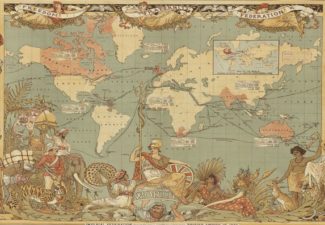
The international phenomenon of land grabbing, which in its most recent manifestation already ten years old, could be seen as a form of neocolonialism that connects Global South countries around a common problem and resistance.
Read MoreScience, conscience and counter-science
In 1956, the scientist Clair Patterson warned that there was an excess of lead in the environment linked to industrial production. Patterson was accused of fundamentalism for warning about the health-related dangers of this metal, just as it happens today with some industries that dismiss scientific evidence.
Read MoreThe Judicial Control of the States of Exception

This article reviews the history of the Colombia Constitution and its exceptions.
Read MoreConstitutional Protection of Rights in Brazil, Spain and Colombia: Constitutional Control of the Sentences

The works collected in this volume, on the Brazilian, Spanish, and Colombian experience, analyze some of the problems derived from the functional reach assigned to their cores.
Read MoreLabor Rights in the FTA Between Colombia and the United States
This article examines the theoretical debate and the comparative experiences of labor clauses in free trade agreements and proposes norms for the FTA between Colombia and the United States that effectively protect labor rights.
(In: Catalina Botero & Andrea Guardo, eds. Economía social de mercado y tratados de libre comercio en Colombia. Fundación Social y Fund. Konrad Adenauer, 2004)
Read MoreBetween the prominence and the routine: A socio-legal analysis of Colombian justice (1980-2005)
This chapter analyzes two apparently paradoxical aspects of Colombian judicial evolution: its protagonism and its enormous political visibility, on the one hand, and its routinization and loss of social relevance, on the other.
Read MoreThe Search for Alternative Economies in Times of Globalization: the Case Study of Informal Recycling in Bogotá
This text examines the potential of supportive economy in the context of globalization, by the way of a case study on the informal recycling cooperatives in Bogotá.
Read MoreExpanding the Economic Canon and Searching for Alternatives to Neoliberal Globalization

This introductory chapter theorizes and documents the diverse initiatives of supportive economy and working transnational mobilization that promises of counterhegemonic globalization.
Read MoreThe Kaleidoscope of Justices in Colombia
Critical Studies of Law and the Theory of Judicial Decision
This introductory study analyzes one of the most influential contemporary debates about the interpretation of rights and judicial decision, initiated between theorists Herbert Hart and Ronald Dworkin.
Read MoreThe Test of Reasonableness and the Right to Equality
This chapter analyzes the jurisprudential application of the equality clause as a constitutional right and proposes a test of reasonableness and compares this clause with those in American and European jurisprudences.
Read MoreTheory of Right and Judicial Decision
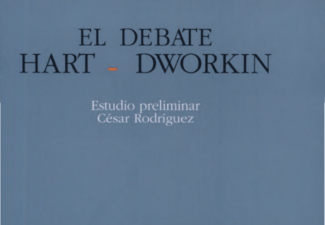
This introductory study analyzes one of the most influential contemporary debates on the interpretation of rights and judicial decisions, begun between the theories of Herbert Hart and Ronald Dworkin.
Read More