


With judges on the chopping block, who will defend us?

With the global Rule of Law in decline, Latin America has become a political chessboard. Who protects us when judges lose their power?
Read MoreJustice in check, but not yet a checkmate

We analyze global attacks on judicial independence and the resistance of courts against rising authoritarianism.
Read MoreWhen discrimination determines who can travel

A Syrian delegation’s trip to Colombia reveals a bitter reality: legal compliance isn’t always enough.
Read MoreHow the U.S.’s Narrative Hurts Immigrants

This anti-immigrant narrative fits into the same broader framework of racism and discrimination that U.S. governments have used throughout history to promote fascist policies against other groups, particularly African Americans and Native Americans.
Read MoreCOP30: transitions, hope, and discontent

COP30 was the setting for discussions on the ‘transitions’ that are pending in a world that is changing due to the impacts of climate change.
Read MoreCOP30: when food came to the climate change negotiating table

The food transition is thus consolidating itself as a strategic axis of climate action, capable of articulating mitigation and adaptation objectives with the guarantee of the human right to adequate food.
Read MoreBeyond COP30: the dispute over a just transition in the face of corporate power

While international law raises the standard of state duties in the face of the climate emergency, corporate power, in the name of “competitiveness,” dissolves regulatory tools.
Read MoreOpen call for Global North fellowships 2026
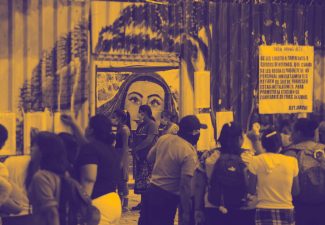
This opportunity, for the second semester of 2026, allows for the exchange of tools and research-action strategies developed at Dejusticia, as well as the contributions of interns and fellows with their own experiences and those of their organizations.
Read MoreSilvia Rivera Cusicanqui and Multispecies Justice in the Andes

This essay is part of Indigenizing International Law: Multispecies Justice from Inverse Legal Anthropology, a forthcoming book developed over fifteen years between the University of Kent and Dejusticia.
Read MoreChildren defenders of human rights

The Constitutional Court of Colombia recognizes for the first time that children have the right and duty to defend human rights.
Read MoreThe binationality of the Wayuu people: the pending debt of Venezuela and Colombia

The Wayuu arrive in Colombia to seek refuge but crashes with a wall that prevents them from accessing social services and fundamental rights: the Colombian State has not recognized the binationality of the Wayuu people in practice.
Read MoreThe binationality of the Wayuu people: the vision from their cosmology

The Wayuu people have demanded the recognition of their binationality, appealing to the legal and political link that unites them with Colombia and Venezuela, which should translate into a full guarantee of rights and citizenship in both countries.
Read MoreEnergy transition and human rights in the Global South

The lack of a human rights and energy policy feeds the growing conflict in the territories. It will be hard to end all forms of violence associated with our reliance on fossil fuels at any cost until we decide to retrace our steps by focusing on a just transition.
Read MoreResisting authoritarian tendencies in Latin America
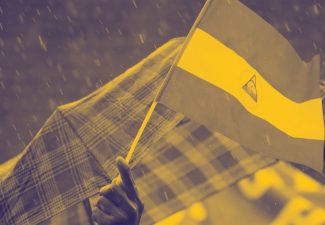
Although the fight against authoritarian tendencies cannot be addressed simply with rights and the people who defend them, we believe that these types of strategies, insofar as they articulate different social sectors, contribute to the deepening of democratic practices.
Read MoreColombian Democracy in the Streets
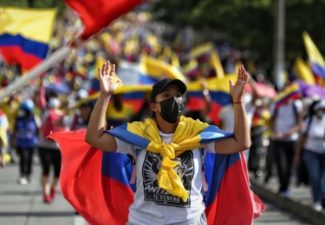
Confronted with the violence in the protests, the government and political leaders, as well as social leaders, must first promote the de-escalation, putting human rights at the center of the crisis management.
Read MoreGender discrimination in Football. Building a Toolbox Toward Gender Equity in the Beautiful Game
As the most popular sport worldwide, football (or soccer) may be the poster child for lingering gender disparities in sport.
Read MoreFrom Snow Angels to a Humanitarian Emergency
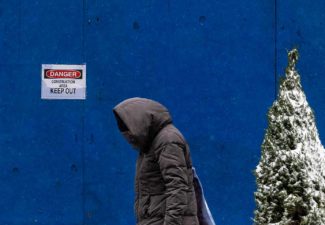
If States like Texas with ample means to tackle climate change fail to do so, the world as a whole fails given that the planet loses momentum in the collective effort to become more resilient against this phenomenon.
Read MoreData Feast: Enterprises and Personal Data in Latin America

Google, Amazon, Facebook, Apple, and Microsoft now possess an ability to reconfigure the behaviour of individuals, clients, and citizens globally. How Brazil, Chile, Colombia, and Mexico are responding?
Read MorePandemic Inequality: Civil Society Narratives from the Global South
The contributors to this book, writing from different perspectives, invite us to consider what we can learn from the interplay between the pandemic and inequality in order to spur a creative reorientation of collective mobilization and advocacy toward the future.
Read MoreIN FOCUS: Facial Recognition Tech Stories and Rights Harms from around the World

The indiscriminate use of Facial Recognition Technology (FRT) globally by law enforcement and other government agencies is dangerously normalising surveillance. The full harmful impacts and effects of this technology on people’s lives are only beginning to emerge. A new INCLO report showcasing FRT stories from around the world flags the risk of creating societies where…
Read MoreDespite Biden’s Victory, Authoritarian Populism Continues to Threaten U.S. Democracy
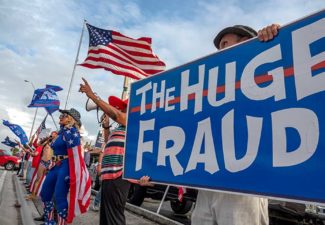
The Republican Party violates norms which protect democracy more frequently than 85% of other political parties leading democracies around the world. Their lack of commitment to these norms shows that the U.S. political system could be weakened even further if another antidemocratic leader comes to power.
Read MoreThe Peruvian crisis and abusive constitutionalism

The Peruvian Congress declared the vacancy or removal from office of President Martín Vizcarra, invoking Article 113 of the Constitution. The procedure appears to be formally appropriate. But the matter is more complicated than that.
Read MoreProtecting Human Rights on the Ground
During the investigation, the presence of OHCHR completed its first six months in Venezuela, so a consultation with human rights defenders in the country was included to assess this experience. Being the first comparative research in this field, its findings are equally of interest to other audiences beyond Venezuela.
Read MoreInternational Humanitarian Law and Victims of Child Recruitment as Targets of an Attack
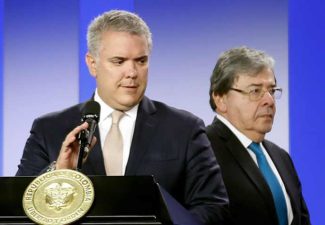
An interpretation of the spirit of IHL, manifested in the principles of military necessity and humanity, as well as the IHRL standards applicable to children, should always prohibit the State from causing excessive death or injury. There is nothing more excessive than killing recruited children —vulnerable, discriminated against, and abandoned by the State— in order to gain a military advantage that could have been achieved through other means.
Read MorePeace during Covid-19 in Colombia

In this second policy briefing, we discuss the implementation of the Final Peace Agreement, its already rocky implementation before the COVID-19 pandemic and some of the greatest challenges as a result of the pandemic.
Read MoreThe Duque Government Before the United Nations: A Zero in Conduct
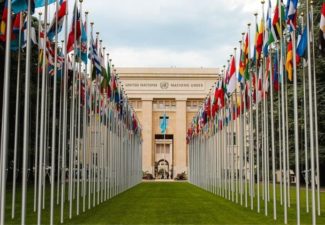
Above all of this disorder, something remains constant: the Duque government’s decided interest to weaken international supervision of human rights not only in the Interamerican system, but also in the United Nations.
Read MoreTax justice as an opportunity
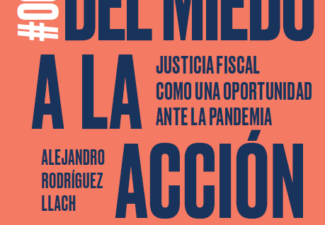
Es momento de que los Estados apliquen políticas fiscales expansivas con un enfoque progresivo y de derechos humanos, que logren garantizar los DESC de los hogares más vulnerables, y, al mismo tiempo, estimular la economía protegiendo el empleo y la liquidez de las pequeñas y medianas empresas.
Read MoreConfronting COVID-19 in Colombia
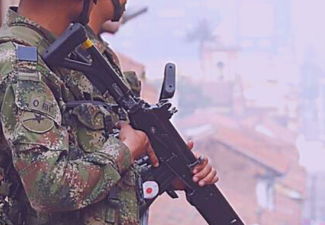
This is the first of three policy briefings, which are part of a COVID19 in Colombia series. The policy briefing series seeks to provide relevant and timely information to academics who are conducting research, or plan on doing so in Colombia, related to the human rights impacts in Colombia and the implementation of the peace…
Read MorePacigerence: Legal Status of Peace Agreements Under International Law
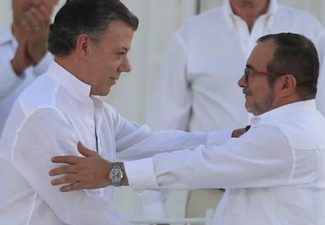
This article explores the exist- ing legal instruments which may confer binding force to such agreements at the international level —an international treaty between a State and an insurgent group, an international treaty signed by a State and third-party States, a special agreement under international humanitarian law, a UN Se- curity Council resolution, and a unilateral declaration of a State—.
Read MoreSummary of the CEDD regional report
This document is a summary of the report Cannabis in Latin America: The Green Wave and Challenges for Regulation
Read MoreThe reform that gives stability and legal certainty to the Peace Agreement is constitutional
Dejusticia defended the constitutionality of the Legislative Act that gives legal certainty to the Final Agreement, and stressed that its contents respond to fundamental rights and international humanitarian law norms.
Read MoreThe Constitution of 1991 is open to peace and the profound changes it requires
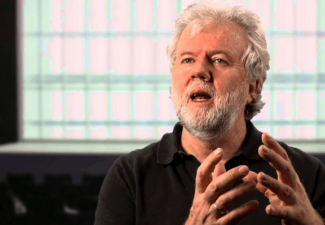
What is the nature, scope and type of control that the Constitutional Court must exercise over the Legislative Acts issued to implement the Final Peace Agreement? Intervention by Rodrigo Uprimny before the High Court.
Read MoreDejusticia defended a decree that allows the Court to suspend terms of ordinary proceedings and focus on the implementation of peace
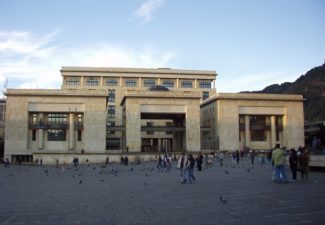
Dejusticia defended the decree that allows the Constitutional Court to suspend ordinary processes to concentrate on the norms that implement the Peace Agreement, but emphasized that this interruption can not be undefined.
Read MoreDejusticia intervened regarding the constitutionality of the Search Unit for Missing Persons
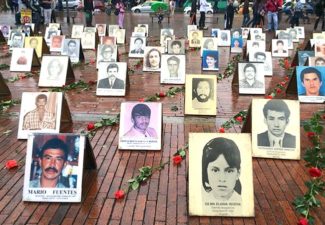
The decree meets the formal and material requirements to be declared enforceable. The decree was issued by the president, who is the competent authority and is also aligned with the criteria of connectedness and strict necessity.
Read MoreDecree that created the National Comprehensive Program for Crop Substitution is constitutional
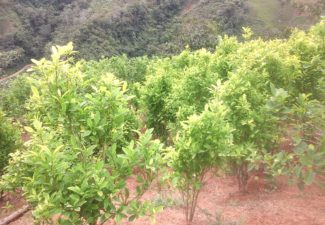
In an intervention before the Constitutional Court, Dejusticia argued that this norm conforms to the Constitution. However, the organization warned that the deadline to determine the beneficiaries should be reconsidered because it could leave out a group of peasants living in poverty.
Read MoreDejusticia intervened before the Constitutional Court against censorship of a health-related commercial

We support the freedom of expression of the NGO Educar Consumidores. They had released a commercial that talked about the content and health effects of sugary drinks, but the Superintendency of Industry and Commerce ordered to suspend its transmission.
Read MoreDejusticia and Cimarrón intervened before the Constitutional Court to oppose racial discrimination in the workplace
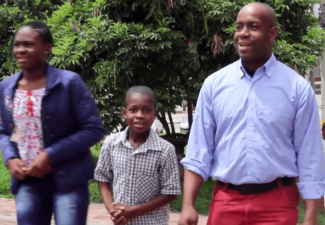
The Constitutional Court is about to end the legal struggle that Jonh Jak Becerra undertook six years ago, after being a victim of racial discrimination at work. Dejusticia and Cimarrón called for the protection of the rights to equality, non-discrimination, decent work and due process.
Read MoreDejusticia intervened in defense of the non-discrimination of immigrants due to ideological reasons

Dejusticia intervened before the Constitutional Court in the process of revision of the immigration and foreigners law of 1920, which considers communist and anarchist people as a danger to the stability of the public powers.
Read MoreIntervention on the protection of information on content related to sugary drinks

Twenty-three citizens, members of the Food Health Alliance, filed an intervention before the Superintendency of Industry and Commerce in the ongoing proceedings against the Educar Consumidores commercial, which presented the sugar content of different drinks available in the market.
Read MoreInterventions in lawsuits against four aspects of the New Police Code

Dejusticia carried out citizen interventions regarding the constitutionality of Police Code articles that establish police measures for several categories of persons and activities.
Read More