


Catatumbo: humanitarian crisis and internal unrest

Dejusticia intervenes before the Constitutional Court to debate the limits of states of emergency in the face of the humanitarian crisis and armed violence.
Read MoreLitigating also means imagining possible futures

Strategic litigation is more than a ruling: it is a tool for challenging narratives and transforming realities. Learn about three key cases from Dejusticia on data protection, control of power in Catatumbo, and the defense of child defenders.
Read MoreCivil society and the legality of public administration: the Google case

We analyze the case of the SIC against Google for data protection in Colombia and the importance of citizen participation in the face of Big Tech’s power.
Read MoreInclusive cities: stories of exclusion and resistance

Building these cities is not just a matter of infrastructure or technical regulations, but a political and social commitment to ensure that everyone has a dignified place to live, participate and thrive.
Read MoreApply to the 2026 Global South Fellowship Call

This opportunity allows human rights defenders to develop their projects and take part in an academic and cultural exchange in a safe space. Apply before January 21.
Read MoreNational sentiment on Santa Rosa Island

The dispute between Peru and Colombia over Santa Rosa Island distracts attention from environmental issues (sedimentation, deforestation). We analyze how the resurgence of nationalism and electoral rhetoric are hindering diplomatic efforts to resolve the conflict in the Amazon River.
Read MoreThe tragedy of the Amazon

The Amazon lacks effective supranational protection. We analyze how the logic of national sovereignty and the weakness of the ACTO prevent a coordinated response to deforestation and extractivism, urging binding solutions and regional funds.
Read MoreNationalism and Other Old Demons

We analyze the resurgence of nationalism, its manifestations from national consciousness to its pathological form, and how populist leaders exacerbate it, supported by digital technology, threatening democracy and human rights.
Read MoreThe Limits of the Nation State in Today’s World

The resurgence of nationalism threatens democracy, international law, and stability. This edition analyzes its manifestations, from xenophobic migration policies to institutional fragility in the Amazon and border conflicts in the Global South.
Read MoreWhy the U.S.’s boat strikes are illegal and should concern us all

These extrajudicial executions are unilateral actions that threaten the sovereignty of Latin American and Caribbean countries, but even more seriously, they violate the right to life of people.
Read MoreDigital Transitions in Transitional Justice

The digitalization of transitional justice should not be seen as a long-term solution, as it can never replace the visceral dynamics of in-person human interaction and emotion, both essential in transitional justice processes.
Read MoreThe Human Rights-based Approach: The Pending Issue of the Migration Law
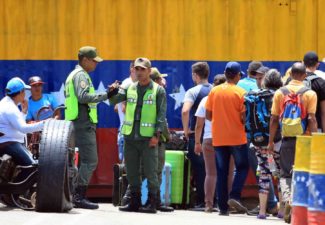
Although the Colombian government has implemented a series of measures to assist the Venezuelan population, this response has been sectorized and short-term in nature.
Read MoreThe Right to Have Rights: A Debate on Nationality in Colombia
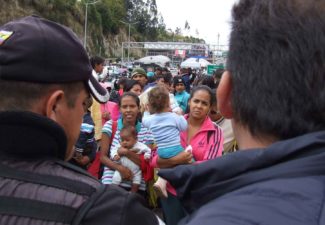
Over ten human rights organizations appeared before the Constitutional Court asking to adopt the definition of domicile contained in the Civil Code, as provided in the Political Constitution and Law 43/1993
Read MoreThe Sarayaku and the Inter-American System on Human Rights: Justice for the “Medio Dia” People and their Living Jungle
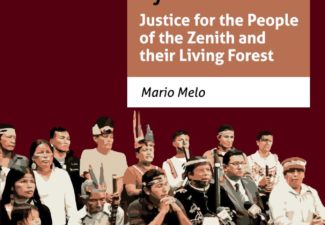
Mario Melo Cevallos, lawyer of the Kichwa people of Sarayaku, presents his version of the history of resistance and mobilization of the indigenous people before the State plans to exploit the oil that was in the heart of the Amazon.
Read MoreFrom repression to migration: The case of Rufo Chacón
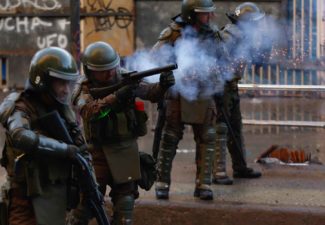
Rufo Chacón, in the company of his mother, is preparing to travel to Spain, where he will get the surgical intervention needed to improve his condition.
Read MoreParticipation in Transitional Justice Measures: A Comparative Study

The study analyzes participatory scenarios involving not only victims but also civil society in a broader sense, as the latter has also been very important for the
promotion, adoption, and implementation of transitional justice measures.
Accountability of Google and other data-driven business models: data protection in the digital age
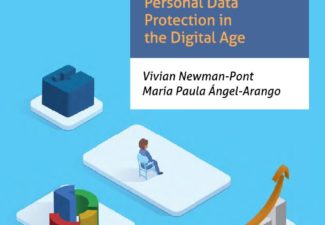
In this document we analyze the privacy policies of 30 companies with data-driven business models that collect data in Colombia and identify practices that have not been sufficiently contemplated by the personal data protection regime currently applicable in our country.
Read More4 Key Strategies to Reducing Sexual Violence Against Children

With the launch of the Alianza initiative, there is hope for a comprehensive change in sexual violence against children. But as always, effective implementation of such an ambitious program will undoubtedly have many challenges.
Read MoreFraught with Pain: Access to Palliative Care and Treatment for Heroin Use Disorder in Colombia
This books seeks to facilitate linkages between discussions on the right to health and discussions on drug policy reform. The populations we talk about here are the noes most in need of a change whereby drug culture measures cease to stand in the way of a life free from pain.
Read MoreLosing Ground: The Sixth Extinction and Development

The changes we have triggered on Earth shatter the distance and sense of remoteness that have governed our relationship with other species and the environment. This is a call to once again recognize our profound interdependence with our environment and protect it—if not for nature’s sake, then for our own.
Read MoreWaiting to Advertise: Children and Junk Food

The strategy, then, is simple: companies assure themselves a client for life, without the person even knowing they’re being sold something.
Read MoreSentences for drug traffickers from South America’s Pacific

The harshest sentences are served by transporters who, in most cases, are dispensable actors in the value chain of narco-trafficking, and who are committing the crimes because of the marginalized and impoverished conditions in which they live.
Read MoreThe Sierra, Displaced

I thought about their story, the people and the situations they must have faced. I honored that by feeling the strength of the land and that the stone had witnessed the same. –Tiokasin, Lakota leader
Read MorePrisons: What Force Can’t Do
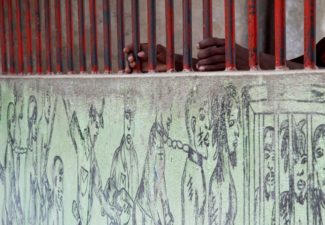
“Heavy-handed” policies on crime in many countries in the Americas have not only brought prisons to crises around the continent, but have also failed to reduce crime and recidivism. A more humane penitentiary system, not one of terror, seems to be the solution that our continent needs.
Read MoreBeyond the Binary: Securing Peace and Promoting Justice after Conflict
The main objective of Beyond the Binary is to place on record the need to formulate answers to the question of the role that criminal action and punishment should play in negotiated political transitions from war to peace.
Read MoreTransnational Advocacy Networks

Activists, particularly those based in the global South, have accumulated a wealth of experience in dealing with a range of transnational networks operating in diverse issue areas. New theoretical understandings have reflected this accumulating experience.
Read MoreEntre coacción y colaboración: Verdad judicial, actores económicos y conflicto armado en Colombia
While it is clear that many of the economic actors lack responsibility in the conflict and others have been victims of it, some research has shown that some did have a decisive role in the origin, development and perpetuation of the cycles of armed conflict in the country.
Read MoreWhat should not be told: Tensions between the right to privacy and the access to information in cases of the voluntary termination of pregnancy
This document attempts to illustrate and analyze some of the tensions that exist between the right to privacy and other relevant constitutional rights and duties, such as the right to information and the duty to report in the context of the partial decriminalization of abortion in Colombia.
Read MoreJustice through Transitions: Conflict, Peacemaking and Human Rights in the Global South
What does justice mean in times of transition? What kinds of possibilities and dissapointments emerge from processes of seeking justice through transition? How might we understand these processes through narrative?
Read MorePalliative Care: A Human Rights Approach to Health Care
This edition is an English translation of “Cuidados paliativos: El abordaje de la atención en salud desde un enfoque de derechos humanos”, published by Dejusticia in August 2016; the data was not updated for the English translation.
Read MoreDejusticia’s intervention on behalf of the right to health and food of the Vaupés indigenous people
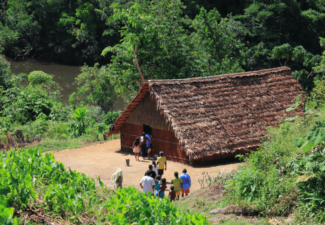
Dejusticia intervened before the Constitutional Court in support of a tutela filed on behalf of indigenous peoples in Vaupés for violations of their right to health.
Read MoreIntervention by Dejusticia and other organizations in favor of the right to food and water of the Wayúu children
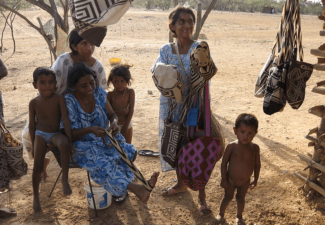
Dejusticia intervened before the Constitutional Court in support of a tutela on behalf of Wayúu children in La Guajira, for violations of their rights to food and water.
Read MoreRequest Under Colombian Freedom of Information Laws

Our request highlights both what has been done and what remains to be done for the creation and implementation of the Legal Commission for Monitoring Intelligence and Counterintelligence Activities.
Read MoreLawsuit to protect the right of access to public intelligence information

Dejusticia filed a lawsuit challenging Decree 857 of 2014, which regulates the Colombian Law of Intelligence and Counterintelligence, for violating some of the necessary requirements that must be fulfilled before the right of access to public information held by intelligence agencies can be restricted.
Read MoreDejusticia intervened in defense of the amnesty law
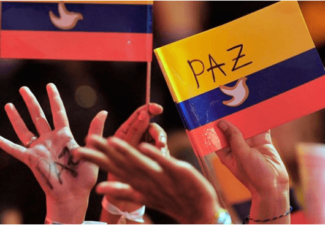
Dejusticia intervened before the Constitutional Court in the process of constitutional revision of the law that grants amnesties, pardons and special penal treatments (Law 1820 of 2016).
Read MoreIntervention before the Constitutional Court in the revision of Decree-Law 249 of 2017, which regulates a specific hiring process for manual eradication for the implementation of the peace process

Dejusticia asked the Constitutional Court to declare invalid Decree-Law 249 of 2017 (DL 249/2017), for two reasons: in issuing this rule, the President of the Republic exceeded the special powers for peace because it did not demonstrate the strict necessity to regulate this subject by this extraordinary way; and the contracting procedure that regulates DL 249/2017 violates the constitutional principles governing public procurement.
Read MoreIntervention before the Inter-American Court of Human Rights in follow-up to the situation of the Sarayaku people of Ecuador
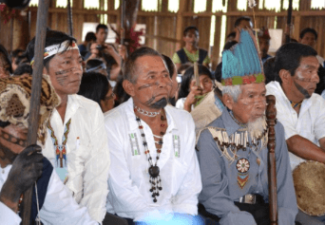
Dejusticia, EarthRights International and the Foundation for Due Process presented an intervention before the Inter-American Court of Human Rights in the follow-up that this court is giving to the situation of the Sarayaku people of Ecuador.
Read MoreIntervention in an advisory opinion before the Inter-American Court of Human Rights in relation to gender identity and economic rights of same-sex couples
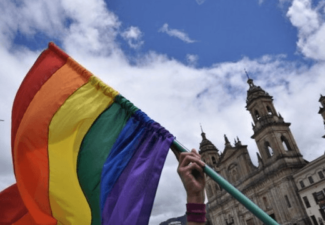
On December 6, 2016, the Inter-American Court of Human Rights invited Dejusticia to present written comments, within the framework of an Advisory Opinion requested by the State of Costa Rica in May 2016.
Read MoreIntervention in the lawsuit against the 122 article of the criminal code related to abortion

The Constitutional Court’s Sentence C-355 of 2006 studied the constitutionality of article 122 of the criminal code, which typifies abortion and decriminalizes it in three circumstances.
Read MoreDejusticia Files Suit to Protect the Right to Privacy Under the New Police Code in Colombia

Dejusticia filed a lawsuit before the Constitutional Court, arguing that several articles of Colombian Law 1801 of 2016 (Police Code) violate the right to privacy.
Read More