


Climate change lawsuit: from theory to action
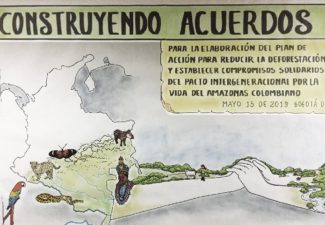
Dejusticia and the Ministry of Environment met with government agencies, academia, and civil society to build together a path forward to comply with the Court’s orders to stop deforestation in the Amazon.
Read More25 Voices Against Deforestation
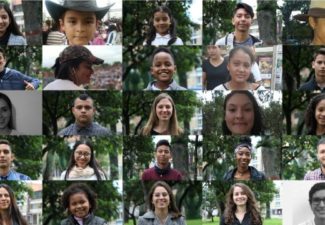
From 17 cities around Colombia, these boys, girls, and young adults between the ages of 7 and 26 were the impetus for the First Lawsuit on Climate Change and the Future Generations of Latin America.
Read MoreHere is how litigation for the planet won in Colombia

The lawyer for the 25 children and youth who won the lawsuit on deforestation and climate change in the Amazon narrates the case and analyzes the subsequent steps to implement the historic ruling of the Supreme Court.
Read MoreHelp us build the Intergenerational Pact for the Amazon

The government and the 25 children and young people who filed a lawsuit to stop deforestation in the Amazon and tackle climate change must now create a plan to achieve this goal. Everyone can join the effort to protect this ecosystem.
Read MoreRegistration open for course on ‘Business and human rights: doctrine, practice, and strategy’
This course focuses on doctrine, practice and strategies for the implementation of human rights protections in the context of business activities. The course offers an intensive introduction to key concepts and emergent jurisprudence in the field.
Read MoreSecond Global Workshop for Indigenous Leaders
Dejusticia and the Racial Discrimination Watch announce its call for applications to the Second
Global Workshop on Human Rights Strategies for Indigenous Leaders. The workshop will take
place on December 2018.
Climate Change and Future Generations Lawsuit in Colombia: Key Excerpts from the Supreme Court’s Decision
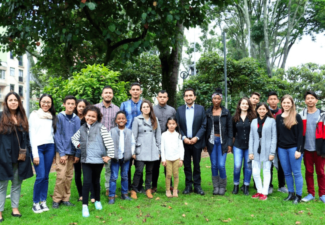
The Supreme Court of Justice ordered the protection of the Colombian Amazon from deforestation, ruling in favor of a group of 25 children and youth, who with the support of Dejusticia, sued the Colombian government for failing to protect their rights to life and a healthy environment. Here are key excerpts from the sentence.
Read MoreDejusticia launches groundbreaking playbook for the human rights field against populism
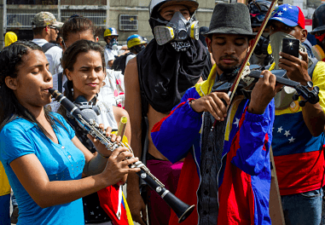
At the Defenders’ Days, during the international conference of human rights defenders organized by Civil Rights Defenders in Sweden, Dejusticia has launched the edited volume Rising to the Populist Challenge: A New Playbook for Human Rights Actors.
Read MoreIn historic ruling, Colombian Court protects youth suing the national government for failing to curb deforestation
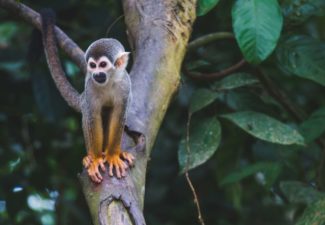
The Supreme Court of Justice ordered the protection of the Colombian Amazon from deforestation, ruling in favor of a group of 25 children and youth, who with the support of Dejusticia, sued the Colombian government for failing to protect their rights to life and a healthy environment.
Read MoreJury Finds Former Bolivian President and Defense Minister Responsible for Extrajudicial Killings of Indigenous People
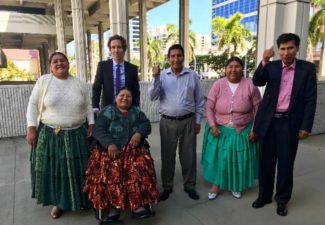
Gonzalo Sánchez de Lozada, and Carlos Sánchez Berzaín, ordered security forces in Bolivia to use deadly military force against unarmed civilians to suppress popular protests against government policies. In all, security forces slaughtered 58 citizens and injured more than 400, almost all from indigenous Aymara communities.
Read MoreIndolence against femicide

According to Forensic Medicine, of the 50,707 case of domestic partner violence registered in 2016, 86% were for violence against women, violence that in many cases ended in femicides.
Read MoreThe Pope’s message
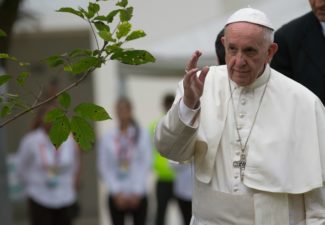
Francis has a powerful message of unity, not only for Catholics, but for all; a message based on a simple, basic morality of brotherhood, solidarity and respect.
Read MoreFrancis, extreme environmentalism?
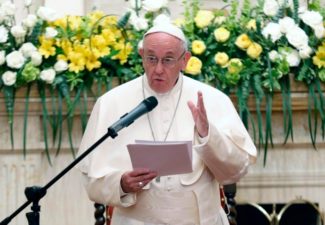
To take seriously the visit of Pope Francis is to take seriously his message on the environment. The central idea of Francis’ ecological encyclical is as simple as it is conclusive: everything is interconnected.
Read MoreUndue pressure in the wrong direction

Why let the United States continue to pressure the government to deal harshly with communities that plant coca, if the problem lies in the ban promoted by the U.S. and delays in rural development in Colombia?
Read MoreIs it possible to build a bridge between the Catholic Church and LGBTI people?
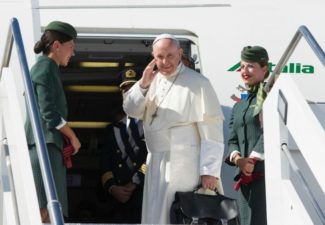
The Church should abandon its moral superiority and open the mind and heart to see the daily discriminatory acts against the LGBTI community around the world.
Read MoreJudicial misinformation
We do not really know how many cases the justice system receives and solves every year. We also do not know how many civil, labor or family cases are registered, nor how many cases of certain behaviors like domestic violence are processed in the country. And no one seems to care about the absence of reliable information.
Read MoreThe fantasies of “homo sapiens”
After having beaten its competitors and almost all other species, today humanity’s main enemy is itself.
Read MoreThe rise of robots
We cannot ignore the rise of artificial intelligence. In the next 10-20 years, about half of paid work will be at risk. How to adapt education and employment accordingly?
Read MoreColombia must not cry another avoidable tragedy
In Colombia, climate change and risk mitigation issues do not escape the political struggles in which almost all the issues on the national agenda end up. It is common to see how public policies approaches do not respond to the need of the territories.
Read MoreOpportunities left behind by the crisis
The backwardness of Cartagena’s social welfare has much of its roots in corruption and the successive institutional crises that it has produced. Except for honorable exceptions, clientelism has been the governance model, which includes bribing oversight authorities to guarantee impunity.
Read More