


Dejusticia and other organizations support the case brought before the United States Supreme Court to protect the right to non-discrimination of same-sex couples

The United States Supreme Court will hear the case of a same-sex couple in Colorado who was denied a cake for their wedding by a pastry chef claiming religious (specifically Christian) objections. In an intervention presented before this Court, Dejusticia and other organizations of the INCLO network supported the couple’s right not to be discriminated against.
Read MoreRegarding the approval of the legislative act that creates the special circumscriptions of peace
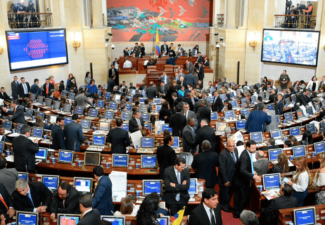
More than 100 organizations, citizens and academics signed a document addressed to the public, the President of the Senate and to the President of the Republic, where they explain why the bill of the legislative act that creates the special circumscriptions of peace was approved in the Senate.
Read MoreKufu, marketing or social responsibility?
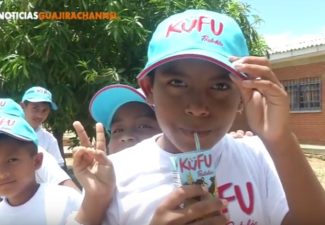
To launch its new line of children’s beverages, Kufu, Postobón donated the product to indigenous communities in La Guajira. Doctors say that the initiative seems more of a market strategy than a true contribution to food security.
Read MoreWith tutela, 1,700 male and female peasants ask to be included in the census
“For peasants to count, they have to be counted,” is the slogan of the plaintiffs who have been rejected by the government during the last two years after asking to be identified in the 2018 census.
Read MoreGuide to clarify rumors about the Peace Agreement
In light of the inaccurate impressions, misinterpretations and half-truths that are circulating, we consider it necessary to clarify what the Government and the ex-guerrilla of the FARC-EP really agreed on, and how those commitments are being implemented.
Read MoreThe Constitutional Court recognizes the right of consumers to access information about the health effects of sugary drinks
The Constitutional Court ruled in favor of a tutela filed by Dejusticia and other organizations that make up the Food Health Alliance. This is an unprecedented ruling in favor of consumers in Colombia.
Read MoreComments on the statutory bill to implement the Special Jurisdiction for Peace
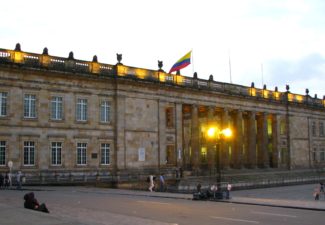
Academics and social organizations, including Dejusticia, analyzed the political convenience and the constitutional justification of the project that is being discussed in Congress.
Read MoreDejusticia and GPAZ’s suggestions so that differentiated criminal treatment does not remain on paper
In the Peace Agreement, the Government committed to give up criminal actions and penalties against small farmers and people living in poverty, involved in illicit crops. To date, no law has been approved for this purpose. Here, we outline our proposals.
Read MoreRegulate the illicit market: a drug policy model with a human rights approach
In a publication by the KAS Foundation, Dejusticia researchers analyze the costs and benefits of different strategies used in the so-called war on drugs.
Read MoreA Nobel Prize Winner in Economics to Take Care of Water
There are hundreds of mechanisms that as a society we can use to protect the environment, but policies are often based on humans being homo economicus and on the assumption that we need changes in prices or penalties to change our habits.
Read MoreThe forgotten migrants of Venezuela
The lack of memory of Latin Americans explains why the region knows so little, and does less, about the situation of more than one million Venezuelan migrants who have arrived in our countries during the last five years.
Read MoreThe assets of the FARC: a litmus test for the ‘fast-track’

Opposition groups that disagree with the peace process pledged to “lash out” in the new legislature against Santos-issued fast-track decrees. The next debate will center around the inventory of FARC assets.
Read MoreThe ghost of fear
Social leaders working on the implementation of the Peace Agreement live in fear of being called guerrilla members, running away from the arbitrary arrests of the past.
Read MoreGentrification: Borders that amplify inequality
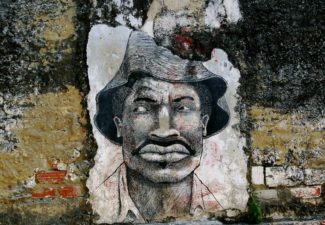
In Latin America, gentrification processes affecting social and cultural rights of economically vulnerable populations are becoming more common. In light of these scenarios, there is a clear need to demand the state to carry out urban transformations at the same time it protects memory, cultural expressions, and other elements that characterize our neighborhood.
Read MoreSatire, slander and democracy
Former President Uribe resorted to a forbidden speech (slander) to attack a speech protected in democracy (satire), which Daniel Samper Ospina uses in his columns.
Read MoreAntioquia is offended
The Antioquia that the former president Uribe says is offended with the satire of Samper Ospina is the uncompromising and unscrupulous Antioquia.
Read MoreHumor against power
The slander of former President Uribe against Daniel Samper Ospina shows that satire is becoming more and more uncomfortable, as more left and right-wing populist multiply.
Read MoreDear Congress members, too much noise around the Special Jurisdiction for Peace!
The proposals asking to remove the application of the Special Jurisdiction for Peace to military and civilians ignore the complex dynamics of the armed conflict.
Read MorePayments for environmental services: a conservation tool or nature’s commodification?
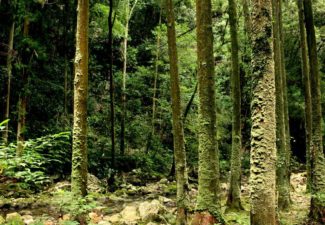
Clean air, fresh water, food production, climate regulation, biodiversity protection and carbon storage are just a few of the ecological benefits we receive from nature. Should we pay for those services? How do we value them? Should we pay for the fact of preserving or because it helps humans?
Read MoreConstituting a black hole
The Constituent Assembly proposed by Venezuelan President Nicolás Maduro will consume what remains of democracy in Venezuela. It will also make Maduro a dictator who will control all the powers of the state. The international community must vigorously oppose it.
Read More