


Research reveals that much of the control over food and beverage advertising rests solely on the industry’s self-regulation

Dejusticia researched what measures the Colombian State is taking to control advertising of unhealthy foods and beverages in children, and identified the regulatory gaps that exist to suggest key areas of state regulation.
Read MoreAsk the cocalera women, they have answers
During the implementation of the Peace Agreement, women growers should have the opportunity to say in what ways to transform their territories, and how the promise of a peasant and solidarity economy and lasting peace could be realized.
Read MoreCrisis in Venezuela: Why isn’t this just another protest?
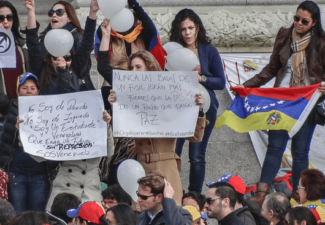
Dejusticia invited two human right defenders of the NGO Provea (Venezuelan Education-Action Program on Human Rights) to visit Colombia and explain in detail the current profound political and social crisis that the neighboring country faces.
Read MoreOpen Applications to the 15th International Human Rights Colloquium

If you are a human rights activist or an agent of social transformation in Latin America, Africa or Asia, apply to the 15th International Human Rights Colloquium, which will take place in Sao Paulo, Brazil, from October 1 to 6, 2017.
Read MoreGpaz and Dejusticia recommend the application of a gender based approach in criminal policy bill
The Working Group on Gender in Peace (GPAZ) and Dejusticia presented an analysis of Bill No. 148 of 2016 (currently in the Senate). The bill is currently being handled by the First Commission and amends provisions of the Criminal Code, the Code of Criminal Procedure , the Penitentiary and Prison Code, and the Childhood and Adolescence Code.
Read MoreNo one responds to racial discrimination at work in Colombia
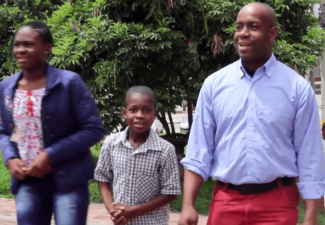
The Constitutional Court is about to end the legal struggle that Jonh Jak Becerra undertook six years ago, after being a victim of racial discrimination at work. Dejusticia and Cimarrón intervened before the Court, calling for the protection of the rights to equality, non-discrimination, decent work and due process.
Read MoreThe implementation of transitional justice in Colombia will guide other peace processes around the world
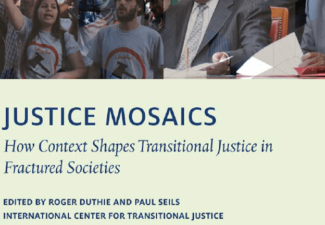
A new book by the International Center for Transitional Justice includes a chapter on Colombia written by two of our researchers.
Read More“Do not mess with my kids: No to gender ideology”
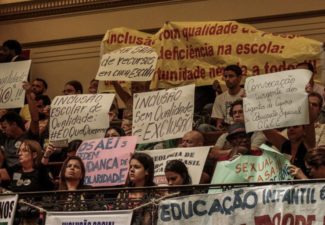
Leaders of Christian churches, conservative sectors, and parents worried about the influence of the State on their children’s sexual education have taken to the streets to defend traditional family values across Latin America.
Read MoreNew article by our Director on reimagining human rights
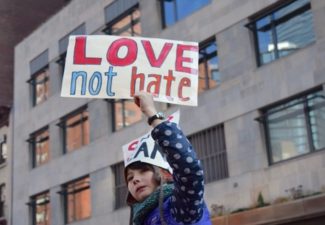
Our Director, César Rodríguez, published the article “Reimagining Human Rights” in the Journal of International Law and International Affairs.
Read MoreWe have a new scientific panel supporting our work: social sciences need natural sciences

The idea of this panel is to complement our work with the natural sciences.
Read MoreAddressing the Slave Trade
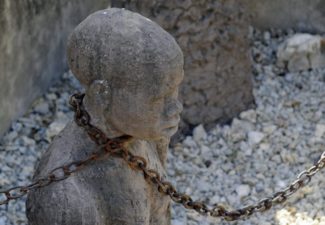
There is an increasing interest by several countries in the Global South, specifically in Latin America and the Caribbean, to advance the discussion on the possibility of demanding reparations from former colonial powers and certain public and private institutions for the role they played in the transatlantic slave trade.
Read MoreA referendum against children
The House of Representatives, in deciding whether or not to support the referendum on adoption promoted by Viviane Morales, will have to analyze whether that reform really protects children and teenagers, as the senator maintains, or whether it affects them very negatively. El referendo propone que sólo puedan adoptar parejas heterosexuales, con lo cual…
Read MoreSantos: Siding With the Ministry of Health or the Ministry of Commerce?
It is well known that the management of President Santos is prudent and allows disagreements between ministers. The style has advantages because it explores options and encourages a healthy diversity.
Read MoreConstitutional Control for the Police Code
The constitutional control of the Police Code is absolutely necessary to prevent arbitrariness against citizens , to which the Congress of the Republic left us exposed.
Read MoreGlobal tensions and local leadership
In the current global context, hopelessness can only be overcome through local leadership, which through concrete actions on a daily basis restores community ties and prevents the promotion of polarization.
Read MoreKidnapping and IHL
It is not coherent for the ELN to say it respects international humanitarian law (IHL) and seeks peace negotiations that meet the aspirations of Colombian society while it keeps practicing kidnapping for ransom.
Read MoreTechnology and civilization
Countries such as Colombia try to follow the path that developed countries took in their civilization process. That is fine, however, in that attempt, countries import the technology but leave aside the culture (coordination and self-regulation of the users) that the adequate operation of that technology requires.
Read MoreSugary censorship
It is unacceptable that an economic group uses its media outlets to restrict freedom of expression and silence critics of one of its companies.
Read MoreHomophobia without borders
In the 21st century, homophobia shows its worst face in Chechnya. 100 homosexuals have been hunted as animals by the authorities and three of them were killed.
Read MoreThe 11th and 12th Commandments
Our precarious civic trust hinders collective action and hampers the development and consolidation of democracy.
Read More