


Why is having a fast-track mechanism important to implement the Peace Accord? Rodrigo Uprimny´s intervention before the Constitutional Court
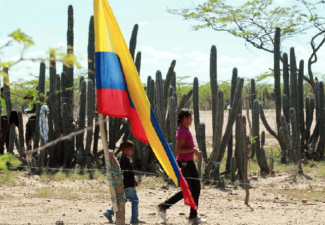
Procedures for implementing the Agreement are indispensable insofar as they aim to ensure the rapid, comprehensive and reliable implementation of the Agreement, and are consistent with the key elements of the 1991 Constitution.
Read MoreWhat are the effects of prior consultation processes in the life of indigenous peoples?
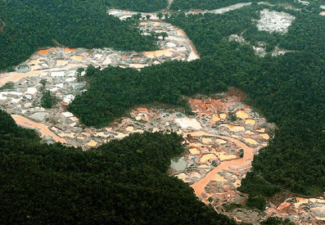
That indigenous peoples can discuss with the government at the same level: this and other effects of prior consultation in the following video.
Read MoreThe National Comprehensive Program for the Substitution of Illicit Crops (PNIS) needs more concreteness, a road map and a more global vision for integral rural development
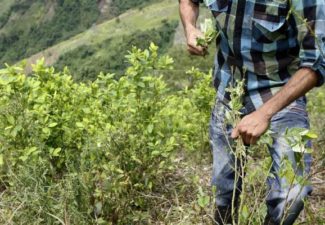
We put forward some recommendations aimed at ensuring the proper implementation of point 4 of the Final Agreement: “Solution to the Problem of Illicit Drugs”, especially in relation to the National Comprehensive Program for the Substitution of Illicit Crops (PNIS).
Read MoreLessons for Colombia from eight countries on corporate responsibility in transitional justice: report

The report includes a comparative study of eight countries (Argentina, Brazil, South Africa, Guatemala, East Timor, Sierra Leone and Liberia) that used transitional justice to judge crimes by corporate actors during armed conflicts.
Read MoreDejusticia weighs in on the Ministry of Justice´s proposal regarding differentiated penal treatment
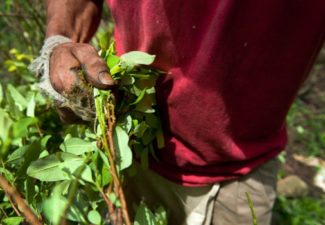
We comment the proposed draft law on the Regulation of Differential Criminal Treatment for individuals associated with the cultivation of illicit crops and women linked to small-scale drug trafficking.
Read MoreGlobal Conversations
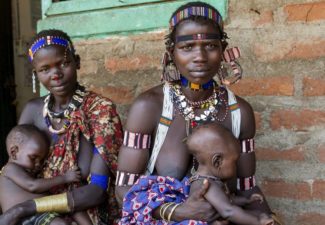
In times of an upside down world , achieving global conversations is an urgent challenge. This is suddently a new opportunity to build a global united front for a new world in which other forms of life are included.
Read MoreThe road to peace is not only about eradicating coca
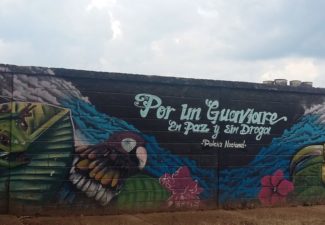
In Havana, the agreement did not only lay out the number of hectares to be eradicated, but also the means to make it possible and sustainable in order to achieve that “stable and lasting” peace that is called for in the final agreement.
Read MoreThe Shrinking of Civic Spaces: What is Happening and What Can We Do?
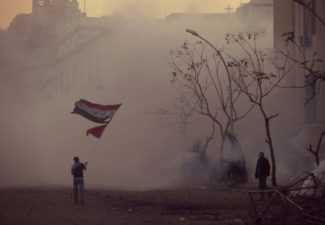
In addition to the threat of populism, human rights face another distinct, yet related phenomenon: the shrinking of civil society spaces around the world.
Read MoreSmearing the Special Jurisdiction for Peace
Those who opposed the Peace Accord, and particularly the Special Jurisdiction for Peace, have all the right to criticize it. But they do not have the right to lie in order to mislead public opinion.
Read MoreCourt Recognizes consumers’ Right to Access Information About the Effects of Sugary Drinks on Health – A First in Colombia

The Supreme Court vindicated the right of consumers to access a commercial about the health effects of sugary drinks whose dissemination had been prohibited.
Read MoreMocoa
I think it was Jacob Bronowski, the 1970s celebrated popularizer of scientific knowledge, who said that nature cannot be dominated by force, but by knowledge. What happened in Mocoa has much to do with that: a lack of preparedness that originated in a lack of knowledge.
Read MoreThe Heroism of Prevention
Atul Gawande, the notable surgeon and writer, published recently “The Heroism of Incremental Care”, a tremendous chronicle of the true heroes of his profession: those who save the most lives. He well could have written about the heroes of tragedies such as the landslide of Mocoa
Read MoreThe gap between discourse and practice for drug policy reform in Latin America
The drug policy reform movement, albeit with its internal diversity, has one main premise: prohibition of drugs has failed to achieve its goal of reducing both demand and supply for illicit substances.
Read MorePeace Implementation: What’s in the works; what already happened (and what should not go through fast-track)
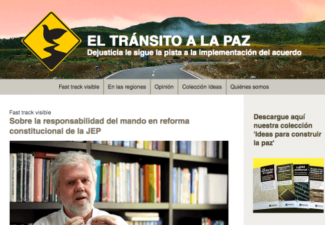
Visit Dejusticia’s web resource, El tránsito a la Paz (The Road to Peace), and view our featured “Visible Fast Track” section
Read More“Social Rights Judgments and the Politics of Compliance” published by Cambridge University is now available
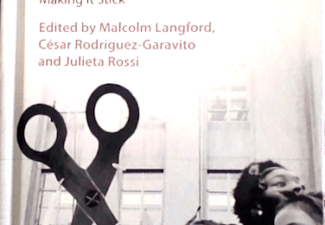
The book “Social Rights Judgments and the Politics of Compliance”, edited by César Rodríguez Garavito, director of Dejusticia, Malcolm Langford (Univ. Oslo) and Julieta Rossi (Univ. Lanús) was just published.
Read MoreMadurazo
There were no tanks attacking the civil institutions, which characterized previous coups. But in Venezuela there was a coup d’état, which intends to be judicially legalized, but that nevertheless is a democratic rupture.
Read MoreDepoliticize the essential
In every society there must be clarity about the difference between what is inside and what is outside the political debate. The decisions that the Government makes in economic, educational or health matters, for example, make part of the first.
Read More10 years of struggle: the story behind the mining consultation in Cajamarca
In Colombia, getting citizens to decide about mining in their territory has not been easy.
Read MoreProposal for the draft legislative act giving stability and security to the Final Agreement
As part of a plural group, Dejusticia presents an analysis on the political expediency and constitutional justification of Draft Legislative Act 01 of 2016 Senate (PAL 1/2016), which gives stability and legal security to the Final Peace Agreement.
Read More
The transition to peace: our commitment to democratize and contribute to the implementation process of the agreement
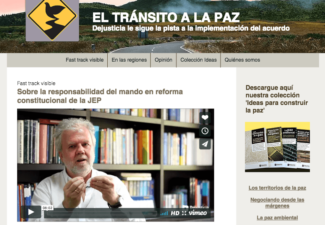
In Dejusticia, we believe that citizen participation and the transparency of the implementation process are fundamental for the construction of a lasting peace beyond what is agreed on paper. In that sense we want to contribute with the website ‘The transit to peace’.
Read More