


Clarification on Cajarmarca
Despite the interests and passions at stake, we must accept and debate with arguments the decision of the inhabitants of Cajamarca to ban mining and protect the water and agricultural interests of their municipality.
Read More“If there is no water for the people, there is no water for the palm”: the ‘peace’ conflicts of Marialabaja
The Montes de María subregion in the Colombian Caribbean has been living for ten years what is now called postconflict: the absence of formal armed actors in the territory and the government’s commitment to guarantee rights and non-repetition.
Read MoreVenezuela, welcome to Colombia
Our Venezuelan brothers and sisters are migrating to Colombia in search of a dignified life. The authoritarian regime of Nicolás Maduro is creating the worst humanitarian crisis in Venezuela.
Read MoreAn organization with collective leadership: our history reviewed in the Leader Network
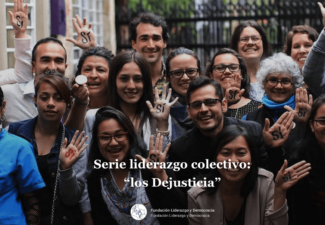
The Leader Network chose Dejusticia to initiate the series of profiles on collective leadership. The profile published in Silla Vacía investigates three fundamental measures of leadership: vision, example and results.
Read MorePopular consultations are constitutional, binding and do have effects on mining concessions
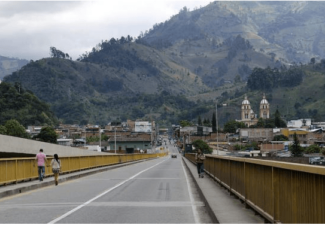
Read here our clarifications about the scope and binding nature of the consultation.
Read MoreThe first four books of the “Ideas for Peace Building” collection are already available

The series, which will have a total of ten texts, seeks to provide thematic documents that offer diagnoses and proposals on some of the post-agreement challenges.
Citizen constitutionalism
Clemenceu once said that war is too serious a matter to leave to the military alone. I also believe that the Constitution is too serious a matter to leave to the constitutional courts alone.
Read MoreCall for applications to the fifth Global Action-Research Workshop is now open
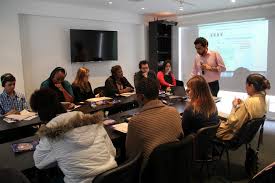
The purpose of the workshop is to strengthen the research, writing and advocacy capacity of its participants and their contributions to their organizations and the international human rights movement in general. Call open until 31 March.
Read MoreWho is a populist?
Populists are, in the end, antidemocratic. What’s more: they use democratic election and the language of democracy in order to undermine it.
Read MoreStates must guarantee the ESCR of refugees and migrants
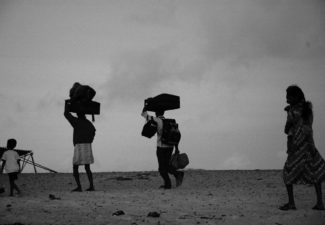
The Committee on Economic, Social and Cultural Rights (ESCR) published a new press release clarifying the obligations that derive from the International Covenant on ESCR regarding refugee and migrant populations in each country.
Read MoreBeing detained for arguing with the police?
Last Friday at 11 pm, a friend who I was with received a call from two of her friends who told her they were being taken to the UPJ for having a beer in the Park of the Hippies in Bogotá
Read MoreThe Many Fundamental Rights That Were Violated as to the Wayúu Population: Special Report by Dejusticia
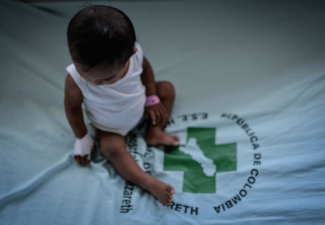
On March 9, 2017, Dejusticia presented a report in support of the Constitutional Court’s inspection of La Guajira. This on-site visit by the Court was part of its follow up on a tutela filed by a private citizen, which complained that Wayúu children were being denied the rights to health, food, and potable water (process T-5.697.370). The goal of Dejusticia’s supporting report was to provide complementary information to the High Court about the humanitarian crisis that the department of La Guajira is suffering, where, according to indigenous leaders, between 80 and 90 children died from malnutrition.
Read MoreMoney and democracy
The revelations of these weeks showed that the campaigns of Santos 2010 and Zuluaga 2014 received concealed funding from Odebrecht, which allowed them to violate the electoral caps.
Read MoreSunflowers and tricks
In 2010, presidential campaign year, candidate Antanas Mockus designed his political proposal based on simple ideas like these: “not everything is fair game” and “public life and resources are sacred.”
Read MoreWhere will the 9 million hectares needed for zidres come from?
Before delivering a considerable part of Colombia to private enterprise, the Government must resolve these five issues.
Read MoreCommuniqué on transparency and publicity of decree-laws and process management of the Constitutional Court, in the fast-track
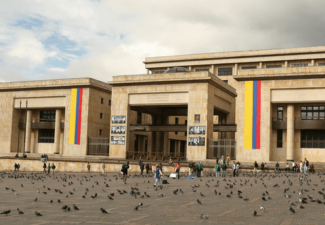
Dejusticia, alongside several civil society organizations, academics and research centers, issued an open letter with proposals to create transparency and dissemination measures regarding the development of norms to implement the peace accord.
Read MoreThe progressive silence on Venezuela
As eloquent as the last OAS report on the extinction of democracy and human rights in Venezuela has been the silence of many progressive Latin American sectors, including human rights organizations.
Read MoreViolence against defenders of social rights is, in itself, a violation of ESCR
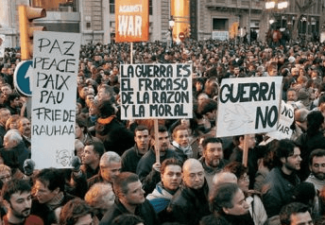
The Committee on Economic, Social and Cultural Rights of the United Nations recently reminded States that they have a responsibility to ensure the protection of human rights defenders.
Read MoreFirst Global Workshop on Human Rights Strategies for Indigenous Leaders in the Global South
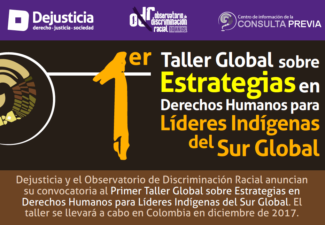
Dejusticia and the Racial Discrimination Watch opens their call to the First Global Workshop on Human Rights Strategies for Indigenous Leaders in the Global South. The workshop will be held in Colombia in December 2017. The call for proposals is open until June 10th.
Read MoreNew study shows growth in the number of prisoners in Latin America for low-level drug offenses
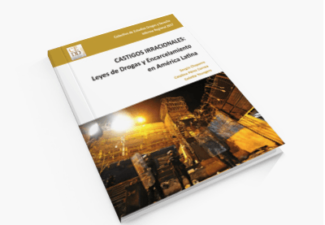
Today, the Drug and Law Study Group (CEDD), a network of experts on drug policy in 9 Latin American countries, publishes new research that reveals that despite the debate in Latin America on the need to rethink drug policies, mass incarceration for these types of crimes, even when they are non-violent and low level, continues to increase in the continent.
Read More