


The right to protest, chained in the new Police Code
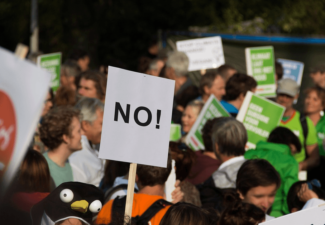
Dejusticia filed a lawsuit against the new norms related to protests and manifestations in Law 1801 of 2016 before the Constitutional Court on the grounds of being unconstitutional.
Read MoreThe Court and peace
The decision of the Constitutional Court on the Peace Legislative Act is at the same time reassuring and worrying.
Read MoreProgressive endorsement (III)
The Court’s judgment on fast track was not only very difficult; it was a “tragic case”, following Professor Manuel Atienza’s logic, since there is no good legal solution because any decision sacrifices an important value.
Read MoreThe year we crashed against ourselves
2016 is ending and I cannot find a better title to encapsulate it that the one of Martín Caparrós’ op-ed: “the year in which we crashed against ourselves.'”
Read MoreGender is Everyone’s Issue
I don’t believe, as some feminists would contend, that gender or patriarchy are necessarily the primary defining structures of society. And I still don’t believe that there is a special place in hell for women who don’t vote for the female candidate, even the historic one. But I have come to believe that in this moment, we ignore questions of gender at our peril
Read MoreIt is not only sugar: soda also uses more water than you can imagine
Shouldn’t consumers know how many hundreds of liters of water are used throughout the production chain of a liter of soda?
Read MorePopular endorsement and fast-track
The Constitutional Court will take a crucial decision next week: if Congress’ endorsement of the new peace accord is or not sufficient to activate the so-called fast track.
Organized crime against judges
Mexico was shocked by the recent murder of
the judge Vicente Bermúdez, which took place in public, in the middle of the
day. Bermúdez was known for adopting judicial decisions in cases against
organized crime, like the ones related to Joaquín Guzmán Loera and the
disappearance of the 43 students of Ayotzinapa. Unfortunately, it is not the
only case of an assassinated judge in Mexico, nor it is the only country in
the region where something like this has happened.
Life sentence?
The horrific murder of indigenous girl Yuliana Samboní, probably committed by Rafale Uribe, a member of Bogota’s elite, provokes pain, indignation and anger. Thus, it is healthy that there was a spontaneous reaction of citizens to demand punishment. And it is understandable that some ask for extreme sentences, like life sentence, for these atrocities.
Read MorePeace that kills
This week gave us a crude sample of the violence that inhabits us. The FARC, number one social enemy, did not kill, did not kidnap and did not take hostage any town in recent days. They were doing a mannequin challenge.
Read MoreNational Coalition in Favor of Drug Policy Reform in Colombia

A group of civil society organizations (NGOs, grassroots organizations, academic sectors, think tanks, and researchers) have come together with the purpose of creating a national coalition in favor of reforming drug policy in Colombia.
Read MoreNetwork of Land Restitution Monitoring Organizations Support Territorial Rights and Restitution Policy
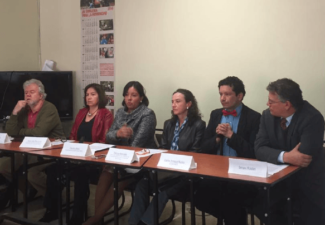
The organizations and people who make up this Territorial Rights and Land Restitution Monitoring Organizations Network express out general support for the territorial rights and land restitution policy.
Read MoreOver 1,000 Leaders Worldwide Call for End to “Disastrous” Drug War, Ahead of UN Special Session

Former Presidents of Mexico, Colombia, Brazil, Chile, Nigeria, Cape Verde, Switzerland & Poland; Former Prime Ministers of Greece, Hungary & The Netherlands Join With Distinguished Scholars, Celebrities, Clergy, Business Leaders, Elected Officials, and Others in Calling for Alternatives to Prohibitionist Drug Control Policies.
Read MoreDejusticia Intervenes in IACHR Public Hearing regarding Measures to Reduce Pre-Trial Detention in Latin America

This Tuesday April 5th 9AM Dejusticia, alongside other organizations, will intervene regarding the issue of women, prisons, and drug offenses.
Read MoreImpunity for Sexual Violence Associated with the Armed Conflict Persists

This is the conclusion of the Sixth Monitoring Report of the Constitutional Court’s Ruling 092 of 2008 and Ruling 009 of 2015.
Read MoreCoadyuvancia in Favor of the Constitutionality of the Popular Consultation in Ibagué
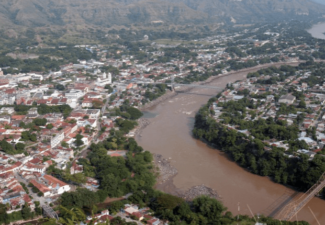
In this coadyuvancia text we defend the constitutionality of the popular consultation in Ibagué through the analysis of two legal issues.
Read MoreUNGASS 2016: The Challenge of Rethinking Drug Policy
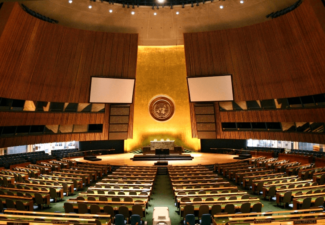
Studies show the negative human rights and public health impact of current drug policy in the region. It’s time to reconsider them.
Read MoreThe Council of State Maintains in Force the “Trans Decree” for the Correction of People’s Gender in the Civil Registry
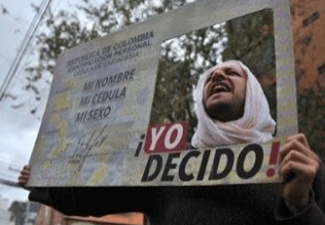
The Court ruled to maintain the fast and easy procedure that the Decree 1227 of 2015 established.
Read MoreIbagué Mining Consultation in Final Stages
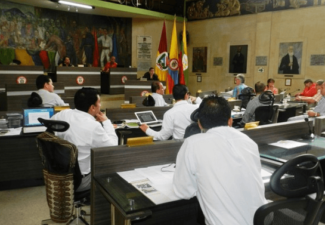
The Council of Ibagué backed the right to consultation on mining matters, but it still has to wait for approval by the Administrative Court of Tolima. Dejusticia researchers explain that Ibagué complies with all the requirements and that the local government has the competency to do this.
Read MoreOpen Call for Applications until March 16th
Open to professionals working for public institutions and NGOs who work on implementing land restitution processes.
Read More