


Post-UNGASS
The “United Nations General Assembly Special Session” about dugs (known as UNGASS) leaves a mixed balance for those that consider the international prohibition regime irrational and unjust and hence should be deeply reformed.
Read MoreThe Law for Enemies
Dilma Rousseff, President of Brazil, is accused of fiscal coverup and bad management of public accounts.
Read MoreEnvironment for Aliens
There is two ways to debate the government’s reversal and Ecopetrol president’s comments in the case allowing for the drilling of oil in Macarena.
Read MoreThe Violence Behind the Gold Route
To read this post in English click here.
While all mining creates various problems, including environmental and social, these problems are magnified with illegal gold mining practices.
Read MoreThe Battle over Institutions
Next year institutions charged with the protection of rights and the constitution are at play.
Read MoreEradicating the War on Drugs
Colombia has to eradicate its own war against drugs and redirect its resources to consolidating democracy and development in rural areas.
Read MoreLand Restitution: A Matter of Justice
It has been a difficult process and there is much more to do. But the criticisms by the Solicitor General and the ranchers’ union do not have any basis when, in the contrary, they should have to double their efforts to repair the damages of such a brutal war.
Read MoreRestitution, To Fertilize or Bury?
It is valid to warn that land restitution could affect poor rural communities that occupy a piece of restituted land, as the problem of “secondary occupants” is complex and deserved to be discussed.
Read MoreThe Injustice of Disorder
The Defense Minister Luis Carlos Villegas said last Tuesday that the “bacrim” have turned into small criminal organizations that, although they have the capacity to intimidate, are not paramilitaries, but rather straightforward criminality.
Read MoreWill There Be No Post-Conflict for Peñalosa?
While Colombia looks to the post-conflict, putting peace initiatives on the agenda, the project of the development plan “Bogotá for Everyonw” 2016-2019 does not take this national goal into account.
Read MoreVenezuela and the Inter American Court: A farewell or a long goodbye
The fifth floor of the building of the Organization of American States (OAS) harbors the Rómulo Gallegos library, named this way as a homage to the first president of the Inter American Commission of Human Rights. This is a meaningful acknowledgment to the role that Venezuela once assumed in the hemispheric system of human rights. Venezuela bore the responsibility of this role in an era that was decades before both the adoption of the American Convention of Human Rights and the establishment of a Court to protect the Convention.
Read MoreCompanies and human rights
How does Chiquita respond in Colombia for the victims of illegal armed groups that the multinational would helped to finance?
Read MoreThe statutory law of the peace referendum would be constitutional
A warning
In this article we do not refer to the eventual content of the referendum, in other words, the specific proposal that would be submitted to consideration of citizens regarding the peace process. Until now, the proposals that have circulated in media are very general and do not go beyond a simple speculation.
Read MoreRatification: the South African example
Is it possible to overcome the existing polarization over the ratification of an eventual peace agreement? FARC insists on a constitutional assembly, while the government is radically opposed to this option.
Read MoreThe mystery of peasant farmer reserve areas
Now that the farmers’ protest has adopted national connotations and requires in-depth solutions, it is worthwhile to carefully analyze the proposal of peasant farmer reserve areas.
Read MoreThe plane of Evo in the new air of the relation between Europe and Latin America
The recent rebellion of the Latin American countries over the incident involving Evo Morales’s plane is symbolically complex; it could mean a change in power relations but it also runs the risk of obscuring national human rights issues.
Read MoreDoes the SITP make Bogotá more human?
The SITP (Bogota’s transportation system) should speed up the process of adapting its services according to the needs of citizens with disabilities.
Read MoreThe spring of social movements
The reactions to the agrarian strike show that Colombians are experts in understanding violence and surviving in solitary silence; but we do not know very well neither what to do, nor what to say when facing the rare happening of a collective and pacific mobilization.
Read MoreThe Wiwa People and the Rancheria Dam
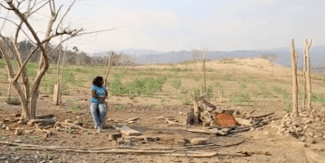
In this mini documentary, Dejusticia and the Wiwa people describe the effects of the construction of a dam without prior consulation on the affected communities. It shows the devastating affects of the dam on the lives and territority of the Wiwa People.
Read MoreConflict, protests and peace
Today we are experiencing two concurrent events. First, we are witnessing the negotiations with the guerillas, which have a good possibility of success. Second, we are living through a time of very intense social unrest, as the farmers’ strike demonstrated. ¿How do we interpret the simultaneity of these processes?
Read More