


Reflections on civil society participation and advocacy at COP 16

The historic participation of civil society was the highlight of the Conference of the Parties to the Convention on Biological Diversity (COP 16), which took place in Cali, Colombia, from October 21 to November 1. This article proposes some critical, contextual reflections that can be used by civil society to address future meetings like this…
Read MoreWho were “the people” at COP16? Reflections on where “The People’s COP” leaves us

One of the outstanding achievements of the 16th edition of the Convention on Biological Diversity (COP16) held in Cali, Colombia was citizen participation. Naming it “The People’s COP”, the national government wanted to send a message to the world that it would be an event different from other international negotiation spaces, with the broad and…
Read MoreWe condemn the persecution of Provea and Venezuelan civil society

Together with other international organizations, Dejusticia condemns the escalating repression by the Venezuelan regime. We express our solidarity with allies such as Provea, who have suffered persecution for their defense of human rights, and we demand respect for the work of civil society.
Read MoreFrom the G20 to COP29 and the IACHR: three spaces in which Dejusticia will urge the need for reforms to the financial architecture

Dejusticia will be participating, together with allied organizations, in advocacy activities in these three spaces in order to propose responses to the climate emergency.
Read MoreMexico: reforming justice, weakening democracy

This Mexican experience has confirmed the urgency of resolving the historical problems of justice, but without undermining the pillars of human rights, the balance of powers and democracy itself.
Read MoreCosmopolitan human rights

“National human rights campaigns have often been heroic and must continue, but they should be expanded or complemented by global struggles.”
Read MoreJustice in Tension: the Role of the ICC in Venezuela’s Repression

Although the authoritarian tendency of Nicolás Maduro’s regime is broad and multifaceted, specific actions are being investigated by the International Criminal Court (ICC).
Read MoreJustice, crisis and reforms

These environmental, climate and economic crises have been compounded by the return of international wars and their enormous toll of both victims and damage, as well as the rise of authoritarian regimes.
Read MoreThe “terrorist” with the toy gun: teenagers detained in Venezuela and the lines that should not be crossed

In Venezuela and other countries, the fight against terrorism has been used to stigmatize protest, to create labyrinths of criminalization that have no way out and to apply an almost magical formula of denial of rights.
Read More5 key points from COP16 that will set the course for the rest of the conference

The closing of the first discussions was defined by debates on financing, conservation commitments and new alliances between local communities and indigenous and Afro-descendant peoples to address the global environmental crisis.
Read MoreFalsehoods about our recent book

Recently, Dejusticia received strong criticism for the publication of our Increasing Accountability report. In this column, I respond and discuss the complexities of the role of businesses during the armed conflict.
Read MoreWhat justice reforms?
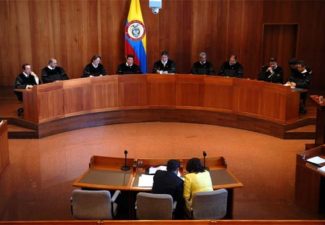
Several presidential candidates propose a justice reform; some have even said that they will hold a Constituent Assembly to achieve it. But beyond that, the candidates could discuss policies that would strengthen access to justice and the system’s legitimacy.
Read MoreSkepticism about pessimism
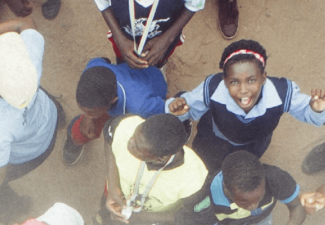
The so-called “negativity bias” helped humans survive as a species, but today makes us excessively pessimistic. We must counteract the pessimistic biases and professionals that receive excessive attention and credit.
Read MoreThis is what we lose when a social leader is attacked
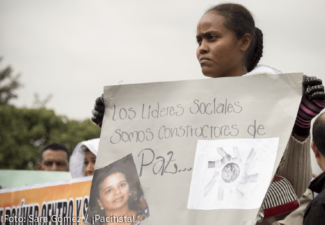
It’s time to stop talking about leaders who are killed or threatened. It is entire communities who are affected when leaders are no longer present. Inevitably, this vulnerability opens the door for armed actors to settle in and take control of the territory.
Read MoreIn Search of Lost Treasures: Indigenous Peoples and Seized Culture

Global South countries have an obligation to set pathways to find lost treasures in museums and private collections around the world. Therefore, it is essential that indigenous peoples are taken into account when determining the use and destination of the cultural material that has been expatriated for centuries.
Read MoreDrawing lessons from the Colombian elections
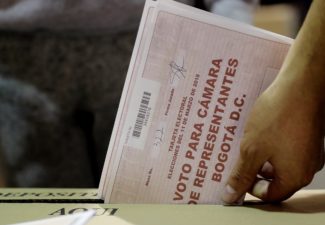
The recent elections taught us that previous reforms have reduced a major problem we had in the late 1990s: extreme political fragmentation.
Read MorePraise for the average citizen
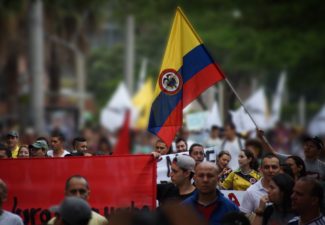
In the middle of my task as a voting jury, the following imaginary world occurred to me: what would happen if, instead of selecting the elected politicians to Congress that day, we selected a group of voting juries chosen by lottery?
Read MoreLitigation, science, and global warming
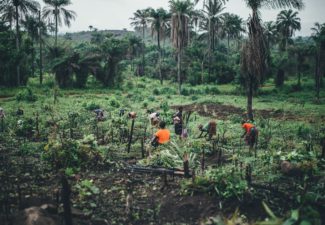
With the “science of attribution,” the Supreme Court of Justice has in its hands the strongest scientific basis by which to decide the lawsuit brought by 25 young people in the coming days.
Con la “ciencia de la atribución” la Corte Suprema de Justicia tendrá en sus manos las bases científicas más sólidas para decidir la tutela de los 25 jóvenes en los próximos días.
Read MoreIn this town, will something serious happen?
¿Por qué es más fácil sembrar miedo en los corazones que esperanza? Nos pasó en el plebiscito, nos pasó en la ola verde. No porque los que queremos un país mejor no seamos la mayoría, sino porque los otros son más efectivos con su ruido ensordecedor.
Read MoreThe place that female coca growers deserve
Women have been central in sustaining life in cocalero territories. Today more than ever, in the midst of substitution processes, that role must be protected.
Read MoreFiscal Policy and Human Rights in the Americas: Mobilizing Resources to Guarantee Rights
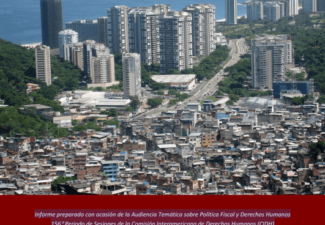
Report written for the thematic hearing on Fiscal Policy and Human Rights of the Inter-American Commission on Human Rights (IACHR).
Read MoreMulti-Door Courthouses: A Good Idea Badly Managed
This research project aims to do a diagnostic about the National Program on Multi-Door Courthoses and make some public policy recommendations that could magnify their virtues and improve access to justice.
Read MoreChallenges to the Inter-American System of Human Rights

This book chronicles how a group of Latin American human rights organizations worked together to develop new strategies monitor the so-called “strengthening process” of the CIDH.
Read MoreRadical Deprivation on Trial
This book by César Rodríguez Garavito and Diana Rodríguez Franco is a fundamental contribution to the study of the most relevant judicial innovations courts have done in the past decade.
Read MoreHuman Rights in Minefields
This book compiles accounts from sixteen action-researchers from the global South about different human rights issues in their respective countries. It is the result of the first Global Action-Research Workshop hosted and organized by Dejusticia.
Read MoreAmphibious Research: Action Research in a Multimedia World
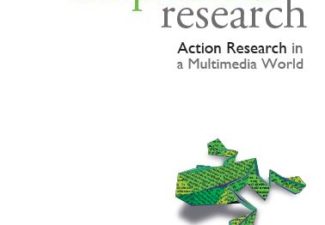
Action research combines academic studies, participation in public debates, public policy advocacy, and the strengthening of institutions (for example, think tanks and nongovernmental organizations).
Read MoreRecognition with Redistribution: Ethno-Racial Law and Justice in Latin America

This Dejusticia book presents an analytical framework and an empirical panorama of the reality of indigenous and afro-descendant rights throughout the region. To this end, it traces trends, advances and tensions in the regulation of cultural diversity and ethnic-racial justice through the analysis of four themes
Read MoreTechnical Report for Alternatives to Imprisonment for Drug-Related Offenses

Police Searches at Discretion? The Tension between Security and Privacy
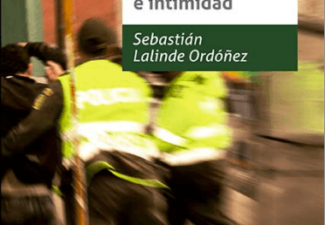
This text seeks to harmonize the duty of the National Police to preserve public order and guarantee security with the right to privacy.
Read MoreTraining on Issues on Sexual Violence in the Armed Conflict: A Methodological Proposal for Public Servants

We contribute some pedagogical materials to develop a training program on this topic. We hope its implementation will contribute to an improvement in the attention given to survivors, and the investigation and judicialization of sexual violence committed in the armed conflict with the goal of reducing impunity for these crimes and increasing survivors’ access to justice.
Read MoreDejusticia and Colombia Diversa Intervened before the Constitutional Court to Ask That Adoption Laws Do Not Exclude Same-Sex Couples
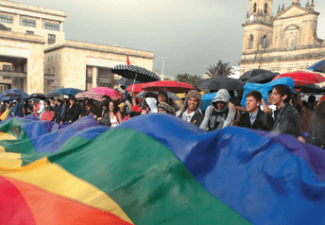
Mauricio Albarracín Caballero, Jaime Ardila Salcedo, Daniel Gómez-Mazo, Alejandro Lanz Sánchez, Olga Patricia Velásques Ocampo, Juan Felipe Rivera Osorio y María Paula Hoyos Sánchez, executive director and members of Colombia Diversa, are also authors of this intervention.
Read MoreCitizen Intervention in the Revision of the BIll on Petition Rights Statutory Law
Dejusticia and Flip ask the Court to examine the contradictions and disharmony between the Statutory Law of Transparency and Access and the public information already in effect as well as the bill on the right to petition that finds itself under constitutional review.
Read MoreIntervention in the Case of Belo Monte
The Inter-American Association for Environmental Defense (AIDA), the Center for the Study of Law, Justice and Society (DEJUSTICIA), the Socio-Environmental Institute (ISA), The Yudjá Mïratu da Volta Grande do Xingu Indigenous Association (AYMÏX) and the Indigenous Missionary Council (CIMI) presented before the Supreme Federal Court of Brazil written memo that shows the illegality of the Congressional permit for the Belo Monte dam.
Read MoreIntervention: Political Speech and Special Constitutional Protection
Dejusticia argued before the Constitutional Court that journalist Luis Agustín González should not be criminally liable for his statements about politician Leonor Serrano.
Read MoreIntervention: Defense of the Superintendent of Health´s Letter 03/13 on Voluntary Interruption of Pregnancy
Dejusticia intervened before the State Council to support the legality of the Superintendent of Health’s Letter 03 from 2013 on voluntary interruption of pregnancy.
Read MoreIntervention: Political Rights in the Legal Framework for Peace
Dejusticia appeared before the Constitutional Court to request that it dismiss the lawsuit brought against Article 66 and 67 of the Constitution, which form part of what is called the “Legal Framework for Peace.”
Read MoreIntervention: Tutela Writ Against the Artistic Project “Blanco Porcelana”
The Constitutional Court invited us opine on the tension between freedom of expression and artistic creation, and the right to privacy and the reputation, in the context of artwork that addresses racial discrimination.
Read MoreHuman Rights report supporting the complaint brought by the Mapuche Bread-makers Union
This document was presented along with the complaint labor union No. 1 of Mapuche Bread-makers of Santiago (Chile) presented to the Committee of Experts of the ILO alleging that Chile violated the Mapuche’s right to prior consultation protected by Convention 169.
Read MoreIntervention: Right to Education of Persons with Disabilities
Dejusticia appeared before the Constitutional Court regarding a constitutional challenge (tutela) by a student who had been granted a loan for students with disabilities, but was then denied loan forgiveness.
Read MoreAmicus about the Rights of Indigenous Populations
Dejusticia, the Global Justice and Human RightsProgram at Universidad de los Andes, and the Law School Clinics at the Pontificia Universidad Católica de Perú and Stanford presented an amicus curiae challenging the constitutionality of guidelines regulating the Official Data Base of Indigenous and Native Peoples in Peru.
Read More