


Ten urgent actions to protect the Amazon promoted by colombian civil society organizations for COP16

As civil society members (The Escucha la Amazonía -ELA- Alliance), we urge the national governments of the Amazon region to establish agreements to combat factors that bring the Amazon closer to the tipping point, such as deforestation, inappropriate land use for activities like extensive cattle ranching, and illegal economies.
Read MoreA group of global activists will visit Colombia to discuss solutions to face the planetary crisis

34 researchers and global activists from the Atlantic Fellows community will meet for a week in Bogotá to discuss a just transition to address the world’s climate crisis. The week will have several key spaces to strengthen collective action and climate justice, as a prelude to COP16 in Cali, Colombia.
Read MoreTogether for a fair tax world

International tax cooperation is not just a matter of politics, but of global justice and respect for human rights. Only by working together and with strong leadership can we build a tax system that ensures the well-being of all people.
Read MoreA human rights-based approach to tax systems

Reforming tax systems with a focus on human rights is key to combating inequality, financing public services and promoting inclusive growth. International cooperation is necessary to confront tax evasion, reduce unfair dependencies and promote a more equitable redistribution of wealth.
Read MoreThe global ideal: fair taxation

A key aspect of achieving this goal is to adopt a human rights approach to how countries collect resources through their tax systems. This implies creating fairer taxes, where those who have more contribute more.
Read MoreEvery dose counts (and costs): Access to antiretrovirals and compulsory licensing

In Colombia, HIV is a visible and urgent challenge that affects thousands of people and puts many more at risk. Despite World Health Organization (WHO) recommendations to use Dolutegravir as first-line treatment due to its high effectiveness and minimal side effects, the high cost of the drug prevented its access to a large part of the population.
Read MoreOn the path to corporate accountability: the Global South and the new European due diligence law

Despite the fact that most corporate violations are concentrated in the countries of the South, the drafting of regulations continues to come from the North, for the most part unilaterally and focused on the prevention of violations.
Read MoreAdvertising, children and the protection of rights: can they go together?

Despite the growing evidence of the harmful impact of advertising on children’s diets and the increasing recognition that advertising of ultra-processed products is harmful to children’s health, as of May 2022, only 60 countries have adopted policies to restrict advertising of ultra-processed products to which children are exposed.
Read MoreBusiness, human rights and a Latin American agenda for regulation

The impacts of some companies on social rights, the lack of regulation in this field, and Dejusticia’s efforts to build a Latin American agenda to promote common standards of responsibility.
Read MoreVenezuela: social organizations demand transparency in elections, political dialogue and guarantees for protests
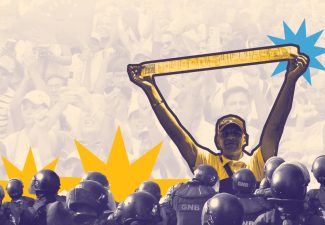
At this critical moment, we express our solidarity with Venezuelan social leaders and organizations working for the defense of human rights. Their courage and commitment to democracy are an invaluable contribution to the construction of peace and social justice in Latin America.
Read MoreWhat do we mean by freedom of food choice?: The link between nutrition labeling and human rights

Smart nutrition labelling should aim to have direct effects on consumer choices, and encourage people to ask “Where does my food come from?” before buying it, to favor eating real, healthier and fresher food that truly to nourish them.
Read More#VenezuelaBienvenida
Citizen-led initiatives like #VenezuelaBienvenida (#VenezuelaIsWelcome in English) are reassuring, which calls on the country to get involved in the crisis on the side of human rights, to open channels of conversation, while promoting research and action to avoid the festering social rejection of Venezuelans.
Read MoreWomen and science

Women’s Day, which was celebrated on March 8th, is a good time to reflect on the stereotypes and discrimination that women continue to face and that must be overcome.
Read MoreIt is time for moderation
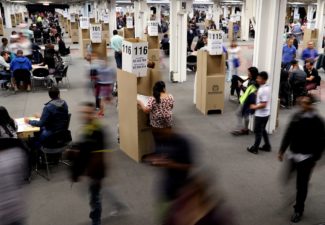
If there was an index to measure the rage of countries, Colombia would rank among the first. Today, we see a closer manifestation of the Colombian rage in the electoral debate, which is full of insults.
Read MoreThe Special Jurisdiction for Peace cannot forget crimes against children

Hundreds of children and adolescents were victims of atrocious crimes during the armed conflict. In this context, the JEP faces the challenge to incorporate a special focus on children in the processes and decisions that it adopts.
Read MoreBojayá changed forever the way to see the pain of victims
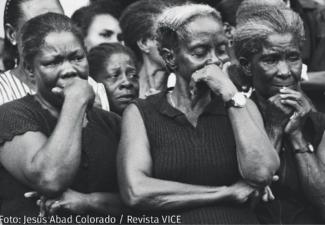
Due to its historical importance, some regional media came to photographically record the exhumation process of the corpses. The community saw this kind of action as a violation to their right to live a dignified mourning, which they were not able to have when the massacre first happened.
Read MoreEnemies or adversaries?
It is so problematic and telling that Uribe decides, once again, not to follow the rules of the game. He accuses a journalist of “slandering” him through social networks, but not before the judges, as the journalist did and as he should if his argument had a basis.
Read MoreColombia: an act of faith?
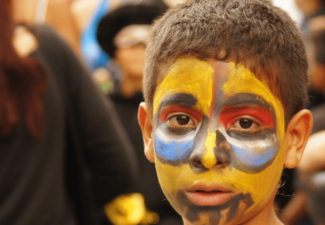
Despite the fact that we, Colombians, have a certain sentimental nationalism, we lack the capacity to act collectively to undertake large global projects. We must build national cohesion based on a story that unites us within our own diversity.
Read MoreThe urgency of what is important
It is time to design effective policies to reduce traffic accidents in the medium and long term. Only with well-founded and cheap public transport can efficient and fair restrictions be applied to private transport.
Read MoreThe role of economic actors in Colombia’s armed conflict: How much do we know?
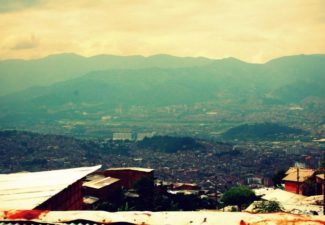
Colombia is undergoing a transitional justice process, in which society wants to know who participated in the internal armed conflict for economic purposes. The recently created Truth Commission must be a space to facilitate this discussion and unveil the role that economic actors played during the war.
Read MoreGovernance and Administration of the Judiciary
Analysis of the reform proposals in the balance of powers project.
Read MorePersonal Data in Public Information: Dark in the Private Sphere and Light in the Public Sphere
This document explores the response of Colombian law and jurisprudence to the tensions between intimacy and the publicity of data.
Read MoreDo Not Interrupt the Law: The National Health Superintendency’s Purview on the Right to Choose

This document seeks to contribute new arguments to advance the debate about the implementation of guarantees to the right to choose in Colombia, overcoming the two obstacles outlined in the report.
Read MoreTowards a Design that Guarantees Adequate Independence of the Judiciary and the Best Method for Selecting Judges for the High Courts
This chapter’s argument is that the independence of the judiciary is a guarantee that without doubt should be preserved but is not absolute and, thus, allows for qualifications in support of more transparency and accountability of the judiciary
Read MoreCommunications Surveillance in Colombia: The Chasm between Technological Capacity and the Legal Framework
The goal of this book is to examine the Colombian legal and jurisprudential framework regarding communications surveillance in light of today’s technologies.
Read MoreThe Future of Human Rights: From Gatekeeping to Symbiosis
The international human rights movement faces a context of uncertainty due to: (i) the rise of a multipolar world with new emerging powers, (ii) the emergence of new actors and legal and political strategies, (iii) the challenges and opportunities presented by information and communication technologies, as well as (iv) the threat posed by extreme environmental degradation.
Read MoreBefore the Courts: Judicial Needs and Access to Justice in Colombia

This book aims to be the most comprehensive diagnosis of legal needs and access to justice conducted in Colombia.
Read MoreTransitional and Constitutional Justice
Chapter by Camilo Sánchez and Catalina Ibáñez Gutiérrez in the book “Transitional and Constitutional Justice” of the Konrad Adenauer Foundation.
Read MoreHuman Rights, Democracy, and Development
Human rights are undergoing a transformation. Around the world debates have proliferated regarding human rights discourses, practices, and studies to the point that some speak about “the end of human rights.” This context is unlike anything since the beginning of the international human rights system around the mid twentieth century.
Read MoreMaking Social Rights Real: Implementation Strategies for Courts, Decision Makers and Civil Society
Given the disappointing implementation levels in various countries and across human rights systems, this guide seeks to contribute to the discussion regarding strategies for courts, international decision-makers, and civil society to increase the implementation of ESCR decisions.
Read MoreIntervention Legal Framework for Peace
Dejusticia intervened before the Constitutional Court in a petition challenging certain provisions of the legislative act that established the Legal Framework for Peace, considering that the Legal Framework does not violate the Constitution, but rather restricts certain constitutional principles in favor of transitional justice processes.
Read MoreLetter regarding human rights and drug policies to governments participating in the OAS General Assembly in Guatemala.
More than fifty civil society organizations from the Americas presented a letter to the governments gathered this week in Guatemala, for the General Assembly meeting of the OAS. In the letter the organizations urgently call for putting human rights protection at the center of the debate over drug policies.
Read MoreLawsuit against the designation of the Superintendent of Vigilance and Private due to the noncompliance of the Quota Law
Dejusticia, Sisma Mujer and the Red Nacional de Mujeres challenged the selection of the Superintendent of Surveillance and Private Security as a violation of the Quotas Law, arguing that the President had an obligation to appoint a woman for the post, and yet appointed a man.
Read MoreChallenge to the appointment of Mr. Pedro Munar Cadena as magistrate of the High Judicial Council
Dejusticia challenges the election of Dr. Pedro Munar Cadena as judge of the High Judicial Council, as his appointment violated article 126 of the Constitution.
Read MoreIntervention in challenge to article 9 of the Victims’ Law
Dejusticia intervened in a challenge to article 9 of the Victims’ Law which provided that reparations in judicial proceedings must be equal to those in administrative proceedings.
Read MoreChallenge to the election of Dr. Alejandro Ordoñez Maldonado as Inspector General
Dejusticia, the Colombian Commission of Jurists, the Center for Constitutional Studies PLURAL, the Corporation Viva la Ciudadanía and Foro por Colombia challenged the election of Dr. Alejandro Ordoñez as Inspector General before the Supreme Court of Administrative Law (Conseil d´Etat)
Read MoreChallenge to Francisco Javier Ricaurte Gómez’s appointment as a judge of the High Judiciary Council for violation of article 126 of the Constitution
Dejusticia challenged the appointment of Francisco Javier Ricaurte Gómez to the High Council of the Judicary because certain magistrates of the Council violated article 126 of the Constitution by naming Ricaurte to a public position when he had previously participated in their appointment to the Council.
Read MoreIntervention in constitutional challenge to article 44 of Law 1551 of 2012
The challenge requests that article 44 of Law 1551 of 2012 be declared unconstitutional because the norm violates various norms related to prior consultation of indigenous groups, the right to self-government, and creates a new territorial division and authority not contemplated in the Constitution.
Read MoreChallenge to the appointment of the Superintendent of Health for failure of President Juan Manuel Santos to fulfill the quota law
Dejusticia, Sisma Mujer and the Red Nacional de Mujeres challenged the appointment of the Superintendent of Health for violation to the quota law.
Read MoreChallenge to the appointment of the Director of Colciencias due to noncompliance with the Quota Law
Challenge to the appointment of the director of Administrative Department of Science, Technology and Innovation (Colciencias) for violation of the Quotas Law.
Read More