


The sound of the ‘other’ voices of the Caribbean

The team at Vokaribe, a community radio station located in the Popular Library of the La Paz neighborhood, in the heart of the southwestern part of Barranquilla, is committed to making “that plural and diverse universe” heard through a sound project that amplifies the “other voices.”
Read MoreKankuama women, living fabric, and ancestral justice

In the heart of the world, the Sierra Nevada de Gonawindúa (Santa Marta), Kankuama women strengthen their own justice system through Community Committees, with the aim of guaranteeing access to justice for women and their families in order to achieve harmony and balance in their communities and territories.
Read MoreMontes de María, a treasure trove of stories

In this subregion of the Caribbean, a rural communications group accompanies marches, protests, and complaints from their communities with cameras and microphones. They also dedicate themselves to telling the everyday stories of peasant, indigenous, and Afro-descendant resistance, those that are lived on the land and in the home.
Read MoreBuenaventura: to dream is to resist

Buenaventura seems like a violent place, a city caught between war and despair, a port without a community. It is, however, the epicenter of multiple struggles and resistance movements, home to communities that face poverty and their past on a daily basis. The Pastoral Social, a branch of the Catholic Church, is committed to building a society that dares to dream of a different Buenaventura.
Read MoreProvidencia: small island, big Caribbean

For decades, the Old Providence Civic Oversight Committee has worked to protect the Raizal people of the islands of Providencia and Santa Catalina from dispossession. Through their work, they seek to preserve the Creole language and traditional cultural practices, the core of the islanders’ connection to their territory.
Read MoreThe Kankuamo people as guardians of the Sierra Nevada

The Kankuamo people of the Sierra Nevada de Gonawindúa are guardians of ancient knowledge, preserving the balance and way of life that is kept high in the mountains. To fulfill their life mission, the Kankuamos have resisted colonization and conflict, reborn in their own government as envisioned by the mamos and sagas. “Our ancestors taught us to care for and live in brotherhood and community,” is the lesson left by Governor Jaime Luis Arias.
Read MoreThe struggle of ACIMVIP: Sacha Muiu and the protection of the territory

In Villagarzón, known as the heart of Putumayo for its rich biodiversity, the hopes and goals of the Inga people remain. ACIMVIP.
Read MoreUma Kiwe Mother Earth: a commitment to caring for water and life in Mocoa

In the Colombian Amazon foothills, three women have come together around a dream: to resist the extractivist destiny that has contributed to the destruction of the forest, rivers, and their communities, using communication as a form of defense and conservation of their territory.
Read MoreA narrative laboratory for healing

In the heart of Cartagena’s most gang-ridden neighborhoods, the Narrarte association uses narrative therapy to heal the wounds of abuse in the community.
Read MoreThe resistance of the black people of the Pacific coast of Cauca

Among the rivers and jungles of the Cauca Pacific, the strength of Black identity accompanies the Community Councils of Guapi, Timbiquí, and López de Micay. Their struggle to achieve a dignified life and build tools for local development is nourished by the teachings of their ancestors.
Read MoreThe unit of hope
The Missing Persons Search Unit has become a beacon of hope for the more than 60,000 families who carry with them the daily torture of enforced disappearances: the helpless waiting for clues as to the whereabouts of their loved one.
Read MoreDeliberation in division
What makes members of divided societies carefully consider the reasons for and against a decision before adopting it?
Read More“Incluidas” and “incluidos?”
Language has a political and symbolic dimension and that is why it is an important space to look for cultural transformations.
Read More2018 and the consolidation of peace
We must be deeply aware that in 2018 we will renew the representatives of the executive and legislative branches. In that context, we must have the vision to understand that those decisions will define the trajectory of the next decade.
Read MoreThe prosecutor and his first year of transparency
Despite the fact that this oversight body has found many breaches of the Transparency Law, it has not imposed a single sanction yet. The sanctions regime has not even been defined.
Read MoreCircumscriptions, law and politics
The sentence by the Cundinamarca Tribunal that ordered the president of the Senate to send the legislative act on circumscriptions to President Santos for its promulgation is legally correct.
Read MoreDebts to peace
This year there were several signs of the deep animosity of traditional political power towards victims and social leaders. The eradication of violence from the political spectrum will only occur with the public’s political participation. Not only with the vote, but starting with the vote.
Read MoreRussian telegrams and Colombian WhatsApp messages
In Colombia, although the intelligence law prohibits telephone tapping since 2013, an wrong interpretation would seem to force providers, such as WhatsApp or Telegram, to provide “any other information that contributes” to the user’s location.
Read MorePoverty, inequality and discrimination in Latin America
When governments are seeking to reduce poverty based on discrimination and increase rights protection, policies must also aim to reduce discrimination due to historical factors. The latter has created the very own elements that facilitate the impoverishment of various social groups.
Read MoreAfro and indigenous peoples should be consulted about truth-seeking processes
The Constitutional Court is currently reviewing the decree that creates the Truth Commission for the implementation of the Peace Agreement. Dejusticia presented an intervention supporting the constitutionality of the decree, with the condition that the participation of various social sectors in future steps is guaranteed.
Read MoreCourts and Social Change: How the Constitutional Court Changed Forced Displacement in Colombia

What role do the courts play in a democracy? What kind of judicial interventions are required to promote public policies that effectively guarantee rights and encourage social change? This book answers these and other questions.
Read MoreTodo list: proposals for the formulation of public policies on reparations in Colombia

The purpose of this document is to initiate a discussion on mechanisms and policy options on which we could rely for the design and implementation of a restitution massive program. This proposal supports the idea of envisaging ample targets for a land restitution process to be successful. This would enable its coordination with other government measures of land ownership redistribution aimed at the transformation of agrarian relations in the country. Although our proposed program of restitution is not intended as a mechanism designed to achieve other objectives such as land reform or rural income generation, we understand that these three state actions must be intrinsically linked in order to produce transformative effects that allow the optimal development of the restitution process.
Read MoreRace and Human Rights in Colombia. Report on Racial Discrimination and Rights of Afro-Colombians
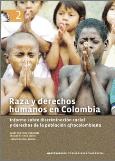
This work questions the myth of racial democracy in Colombia and is the full version of the Report on Racial Discrimination and Rights of Afro-Colombian population.
Read MoreMajorities without Democracy: Power Imbalances and the Rule of Law in Colombia
The theme of presidential reelection has been present, with brief interruptions, in the headlines of the national press since 2004. A lot has been said, discussed and analyzed in favor and against reelection during this period. The main point of contention lies in the conception of democracy.
Read MoreNullity action against the administrative act through which the House of Representatives chose Dr. Volmar Perez as Ombudsman on August 19, 2008.
Dejusticia, the Human Corporation Regional Center for Human Rights and Gender Justice, the Women National Network, and the Antigone Corporation for Social Development, Human Rights and International Humanitarian Law, filed a nullity action against the administrative act through which the House of Representatives chose Dr. Volmar Perez as Ombudsman, arguing that the triad formed by the national government did not respect the law of equal participation of women (Law 581 of 2000) which requires that the lists of candidates for positions such as the Ombudsman include at least one woman.
Read MoreAmicus brief before the Inter-American Court regarding access to information in Venezuela
Dejusticia presented an amicus brief in the case of Ríos y otros vs. Venezuela in the Inter-American Court of Human Rights regarding violations of article 13 and 1.1 of the American Convention.
Read MoreIntervention same-sex couples
Dejustica intertervened at the request of the Constitutional Court in order to opine regarding whether scientific evidence demonstrates that children are affected by growing up in families with same sex parents.
Read MoreIntervention relating to conscientious objection to military service
The intervention was presented regarding conscientious objection as grounds for permanent exclusion for military service, and argues that article 27 of Law 48 of 1993 is unconstitutional.
Read MoreReparations in Colombia: Dilemmas in a Context of Conflict, Poverty and Exclusion
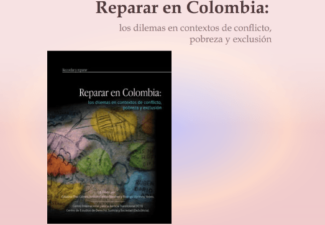
This publication contributes answers to the challenges based on the need to repair grave violations committed in a context of war, poverty and exclusion.
Read MoreNew Book: “Normas de papel. La cultura del incumplimiento de reglas”
Latin America’s culture of noncompliance dates from the colonial time period.
Read MoreUnequal Justice? Gender and Victim Rights in Colombia
The chapters in which members of Dejusticia participate are number 4 (Gender violence and constitutional justice in Colombia by Julissa Mantilla Falcón and Rodrigo Uprimny Yepes) and 5 (Reparations with a gender focus: the potential to transform discrimination and exclusion by Diana Esther Guzmán).
Read MorePaper Norms
This book is based on research project on the culture of noncompliance conducted in Colombia between 2006 and 2009.
Read MoreAfro forced displacement
This book documents and analyzes the effects of forced displacement on the Afrocolombian population and its particular impact on the rights that black communities have to the territory.
Read MoreJudges Without the State
This book is the outcome of a research made in Colombia between 2005 and 2007 on judges working in armed conflict zones in Colombia.
Read MoreAmicus Curiae for the case of sexual violence against women in Peru
The present Amicus Curiae, involves d five cases of sexual violence against women in the Peruvian armed conflict and argues that according to Peruvian and international law, the State must prosecute such acts of sexual violence
Read MoreSupreme Court of Justice sanctions nightclubs of Bogotá due to racial discrimination
Racial Discrimination Watch filed a tutela against the President, Bogotá´s Mayors Office and three night clubs for racial discrimination
Read MoreLawsuit that seeks the protection of the right to housing
Lawsuit against paragraph 1 of article 15 of Law 388 of 1997, and against article 40 of law 3 from 1991, for violating the Constitution.
Read MoreIntervention against the Free Trade Agreement between Colombia and the United States
Intervention in the process LAT311 against the Law 1143 from 2007 “by which the Free Trade Agreement between Colombia and the United States of America is approved”, plus the annexed letters and agreements, signed at Washington, DC on November 22, 2006.
Read MoreIntervention against the Modificatory Protocol of the Free Trade Agreement between Colombia and the United States
Civic intervention within the process of No. LAT319 of automatic, integral and prior review of the Modification Protocol of the Free Trade Agreement between Colombia and the United States and its enclosed letter, approved via Law 1166 of 2007.
Read MoreHealth Care: Afro Descendents
Public action of unconstitutionality of articles 1 through 30 of the Law 691 of 2001, which regulates the participation of ethnic groups in the General System of Social Security, alleging violations of the introduction and of articles 1, 2, 7, 11, 12, 13, 48, 49, 70, 85, 93, 330 (paragraph), 55 transitory of the Political Constitution.
Read More