


Posts by Dejusticia
Open call for Global North fellowships 2026
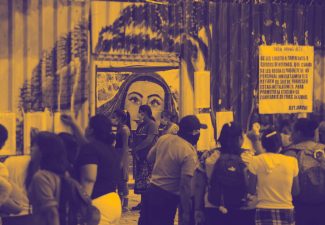
This opportunity, for the second semester of 2026, allows for the exchange of tools and research-action strategies developed at Dejusticia, as well as the contributions of interns and fellows with their own experiences and those of their organizations.
Read MoreSilvia Rivera Cusicanqui and Multispecies Justice in the Andes

This essay is part of Indigenizing International Law: Multispecies Justice from Inverse Legal Anthropology, a forthcoming book developed over fifteen years between the University of Kent and Dejusticia.
Read MoreChildren defenders of human rights

The Constitutional Court of Colombia recognizes for the first time that children have the right and duty to defend human rights.
Read MoreCatatumbo: humanitarian crisis and internal unrest

Dejusticia intervenes before the Constitutional Court to debate the limits of states of emergency in the face of the humanitarian crisis and armed violence.
Read MoreLitigating also means imagining possible futures

Strategic litigation is more than a ruling: it is a tool for challenging narratives and transforming realities. Learn about three key cases from Dejusticia on data protection, control of power in Catatumbo, and the defense of child defenders.
Read MoreCivil society and the legality of public administration: the Google case

We analyze the case of the SIC against Google for data protection in Colombia and the importance of citizen participation in the face of Big Tech’s power.
Read MoreInclusive cities: stories of exclusion and resistance

Building these cities is not just a matter of infrastructure or technical regulations, but a political and social commitment to ensure that everyone has a dignified place to live, participate and thrive.
Read MoreApply to the 2026 Global South Fellowship Call

This opportunity allows human rights defenders to develop their projects and take part in an academic and cultural exchange in a safe space. Apply before January 21.
Read MoreNational sentiment on Santa Rosa Island

The dispute between Peru and Colombia over Santa Rosa Island distracts attention from environmental issues (sedimentation, deforestation). We analyze how the resurgence of nationalism and electoral rhetoric are hindering diplomatic efforts to resolve the conflict in the Amazon River.
Read MoreThe tragedy of the Amazon

The Amazon lacks effective supranational protection. We analyze how the logic of national sovereignty and the weakness of the ACTO prevent a coordinated response to deforestation and extractivism, urging binding solutions and regional funds.
Read MoreConsejo de Estado admite demanda contra la elección de Carlos Camargo como magistrado

El Consejo de Estado acaba de admitir una demanda de nulidad electoral presentada por cinco organizaciones de la sociedad civil y la academia —Dejusticia, la Fundación Jacarandas, el Colectivo de Abogados y Abogadas José Alvear Restrepo (CAJAR), el Instituto Latinoamericano para una Sociedad y un Derecho Alternativos (ILSA), y la Facultad de Derecho y Ciencias…
Read MoreEl caso de Sofía revela el estigma hacia las personas que usan drogas

La estudiante de medicina fue discriminada por tener un episodio de consumo de drogas. Basada en prejuicios, la universidad suspendió sus prácticas clínicas y difundió su información médica sin consentimiento.
Read MoreI don’t care if they call me a dictator.

During his six years in office, Bukele has consolidated his power, paving the way to become the dictator he appears to be announcing himself as.
Read MoreLlamamos la atención sobre la falta de equidad de género en la Corte Suprema de Justicia

Dejusticia presentó un amicus curiae en el proceso que pide anular el acuerdo que seleccionó al magistrado José Urbano como magistrado de la Sala de Casación Penal, por falta de paridad.
Read MoreNGOs at risk of global extinction
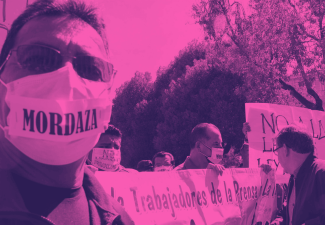
How can non-governmental organizations transform themselves? What were they like when they did not depend on international funding?
Read MoreAborto en Ecuador: presentamos un amicus a la Corte Constitucional
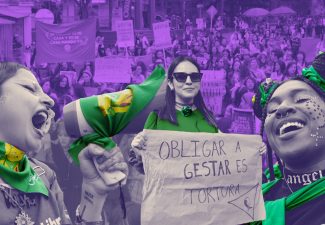
Dejusticia intervino ante la Corte Constitucional de Ecuador exponiendo los estándares internacionales y la experiencia de Colombia, que puede servir de ejemplo al vecino país.
Read MoreGanadería y deforestación: la Corte Constitucional ampara el derecho a saber el origen de la carne
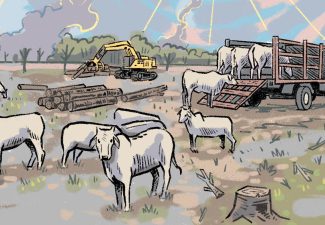
La Corte estableció que los particulares están obligados a responder solicitudes de periodistas cuando piden información que contribuye a formar a ciudadanos, hacer control a los diferentes poderes y se considera de interés general para la sociedad.
Read MoreColombia: going back to the original balance of justice

There is a crucial aspect of Colombia’s transitional justice model that is worrying: the current inability of the Special Jurisdiction for Peace (JEP) to offer legal security to those who participated in the conflict, including in human rights violations, and have not been identified as among the most responsible. And making sure they also contribute to the satisfaction of the rights of the victims. The JEP must avoid keep moving towards maximalist approaches and go back to the balance in the Peace Agreement.
Read MorePeruvian democracy hangs in the balance; NGOs at risk
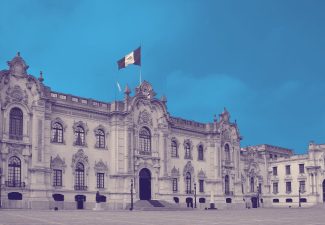
The Peruvian state, based on its commitments to international law, has an obligation to guarantee democracy and, within that framework, the right of civil society to associate and express itself. However, we are facing a serious situation in which civic space is being closed off, with various warning signs that urgently need to be addressed.
Read MoreMaduro’s final blow against NGOs

Venezuelan civil society has resisted for years, went to the polls, organized to collect the records, count the votes, and is demanding in the streets, despite fear, that the popular mandate be respected. Let us hope that world leaders and important human rights organizations from outside the country will not leave it alone.
Read MoreLe pedimos a la Corte que proteja el #DerechoADefenderDerechos de niños y adolescentes
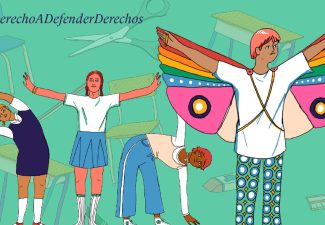
La intervención se da en el marco de un proceso de tutela presentado por un niño quien denunció diversas violaciones a derechos fundamentales y los de sus compañeras perpetradas por su colegio, asociadas con el acceso a la educación y al libre desarrollo de la personalidad de los niños, niñas y adolescentes LGBTIQ+. Para Dejusticia, el colegio también afectó el derecho a defender los derechos humanos de los menores.
Read MoreLeft, democracy, and Venezuela
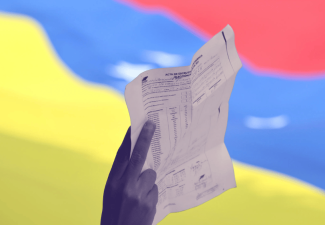
Colombia must demand an end to human rights violations and the immediate publication of the results and recount, with international verification to ensure credibility and prevent further violence and repression.
Read MoreThe strength of civil society through 32 examples of solidarity

In our new publication, “Tejido vivo,” we tell the stories of 32 organizations from different parts of Colombia that have created ways to defend democracy, their rights, and resist discrimination, war, and violence.
Read MoreState intelligence gathering on the internet and social media: the case of Colombia
In this report, we explore this subject by drawing on the “Secret Dossiers” case published in 2020 by Semana magazine, which shows how the Colombian state exploits social media and the internet in order to monitor and profile individuals.
Read MoreMujeres cuidadoras e ingreso mínimo: la Corte Constitucional trazó reglas que las protegen

El caso de 24 mujeres trabajadoras domésticas y migrantes excluidas del Programa Ingreso Solidario (PIS) condujo a un importante fallo que, en adelante, permitirá incluir la particular situación de las mujeres más vulnerables en cualquier ayuda del Estado.
Read MoreBukele: the savior? (II)

Bukele’s immense popularity does not legitimize his assault on the rule of law, as he is destroying the foundations of democracy, just as similar assaults by Viktor Orbán in Hungary, Daniel Ortega in Nicaragua, and Chavismo in Venezuela have not been legitimized.
Read MoreBukele: the savior?

This saga involving Bukele deserves to be known in Colombia because there are certain sectors, especially on the right, that rightly criticize similar processes of destruction of the rule of law by Ortega in Nicaragua or Maduro in Venezuela, but remain silent in the face of this assault on democracy in El Salvador.
Read MoreAgainst the Current: Human Rights and Climate Justice in the Global South

Against the Current is the result of the collective effort of participants from Dejusticia’s seventh annual Global Action-Research Workshop for Young Human Rights Advocates.
Read MoreElementa DD.HH. y Dejusticia presentamos un amicus en el proceso que adelanta el Asocazul y Cajar por afectaciones derivadas de aspersiones con glifosato

El glifosato causó daños irreversibles a los campesinos del sur de Bolívar y el Estado debe repararlos. Así lo argumentamos en una intervención ante el Consejo de Estado.
Read MoreThe immigration policy of the United States and its implications in Latin America

The United States has implemented different measures to prevent the entry of migrants and refugees into its territory, including extending its immigration policy to Latin American countries.
Read MoreUnder Surveillance: (Mis)use of Technologies in Emergency Responses

Surveillance technologies exacerbated the impacts of Covid-19 emergency measures on civic space by allowing governments to collect fine-grained data about individuals while also working across large scales of information, in a way that has been unprecedented in the history of global pandemics.
Read MoreInteligencia estatal en internet y redes sociales: la privacidad bajo amenaza
La inteligencia estatal hace mucho que se trasladó a la internet y las redes sociales. Esto, por supuesto, representa riesgos adicionales al ejercicio del derecho a la privacidad en línea que ya enfrenta serios obstáculos por cuenta de prácticas nocivas que desempeñan otros actores.
Read MoreAnalysis of a tax on sugar-sweetened beverages in the Colombian labor market
El impuesto a las bebidas azucaradas ha sido una política de salud pública implementada para desincentivar los altos niveles de consumo de estas bebidas. Sin embargo, según la industria, esta medida promueve el despido masivo de trabajadores. ¿Eso es cierto?
Read MoreStrategic Litigation Manual: From Theory to Practice, Lessons from Colombia & Lebanon
The manual presents the theory of strategic litigation with examples of real cases brought by Dejusticia and The Legal Agenda. We encourage readers to continue to add to it with each new case they have the opportunity to work on.
Read MoreFiscal policy in the regulation of adult-use cannabis in Colombia
Drugs are not the Devil, but nor are they child’s play. A drug policy that would be respectful of human rights and safeguard public health must lie at an intermediate point between full liberalization and the prohibition currently in place.
Read MoreReimagining the Future of Human Rights
The chapters in this book offer a snapshot of the current state of Human Rights that can help guide our work as activists and researchers.
Read MoreMigration and Decent Work: Challenges for the Global South
This book seeks to strenghten the Human Rights movement through collaboration and the sharing of experiences. The diversity of voices featured here offers a look at migration based on and geared toward the Global South.
Read MoreCivil Resistance Against 21st Century Athoritarianism
Thorugh various narratives, the authors seek to recognize new spaces for struggle —such as political activism— to develop action-research tools in a context of crisis.
Read MoreEngaging with Big Business: Seeking Accountability for the Human Rights Impacts of Corporate Activities
A course on Business and Human Rights organized by Dejusticia
Read MoreStrategic Litigation: Inward and Outward Learning
Challenges to counter initiatives that aim at weakening human rights systems
Read MoreLearning into the future: our experience with partners
Challenges to counter initiatives that aim at weakening human rights systems
Read MoreLearning how to learn more effectively
Challenges to counter initiatives that aim at weakening human rights systems
Read MoreLearning how to reinvent a partnership
Challenges to counter initiatives that aim at weakening human rights systems
Read MoreLessons for civil society organizations on reforming international Human Rights Systems
Challenges to counter initiatives that aim at weakening human rights systems
Read MoreIndigenous Leaders of the World: Register for the Third Global Indigenous Workshop

The concept of the “living jungle” will be the guide for this workshop, which will occur in December in the territory of the Sarayaku in the Ecuadorian Amazon. Applications open until July 10.
Read More7th Global Action-Research Workshop for Young Human Rights Advocates

The goal of the Workshop is to strengthen the writing and advocacy skills of the participants.
Read MoreBusiness and Human Rights: New responses to ensure Human Rights are guaranteed in corporate activities
A course on Business and Human Rights organized by Dejusticia
Read MoreEighth Global Action-Research Workshop for Young Human Rights Advocates
We invite applications from young professionals from the Global South who are engaged in advocacy around migration
Read MoreColombia must obtain resources to guarantee the right to health of Venezuelan migrants: Constitutional Court
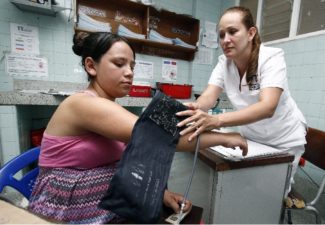
The high court protected the right to health of two undocumented Venezuelans and requested the government to advance as “expeditiously and effectively as possible” towards the full realization of migrants’ right to health, regardless of their immigration status. Dejusticia intervened in the case.
Read MoreDejusticia intervenes in defense of Venezuelan migrants’ right to health
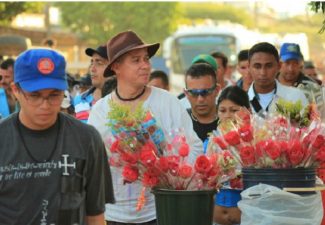
The Constitutional Court invited Dejusticia to present their legal opinion on two cases concerning the right to health of people coming from Venezuela.
Read MoreThe foreign minister’s silence on Colombians imprisoned in Venezuela

More than 60 innocent Colombians sleep in Venezuelan jail cells. Although similar situations have resulted in diplomatic confrontations between Venezuela and countries such as Brazil, in Colombia, the Minister of Foreign Affairs, María Ángela Holguín has kept a low profile.
Read MoreThe long wait of the JEP ahead of the decisions of the Constitutional Court and Congress
In the last six months civil society organizations, such as Dejusticia, have called on both institutions to give free rein to the norms that consolidate the Special Jurisdiction for Peace.
Read MoreCase of indigenous people of Bojayá who could not vote in the plebiscite is about to reach the Court
Through a tutela, a group of Emberá claimed their rights to political participation and equality, because their economic situation and how far they live made it impossible for them to move to endorse the Peace Agreement. Dejusticia, human rights organizations, and indigenous leaders asked the High Court to review the case.
Read MoreThe Constitutional Court has the last word to save the Ciénaga Grande of Santa Marta
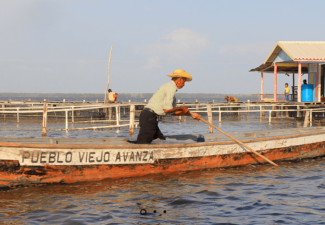
The environmental crisis of this ecosystem led fishermen to pursue a legal battle that reached the High Court. In this intervention, we support their demand that environmental authorities take urgent measures to stop the disaster and thus, protect their rights to healthy environment, dignified life and work.
Read MoreGender focus in rural reform is important but insufficient
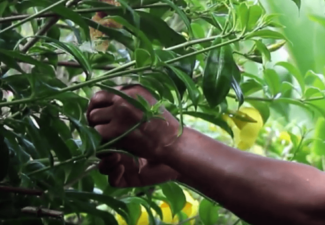
The Gender-in-Peace Working Group -GPAZ, a group of which Dejusticia is a member, took part in the Public Hearing convened by the Constitutional Court, within the framework of the informal constitutional review of Decree 902 of 2017 “to facilitate the implementation of the Comprehensive Rural Reform contemplated in the Final Land Agreement, specifically the procedure for access and formalization and the Land Fund.”
Read MoreRural reform decree to resolve historic debt with peasants
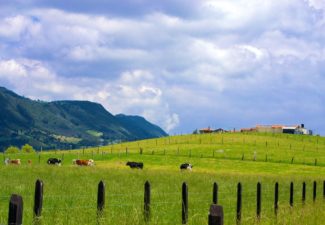
Terrible conditions in the countryside and lack of access to land are linked to the armed conflict. Point one of the Peace Agreement, which is under study by the Constitutional Court, addresses these issues. Dejusticia presented an intervention supporting most of its content.
Read MoreThe national government geographically isolated Chocó

We intervened to support a tutela that requires the government to pave the
Quibdó-Medellín and Quibdó-Pereira roads: a promise that has historically been unfulfilled.
Prison is not the only sanction in transitional justice mechanisms

César Rodríguez defended that the Comprehensive System of Truth, Justice, Reparation and Guarantees of Non-Repetition is in line with the Constitution. Regarding penalties, he affirmed that international law discusses effective sanctions, not imprisonment.
Read MoreFirst Global Workshop on Human Rights Strategies for Indigenous Leaders in the Global South
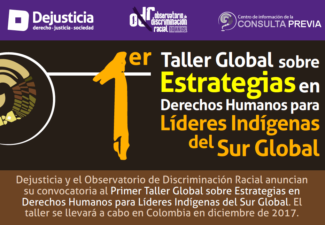
Dejusticia and the Racial Discrimination Watch opens their call to the First Global Workshop on Human Rights Strategies for Indigenous Leaders in the Global South. The workshop will be held in Colombia in December 2017. The call for proposals is open until June 10th.
Read More