


Issue-Drug Policy
Captagon, Syria and armed conflict: another failure of the war on drugs
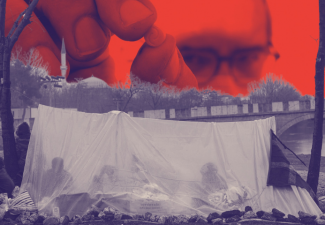
The CND 67 scenario led to conversations around this substance, a kind of amphetamine whose trafficking networks are of concern to several governments. The human rights approach is minimal in the understanding of the problem, and in Colombia, we already know the consequences of this mistake.
Read MoreJustice Is Setting Them Free: Women, Drug Policies and Incarceration in Latin America
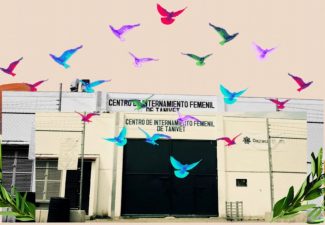
“Justice condemns women with a double penalty for being a woman… especially as a low-income woman, you’re invisible in the system until you commit a crime. Then, they finally see you.” —Nora Laura Calandra, co-founder of La Rama de Libertadxs y Familiares.
Read MoreGlobal drug policy: the transition from “crime and punishment” to safeguarding human rights

We were in Geneva at the presentation of the report of the Office of the United Nations High Commissioner for Human Rights. One of the recommendations was the responsible and progressive regulation of drug markets.
Read MorePunitive drug laws: 10 years undermining the Bangkok Rules

A set of 70 rules that seek to adapt world prison systems to the needs and experiences of women deprived of liberty are in risk by the punitive approach of many drug laws.
Read MoreDejusticia and more than 70 international organizations request urgent attention for people who inject themselves with drugs in Colombia

In Colombia, the suspension of services puts at risk the advances achieved in recent years. More than 1,000 people are unattended.
Read MoreCoca: the plant that takes a toll

On April 2017, we traveled to the department of Putumayo, Colombia to speak with a group of cocalera women about how the Crop Substitution Program should advance. This is the powerful testimony of one of them.
Read MoreDejusticia and GPAZ’s suggestions so that differentiated criminal treatment does not remain on paper
In the Peace Agreement, the Government committed to give up criminal actions and penalties against small farmers and people living in poverty, involved in illicit crops. To date, no law has been approved for this purpose. Here, we outline our proposals.
Read MoreRegulate the illicit market: a drug policy model with a human rights approach
In a publication by the KAS Foundation, Dejusticia researchers analyze the costs and benefits of different strategies used in the so-called war on drugs.
Read MoreThe use of jail went out of proportion

If the idea was to control the production, transportation and use of drugs through tough policies, what ended up happening was the criminalization of the most vulnerable and marginalized.
Read MoreEvery hour nine people are detained for drug-related crimes

The book “Drug crimes and prison overdose in Colombia”, produced by the Research Consortium on Drugs and the Law and Dejusticia, disagnoses the impact of drug policy on the prison system and recommends, among other measures, to decriminalize personal dose.
Read MoreInnovative approaches to the drug problem and imprisonment
The experiences of Uruguay, Costa Rica and Ecuador show that it is possible and useful to apply innovative approaches to drug-related incarceration. However, they also highlight the limits of these programs and their failure to prevent further criminal activity.
Read MoreThe debts we owe to female coca growers
Although women growers face particular contexts of discrimination, poverty and workload, the decree creating the Program for the Substitution of illicit crops did not include a gender approach.
Read MoreMore opportunities and less jail for women with drug offenses
93% of these women are mothers, 52% are head of household, and many have not finished high school; that is, they are poor women. Although the Peace Agreement contemplated a different criminal treatment for these cases, to date no bill has been filed before Congress.
Read MoreThe road to peace is not only about eradicating coca
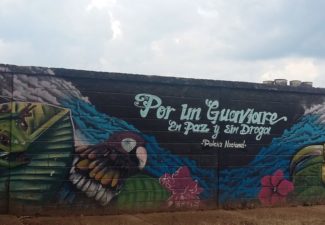
In Havana, the agreement did not only lay out the number of hectares to be eradicated, but also the means to make it possible and sustainable in order to achieve that “stable and lasting” peace that is called for in the final agreement.
Read MoreThe gap between discourse and practice for drug policy reform in Latin America
The drug policy reform movement, albeit with its internal diversity, has one main premise: prohibition of drugs has failed to achieve its goal of reducing both demand and supply for illicit substances.
Read MoreThe State seems to negotiate with a dagger under the tablecloth
The drugs section of the peace agreement mentions strategies for the substitution of illicit crops, strengthening the fight against illegal finances and drug trafficking groups, paying attention to consumption and the promotion of an international debate on drug policy. However, it fell short in providing a comprehensive solution for communities associated with coca leaf cultivation.
Read MoreViolence Against Prisoners
More than a prison crisis, massive murders in prisons are proof of the institutional weakeness when facing organized crime.
Read MoreThe new agreement with the FARC and the changes it proposes for drug policy
Drug policy in Colombia is subject, at least politically, to the margin of action provided by the Havana Agreement on illicit drugs. A few days ago Colombians found our about the new agreement, and the scope of the changes incorporated after the proposals of the No campaign.
Read MoreIllicit Drug Sales in the Deep Web: Safer Trading for Whom?
The creativity evidenced by drug traders and consumers reminds us that prohibition got it all wrong by making “a drug-free world” its main objective.
“Yes, it’s about race”
Those were the words uttered by the mayor of Dallas, Mike Rawlings, during the vigil held after five police officers were shot to death by an armed man during a peaceful protest of the Black Lives Matter movement, which was organized after two African American men were killed by police. Well, let’s talk about race.
Read MoreAfter the Drug Wars
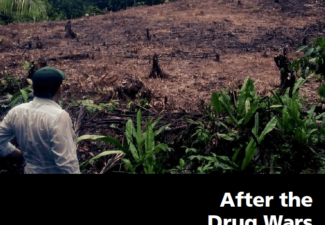
The post-‘war on drugs’ era has begun. Prohibitionist policies must now take a back seat to the new, comprehensive, people-centred set of universal goals and targets that we know as the Sustainable Development Goals.
Read MoreWomen, Drug Policy, and Imprisonment
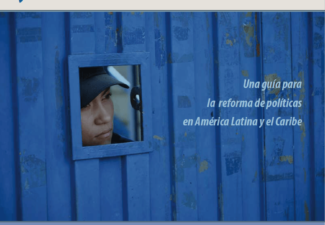
This guide, written by the Washington Office on Latin America, the International Drug Policy Consortium, the Inter-American Commission of Women, and Dejusticia, proposes drug policy reform to reduce the female prison population in the Americas.
Read MoreMitigating Criminal Law Addiction: Alternatives to Prison for Drug-related Offenses
This report was prepared with the Colectivo de Estudios Drogas y Derecho and discusses alternatives to prison for drug-related offenses.
Read MoreTechnical Report for Alternatives to Imprisonment for Drug-Related Offenses

In Search of Rights: Drug Users and Governments Response in Latin America
The Drugs and Rights Studies Collective published a new report that examines government responses to the consumption of illicit drugs in eight countries in Latin America: Mexico, Colombia, Peru, Ecuador, Brazil, Argentina, Uruguay and Bolivia.
Read MoreOutrageous Penalties: Disproportionality in the penalization of drugs crimes in Colombia
This study supports with solid empirical evidence that drug policies in Colombia that resort to the use of criminal law do not respect the principle of proportionality and therefore are not justifiable from the constitutional point of view.
Addicted to punishment: The disproportionality of drug laws in Latin America
This document analyzes the proportionality of drug related crimes in seven Latin American countries through the study of the evolution of their criminal legislations from 1950 until 2012.
Read MoreAddicted to Punishment: The disproportionality of drug laws in Latin America

This document describes the disproportionality of the drug-related crimes in seven Latin American countries. Even though they are punishable behavior that does not directly or indirectly harm third parties, studies of drug crime related laws show a regional tendency to increase the use of criminal law
Read MoreSystems Overload: Drug Laws and Prisons in Latin America
This paper demonstrates how drug policy in the country tended to a progressive hardening along the twentieth century and, notwithstanding, failed to be effective in reducing supply and in combating organized crime networks dedicated to trafficking.
Read More