


Issue-Drug Policy
Decree that created the National Comprehensive Program for Crop Substitution is constitutional
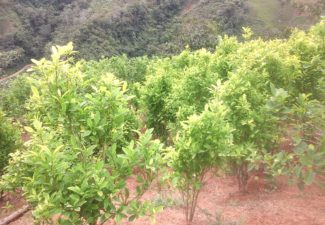
In an intervention before the Constitutional Court, Dejusticia argued that this norm conforms to the Constitution. However, the organization warned that the deadline to determine the beneficiaries should be reconsidered because it could leave out a group of peasants living in poverty.
Read More10 reasons why drug policy needs to be shaken up

The growing risks of the war on drugs can no longer be ignored. On June 26, organizations from around the world will come together under the slogan “Support. Do not punish.” In Colombia a special event will be held in Medellín this Friday 23.
Read MoreAsk the cocalera women, they have answers
During the implementation of the Peace Agreement, women growers should have the opportunity to say in what ways to transform their territories, and how the promise of a peasant and solidarity economy and lasting peace could be realized.
Read MoreThe National Comprehensive Program for the Substitution of Illicit Crops (PNIS) needs more concreteness, a road map and a more global vision for integral rural development
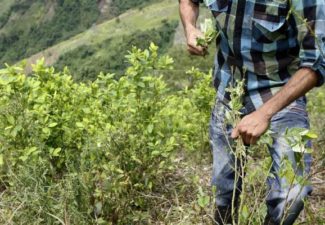
We put forward some recommendations aimed at ensuring the proper implementation of point 4 of the Final Agreement: “Solution to the Problem of Illicit Drugs”, especially in relation to the National Comprehensive Program for the Substitution of Illicit Crops (PNIS).
Read MoreDejusticia weighs in on the Ministry of Justice´s proposal regarding differentiated penal treatment
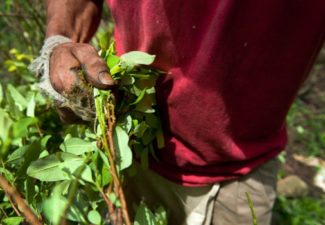
We comment the proposed draft law on the Regulation of Differential Criminal Treatment for individuals associated with the cultivation of illicit crops and women linked to small-scale drug trafficking.
Read MoreAn organization with collective leadership: our history reviewed in the Leader Network
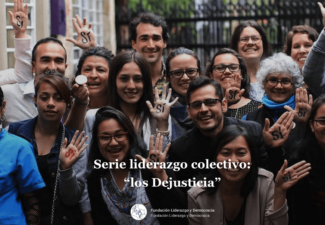
The Leader Network chose Dejusticia to initiate the series of profiles on collective leadership. The profile published in Silla Vacía investigates three fundamental measures of leadership: vision, example and results.
Read MoreNew study shows growth in the number of prisoners in Latin America for low-level drug offenses
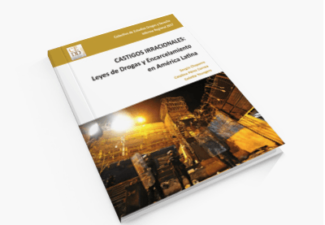
Today, the Drug and Law Study Group (CEDD), a network of experts on drug policy in 9 Latin American countries, publishes new research that reveals that despite the debate in Latin America on the need to rethink drug policies, mass incarceration for these types of crimes, even when they are non-violent and low level, continues to increase in the continent.
Read MorePublic letter on the reactivation of terrestrial spraying of illicit crops

Without previously implementing
an adequate development approach, concerted with the communities, forced
eradication has proven to be wrong and harmful.
Dejustica, along with more than 300 organizations, asks the UN to act against extrajudicial killings in the Philippines
Open letter from civil society calling on UN drug control agencies to condemn the extrajudicial killing of people suspected of using or
dealing drugs in the Philippines.
The heroic act of guarding death
It was a sunny day in February and the entrance to the family’s house was decorated with a purple ribbon. In a room, Juanse’s photos and the paintings his friends had given him were visible. We talked for hours with his parents and sister, we got to know Juanse through his family. Two weeks ago, they had had to say goodbye to their 14 year-old son and brother.
Read MoreA Pronouncement from the Coalition for Drug Reform Policy
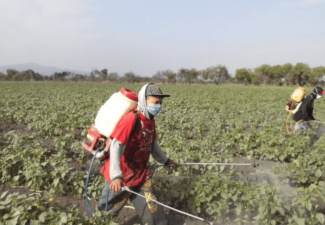
An intent to reactivate fumigations
Read MoreDrugs, Mafias, and Peace
We either change drug policy to weaken paramilitarism and the strongholds of organized crime that remain from the internal conflict, or the possibilities for peace building will be much more difficult and uncertain.
Read MorePost-UNGASS: From Why to How to Change Drug Policy
Colombia insisted at the UN that the War against Drugs has failed, it’s time to implement more intelligent policy domestically.
Read MorePost-UNGASS
The “United Nations General Assembly Special Session” about dugs (known as UNGASS) leaves a mixed balance for those that consider the international prohibition regime irrational and unjust and hence should be deeply reformed.
Read MoreEradicating the War on Drugs
Colombia has to eradicate its own war against drugs and redirect its resources to consolidating democracy and development in rural areas.
Read MoreThe Many Faces of Drug Use
We have to insist that no drug user should be treated as a criminal and that the majority is far the dominant stereotype.
Read MoreCoca Corridors: Stories of Cultivators and Narcotraffickers
Until a couple weeks ago, I had not heard of the narco-corridors of Colombia.
Read MoreThe State Created a Vicious Cycle for Coca Producing Communities
To read this post in English click here.
States made a mistake with coca producing communities, as they not only incentivized an illegal market that turned them into part of a criminal network, but also never addressed the causes of the increase of drug trafficking in rural areas, and responded with simplistic solutions: bullets or eradication.
Read MoreDying in Pain in the Global South
All of us, at one point, have been close to the pain of a loved one: a grandmother with cancer at home, a father at the oncological care unit, a brother ongoing sessions of radio and/or chemotherapy.
Read MoreThe Alarming Rate of Imprisoned Women for Drug-Related Offenses
In Latin America the use of prison as a response to drugs have disproportionately affected women.
Read More