


Area-Global South & North Collaborations (Internationalization)
Open call for Global North fellowships 2026
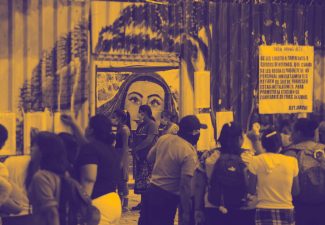
This opportunity, for the second semester of 2026, allows for the exchange of tools and research-action strategies developed at Dejusticia, as well as the contributions of interns and fellows with their own experiences and those of their organizations.
Read MoreThe Limits of the Nation State in Today’s World

The resurgence of nationalism threatens democracy, international law, and stability. This edition analyzes its manifestations, from xenophobic migration policies to institutional fragility in the Amazon and border conflicts in the Global South.
Read MoreCELAC-EU: Cooperation Trapped in Prohibitionism

Drug policy dominates the CELAC-EU Summit. We analyze the asymmetry in cooperation and the call to replace prohibitionism with financial traceability.
Read MoreTransformative bi-regional cooperation for a just energy transition

The CELAC-EU Summit promotes energy transition. How can we achieve a just transition and avoid “green extractivism” in Latin America?
Read MoreCare as a human right: a bi-regional agenda for the sustainability of life

The bi-regional pact on care will be key at the CELAC-EU Summit. We analyze how it seeks to recognize care as a right and reduce gender inequality.
Read MoreCELAC–EU: an alliance to defend democracy, rights, and multilateralism in difficult times

Analysis of the CELAC-EU Summit in Santa Marta. The EU-Latin America alliance faces key challenges in democracy, multilateralism, and green transition.
Read More“Seville’s commitment” must not remain on paper
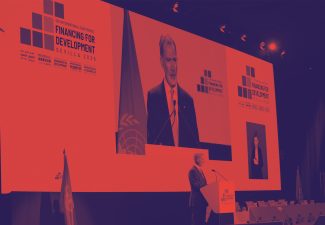
What we saw and heard in the previous forums—especially in the feminist and civil society space—made it clear to us that grassroots mobilization is key.
Read MoreClimate budgets
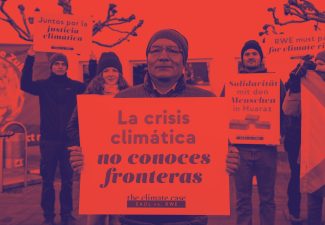
El presupuesto no es solo una hoja de cálculo. Es una herramienta política que define qué se protege y a quién se prioriza.
Read MoreTaxes and spending with a sense of social justice
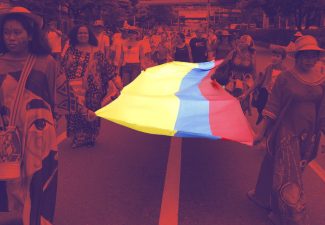
Talking about fiscal policy means talking about government revenue and spending, but above all about its power to transform lives and define the future we want to build.
Read MoreWhat’s in the shopping cart: the hidden history of “neutral” taxes

Consumption taxes hit low-income households hardest, where every penny counts.
Read MoreThe immigration policy of the United States and its implications in Latin America

The United States has implemented different measures to prevent the entry of migrants and refugees into its territory, including extending its immigration policy to Latin American countries.
Read MoreThe binationality of the Wayuu people: the pending debt of Venezuela and Colombia

The Wayuu arrive in Colombia to seek refuge but crashes with a wall that prevents them from accessing social services and fundamental rights: the Colombian State has not recognized the binationality of the Wayuu people in practice.
Read MoreThe binationality of the Wayuu people: the vision from their cosmology

The Wayuu people have demanded the recognition of their binationality, appealing to the legal and political link that unites them with Colombia and Venezuela, which should translate into a full guarantee of rights and citizenship in both countries.
Read MoreUnder Surveillance: (Mis)use of Technologies in Emergency Responses

Surveillance technologies exacerbated the impacts of Covid-19 emergency measures on civic space by allowing governments to collect fine-grained data about individuals while also working across large scales of information, in a way that has been unprecedented in the history of global pandemics.
Read MoreEnergy transition and human rights in the Global South

The lack of a human rights and energy policy feeds the growing conflict in the territories. It will be hard to end all forms of violence associated with our reliance on fossil fuels at any cost until we decide to retrace our steps by focusing on a just transition.
Read MoreThe Sarayaku and the Inter-American System on Human Rights: Justice for the “Medio Dia” People and their Living Jungle
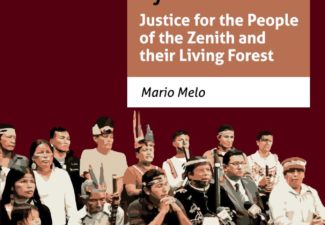
Mario Melo Cevallos, lawyer of the Kichwa people of Sarayaku, presents his version of the history of resistance and mobilization of the indigenous people before the State plans to exploit the oil that was in the heart of the Amazon.
Read MoreFrom repression to migration: The case of Rufo Chacón
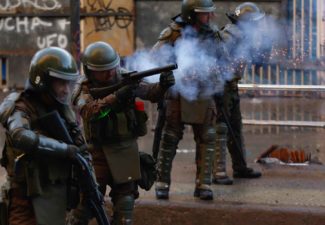
Rufo Chacón, in the company of his mother, is preparing to travel to Spain, where he will get the surgical intervention needed to improve his condition.
Read MoreThe Sierra, Displaced

I thought about their story, the people and the situations they must have faced. I honored that by feeling the strength of the land and that the stone had witnessed the same. –Tiokasin, Lakota leader
Read More7th Global Action-Research Workshop for Young Human Rights Advocates

The goal of the Workshop is to strengthen the writing and advocacy skills of the participants.
Read MoreEighth Global Action-Research Workshop for Young Human Rights Advocates
We invite applications from young professionals from the Global South who are engaged in advocacy around migration
Read MoreA Hop, Skip, and a Jungle Away: From the Global South to Sarayaku
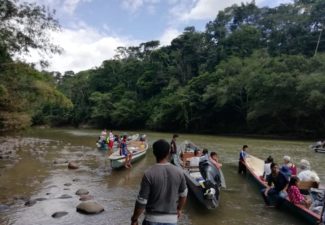
Nearly all of the indigenous leaders who joined us for the workshop had some troubles in transit, which is clearly not an accident.
Read MoreMy Name is Nobody
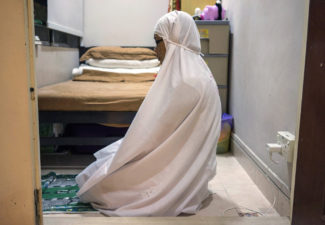
As a human being, Alba needs to be able to assume her identity without fear. But if the conditions she experiences persist and the impacts on her health are made invisible, she could end up having this name that no human being should ever have – whether as a survival mechanism or because of her state of marginalization.
Read MoreTransnational Advocacy Networks

Activists, particularly those based in the global South, have accumulated a wealth of experience in dealing with a range of transnational networks operating in diverse issue areas. New theoretical understandings have reflected this accumulating experience.
Read MoreDejusticia intervenes in defense of Venezuelan migrants’ right to health
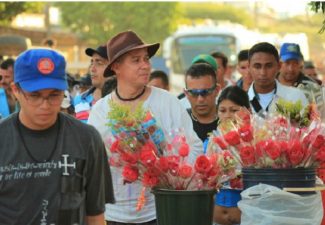
The Constitutional Court invited Dejusticia to present their legal opinion on two cases concerning the right to health of people coming from Venezuela.
Read MoreJustice through Transitions: Conflict, Peacemaking and Human Rights in the Global South
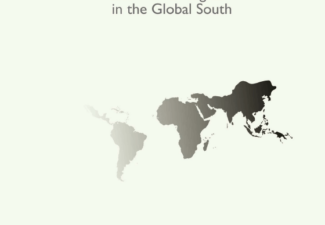
What does justice mean in times of transition? What kinds of possibilities and dissapointments emerge from processes of seeking justice through transition? How might we understand these processes through narrative?
Read MoreTaxes on soft drinks in the Americas: trend or necessity

More than a trend, the increasing number of countries implementing a tax on soft drinks shows that this kind of fiscal measure is a cost-efficient policy to tackle the obesity epidemic in the Americas.
Read MoreJuan Pedro Lares: The freed prisoner that never was
Juan Pedro Lares, a 24-year old Colombian-Venezuelan young man, who was abducted by a hundred civilian-dressed members of the Venezuelan Intelligence, the National Guard, the police, and armed civilian groups from his family’s home in July of last year was finally set free . But a feeling of injustice still lingers.
Read MorePalliative Care: A Human Rights Approach to Health Care
This edition is an English translation of “Cuidados paliativos: El abordaje de la atención en salud desde un enfoque de derechos humanos”, published by Dejusticia in August 2016; the data was not updated for the English translation.
Read MoreHuman Rights Due Diligence to Identify, Prevent and Account for Human Rights Impacts by Business Enterprises
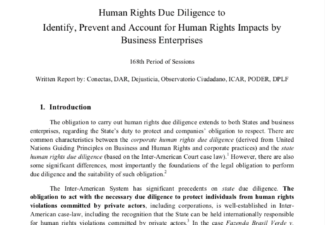
The aim of this document is to present to the IACHR, as it develops a report with guidelines for Business and Human rights and as it engages more generally with human rights violations in the context of business activities, a summary of the main areas of concern with regard to human rights due diligence.
Read MoreRising to the Populist Challenge
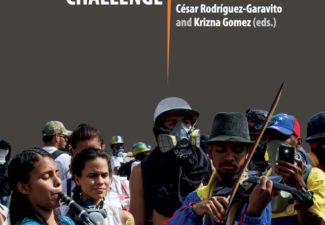
This book collects and analyzes a repertoire of responses by human rights organizations to the crackdown against civil society in the populist context.
Read MoreBUSINESS AND HUMAN RIGHTS: SUBMISSION TO THE INTER-AMERICAN COMMISSION ON HUMAN RIGHTS AND THE SPECIAL RAPPORTEUR ON ECONOMIC, SOCIAL, CULTURAL AND ENVIRONMENTAL RIGHTS
This document focuses on implementation and access to effective remedies in the context of business activities. It also collects Inter-American standards that have an impact on the monitoring and on plans for the implementation of the Guiding Principles on Business and Human Rights. Moreover, it collects examples of practices that must improve in order to protect human rights in the context of business enterprises.
Read MoreGlobalization and Human Rights Book Series
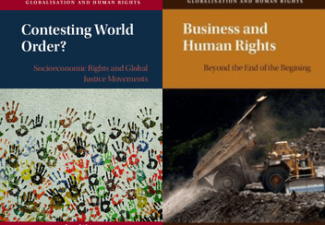
The series provides unique and multi-disciplinary perspectives on the interface of the global economy and human rights. It offers space for exploring the challenges of globalization, the role of human rights in framing and shaping regulation and politics and, more critically whether human rights are a mere product or legitimation of globalization.
Read MoreBusiness and Human Rights. Beyond the End of the Beginning
The regulation of business in the global economy poses one of the main challenges for governance, as illustrated by the dynamic scholarly and policy debates about the UN Guiding Principles on Business and Human Rights and a possible international treaty on the matter.
Read MoreIntervention before the Inter-American Court of Human Rights in follow-up to the situation of the Sarayaku people of Ecuador
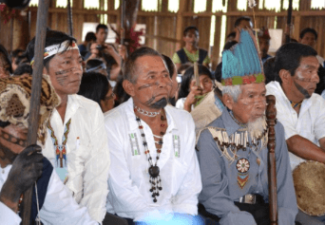
Dejusticia, EarthRights International and the Foundation for Due Process presented an intervention before the Inter-American Court of Human Rights in the follow-up that this court is giving to the situation of the Sarayaku people of Ecuador.
Read MoreWe presented a tutela in favor of the right consumers have to receive information on the amount of sugarpresent in the beverages we drink

Dejusticia and other organizations filed a tutela regarding the Industry and Commerce Oversight Agency ban of a commercial by Educating Consumers that addressed health effects of excessive sugary drinks consumption.
Read MoreDejusticia and other organizations intervene in protection case on behalf of Wayúu children
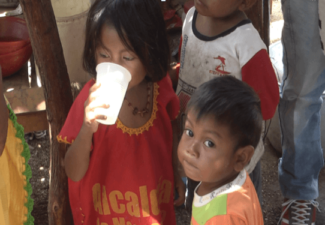
on 19 july, Dejusticia, along with the National Indigenous Organization of Colombia (ONIC), the Civic Committee for the Dignity of La Guajira, and the Committee of Support for Popular Communities (CODACOP), and several leaders of the Wayúu peoples, sent to the Supreme Court of Justice of Colombia a brief in support of the citizen-led protection case on behalf of Wayúu boys and girls, who are facing grave danger due to a widespread situation of hunger and lack of drinking water in the department of La Guajira.
Read MoreHuman Rights Case Against Former Bolivian President for Role in 2003 Massacre Cleared to Move Forward
Court of Appeals Rejects Defendants’ Attempt to Have Case Dismissed
Read MoreDejusticia Intervenes in Favor of Migrant Woman in Bolivia who Was Sterilized without Her Consent

Dejusticia intervenes before the Inter-American Court on Human Rights in the case of a migrant woman in Bolivia who was sterilized without her informed consent.
Read MoreIntervention Litigating Article that Establishes Sales Tax

We intervened before the Constitution Court litigating the unconstitutionality of Numera 3 of Article 171 of Law 1607 of 2012, that modifies taxes and establish a sales tax.
Read MoreDejusticia’s Director Intervenes before the Inter-American Court on Human Rights on Fazenda Brazil Workers Case
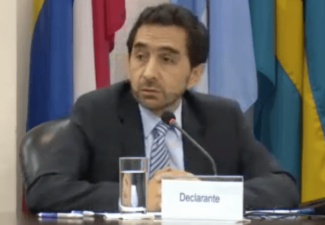
César Rodríguez Garavito, Dejusticia’s director, intervened as an expert witness in the first case that debates forced work in the Americas, regarding the complaint of slave work in Brazil.
Read MoreAmicus Curiae in Favor of the Right to Prior Consultation of Mayan Communities in Mexico

This amicus curiae seeks to support the actions of the Mayan communities from Pach-Chan and Canabchen to ask that their right to prior consultation be respected in the case against Monsanto’s genetically modified soy crops.
Read MoreDejusticia Intervenes in Favor of an Activist that Defended the Sawhoya Community in Paraguay

The International Network for Economic, Social and Cultural Rights (ESCR-Net) and Dejusticia presented an intervention in favor of the lawyer Julia Cabello, executive coordinator of Tierraviva, who was sued by the Minister Gladys Bareiro de Módica.
Read More