


Area-Global South & North Collaborations (Internationalization)
Useful sanctions
The principal objections to the peace accords of La Habana, voiced not only by the political party Centro Democrático, but also by parts of Colombian society, seem to be essentially about the political participation of the FARC and the lack of prison terms for them.
Read MoreIncluding women in the peace process
Although women make up more than half of the population and are the group with the greatest number of victims in Colombia, only 3.6% of women were included in the spaces where decisions about peace have been made. (Spanish)
Read MoreThe Political Strategy for Peace
Pijao: the “slow” town that is endangered due to mining
Hidden between the mountains of Quindio, there is a small town waging a battle to defend its autonomy and territory. Pijao is a municipality with approximately 6,000 residents. Since a few years ago, it struggles to defend its decision to “not be in a rush”, where quality of life, good food, and nature come first before mining, which threatens to change Pijao’s life style.
Read MoreWhy transitional justice also has to do with business
It is clear that peace will bring economic benefits to Colombian society. This conclusion became apparent during several panels at the World Economic Forum on Latin America, which took place in Medellin a week ago. As the forum director, Marisol Argueta, said: similar to the growing investment in agroindustry, infrastructure, and the service sector, the inclusion of isolated territories in productive settings will stimulate the economy.
Read MoreMeasuring What Matters: a Key Challenge in Human Rights and Business
Five years in, we still lack data and methods to measure how and whether States’ and business commitments to the Guiding Principles on Business and Human Rights are actually improving conditions on the ground. It is time to focus on measuring what matters, and zeroing in on how affected communities have experienced the GPs.
Hunger and Obesity: Two Faces of Inequality
Hunger and obesity are avoidable in today’s world. They are the result of political decisions that States have made regarding the production, commercialization, and distribution of food.
Taking Protests Seriously
The poor debate about the current rural worker and ethnic communities strike shows that we still do not take social movements seriously. The blindspot is not only Santos’– “such strike does not exist,” he said during the marches in 2013– it extends to the media, the state, and the academy.
Read MoreInvisible and Vulnerable Migrants
To read this post in English click here.
Hundreds of migrants travel invisibly through Latin America toward the United States and confront regressive migration policies in our continent.
IACHR: Crisis and Opportunity
The Inter-American Commision on Human Rights (IACHR) has been fundamental in the struggle for democracy in Latin America. In many cases it has been the only institution to which victims of violations could turn to when they found no response in their own countries, like the families of those that were forcefully disappeared by the Argentine and Chilean dictatorships, or the victims of political persecution in Venezuela, or the censored journalists in Ecuador. And IACHR has also played an essential role in crucial moments, like the resistance of Peruvians against Fujimori’s dictatorship or the investigation about the missing Mexican students of Ayotzinapa.
Read MoreIbagué Mining Consultation in Final Stages
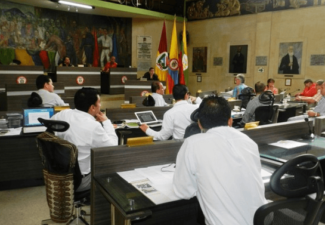
The Council of Ibagué backed the right to consultation on mining matters, but it still has to wait for approval by the Administrative Court of Tolima. Dejusticia researchers explain that Ibagué complies with all the requirements and that the local government has the competency to do this.
Read MoreDejusticia’s Director Appears before the Inter-American Court as Expert in Modern Slavery Case in Brazil
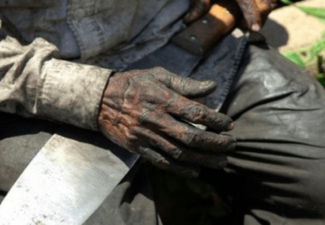
This Thursday February 19th César Rodríguez Garavito, Dejusticia’s executive director, will intervene as an expert in the first case that considers forced labor in the Americas, regarding a complaint about slave work in Brazil.
Read MoreStatement on upcoming Venezuelan elections
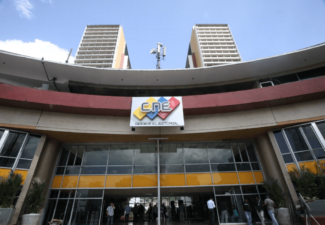
Call for a Robust UNASUR Electoral Mission to Venezuela.
Read MoreStatement on upcoming Venezuelan elections
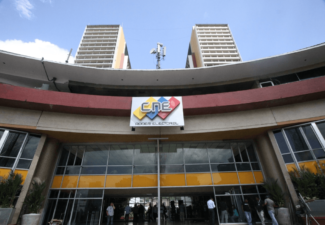
Call for a Robust UNASUR Electoral Mission to Venezuela.
Read MoreSee What Our Global School’s Course on Social Rights in Bogotá Was Like
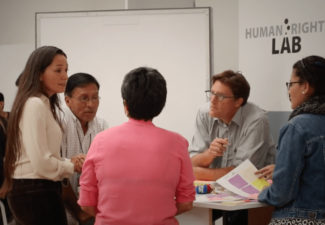
September 14th-18th, 2015 we hosted the Social Rights Intensive Course: Latin America in the Global Context with more than 50 participants from all over Latin America.
Read MoreCésar Rodríguez Garavito New Dejusticia Director

After a decade as co-director of the international area, our founding member César Rodríguez is now the executive director of Dejusticia.
Read MoreCesar Rodríguez-Garavito Assumes Executive Directorship of Dejusticia

After directing the international area, our founding member César Rodríguez assumes Dejusticia’s Executive Directorship.
Read MoreLive Streaming of ESC Social Rights Course
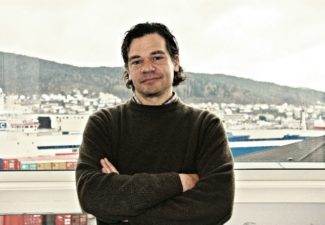
Conference by Roberto Gargarella.
Read MoreOur Social Rights ESC Rights Course Begins
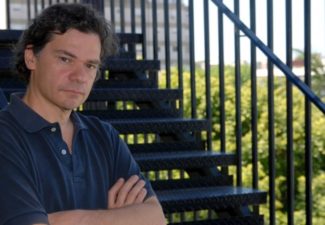
This course will take place from the 14th to the 18th of September. It will be taught by well-known academics and legal experts from Latin America and around the world.
Read More“One realizes that what has been done in Colombia isn’t so terrible”

Leonarda De la Ossa, Activist from Montes de María, talks about her experience in the Action-Research Global School.
Read More