


Area-Global South & North Collaborations (Internationalization)
Who Is Still Financing the Climate Crisis?
Despite the progress the international community has achieved in terms of tackling climate change, a great contradiction exists between what is stated in international accords and what happens in practice. This is particularly evident in the steady financing of fossil fuel infrastructure at the expense of people’s lives.
Read MoreKnowledge, resistance and reflection
A new initiative for indigenous leaders in the Global South.
Read MorePeace and echo chambers
In addition to the end of a half a century war, the most positive aspect that the process that will likely end this Sunday with the victory of the YES leaves behind is the strengthening of public debate and citizen participation in politics.
Read MoreOf Peace and Traffic: Being Filipino in Colombia
As a foreigner, I always get the ¿De donde eres? (Where are you from?) question from cab drivers in Colombia. After a small chitchat about where exactly in the globe my country is and Imelda Marcos’ 3,000 pairs of shoes (which seem to be the usual thing they can recall about the Philippines), the conversation would usually turn to the traffic.
Read MoreThe sugar conspiracy
Conspiracy
theories are less often than not on point. Social phenomena are often
more complex than the stories of furtive strategies and collective fraud that complot theorists suggest. To prove whether conspiracies
do exist is a difficult matter that tests the efforts of memorable
journalists or researchers.
A new path for the International Criminal Court and peace processes?
One of the issues that has generated most debate in international legal circles is whether the justice and accountability component of the Colombian peace accord contradicts the State’s duties in terms of international criminal law.
The Olympics or the inability to protect rights
While traveling to Brazil, I felt why the Olympics are splendid. However, I confirmed how humanity has not been able to generate any advances in the protection of human rights during the construction of this mega-events.
Read MoreUnreformable criminals or teenagers in complex realities?
It is programs in which adolescents are treated as subjects of rights that welcome solutions to the rise of youth violence, not the heavy-handed response of criminal responsibility.
Read MoreThe Olympic challenge of Abrão
In the next few days, the Brazilian lawyer Paulo Abrão will become the new executive secretary of the Inter-American Commission on Human Rights. This is good news for the region given that his experience will be essential to face the multiple challenges of said organization.
Read MoreConcealing hunger statistics
There are two ways to hide a scandalous statistic, like that of child deaths linked to malnutrition in Colombia. One is to solve the problem. The other one is to hide or retouch the statistics.
Read MorePeople’s Consultations About Mining Are Constitutional
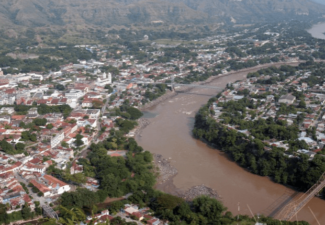
Dejusticia filed a supporting brief in the protection case presented by citizens of Pijao, in defense of their right to citizen participation in a people’s consultation about mining.
Read MoreHuman Rights Case Against Former Bolivian President for Role in 2003 Massacre Cleared to Move Forward
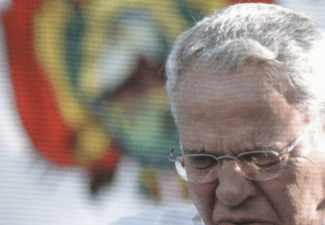
United States Court of Appeals Rejects Defendants’ Attempt to Have Case Dismissed
Read MoreCase Against Bolivian Ex-President for His Role in 2003 Massacre Can Proceed
A U.S. Appeals Court rejected the attempt by the defendant to throw out the case.
Read MoreVenezuela Should Repeal the Emergency Decree in Force
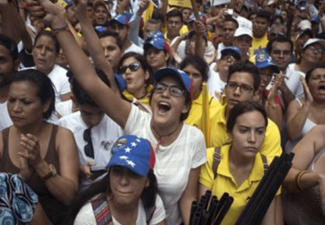
Dejusticia signed alongside 124 organizations asking the international community to put pressure on Venezuela and its state of emergency decree.
Read MoreRepairing Victims: Lessons Learned from a Study on Return
In recent days the National Univesity published a study titled “Challenges to the Integration of Returned Communities: Analysis of the Case of Las Palmas, Bolívar”. Although the study aimed to propose a tool that would allow monitoring and measurement of returned communities’ needs in terms of social capital, we will focus on the figures detailing inequality and the possible impact of these on the process of transformative reparations.
Read MoreFor Defender’s Day in Stockholm Dejusticia Worked with Activists from Some of the Most Repressive Countries in the World
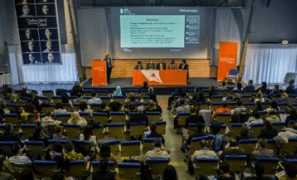
Pressuring human rights defenders is a global trend today, both in authoritarian and democratic regimes. Dejusticia works on this issue internationally.
Read MoreThe Digital Gods

At the center of this debate, beyond the capitalist argument of the mobile giant, is the protection of citizens’ right to privacy. Is privacy an absolute right that must never be compromised, not even to allow the state to fulfill its security obligations? Of course not.
Read MoreNational Coalition in Favor of Drug Policy Reform in Colombia

A group of civil society organizations (NGOs, grassroots organizations, academic sectors, think tanks, and researchers) have come together with the purpose of creating a national coalition in favor of reforming drug policy in Colombia.
Read MoreOver 1,000 Leaders Worldwide Call for End to “Disastrous” Drug War, Ahead of UN Special Session

Former Presidents of Mexico, Colombia, Brazil, Chile, Nigeria, Cape Verde, Switzerland & Poland; Former Prime Ministers of Greece, Hungary & The Netherlands Join With Distinguished Scholars, Celebrities, Clergy, Business Leaders, Elected Officials, and Others in Calling for Alternatives to Prohibitionist Drug Control Policies.
Read MoreUNGASS 2016: The Challenge of Rethinking Drug Policy
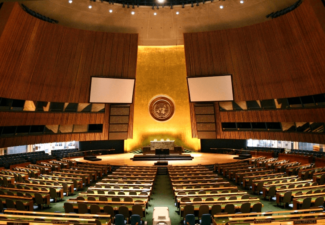
Studies show the negative human rights and public health impact of current drug policy in the region. It’s time to reconsider them.
Read More