


Issue-Rule of Law
Supreme Court of Justice protects the right to protest against police violence
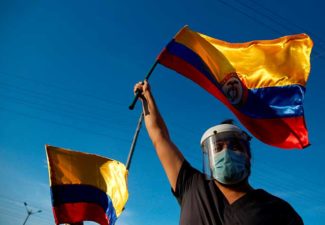
The Supreme Court of Justice of Colombia protected the right of all people to demonstrate and the duty of the authorities to “ward off, prevent and punish the systematic, violent and arbitrary intervention of the public force in demonstrations and protests.”
Read MoreWe won the Tang Prize!
Dejusticia, a Colombian think-do-tank with 15 years of history, is one of the three organizations in the world awarded this year with the Tang Prize in the Rule of Law category, and the first Latin American laureate in the history of the Tang Prize. This award, delivered biennially since 2014 by the Academia Sinica (Taiwan),…
Read MoreThe Yukpas: The Indigenous community who migrated to Colombia in search of rice
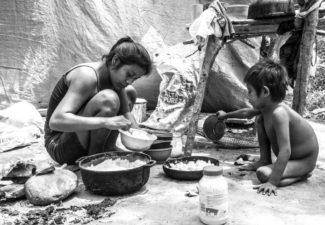
One of Colombia’s greatest challenges as it relates to Venezuela’s migration crisis is the ethnic group who came from the neighboring country, having fled the crisis and asking to be recognized as binational citizens. They are some 300 people who decry the death of two of their children, the disappearances of some of their members, and the consistent threats they face.
Read MoreWhat justice reforms?
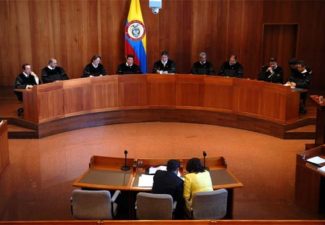
Several presidential candidates propose a justice reform; some have even said that they will hold a Constituent Assembly to achieve it. But beyond that, the candidates could discuss policies that would strengthen access to justice and the system’s legitimacy.
Read MoreThis is what we lose when a social leader is attacked
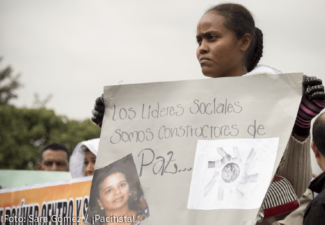
It’s time to stop talking about leaders who are killed or threatened. It is entire communities who are affected when leaders are no longer present. Inevitably, this vulnerability opens the door for armed actors to settle in and take control of the territory.
Read MoreDrawing lessons from the Colombian elections
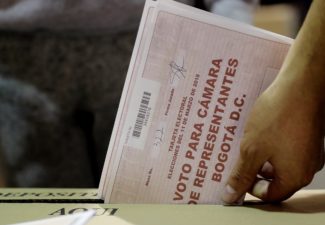
The recent elections taught us that previous reforms have reduced a major problem we had in the late 1990s: extreme political fragmentation.
Read MorePraise for the average citizen
In the middle of my task as a voting jury, the following imaginary world occurred to me: what would happen if, instead of selecting the elected politicians to Congress that day, we selected a group of voting juries chosen by lottery?
Read MoreDejusticia defends freedom of expression and political cartoons
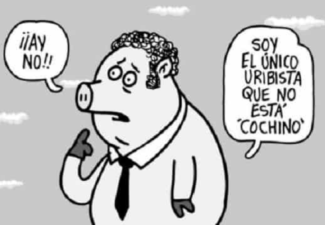
A citizen sued the caricaturist known as Matador, arguing that one of his cartoons is slander. Dejusticia argues that political criticism and artistic expression are protected by the Constitution.
Read MoreThe Special Jurisdiction for Peace cannot forget crimes against children

Hundreds of children and adolescents were victims of atrocious crimes during the armed conflict. In this context, the JEP faces the challenge to incorporate a special focus on children in the processes and decisions that it adopts.
Read MoreEnemies or adversaries?
It is so problematic and telling that Uribe decides, once again, not to follow the rules of the game. He accuses a journalist of “slandering” him through social networks, but not before the judges, as the journalist did and as he should if his argument had a basis.
Read MoreThe cost of rights
One dimension that critics of the Constitutional Court often forget is that all rights involve some spending. That is why we must take into account both the costs and the benefits of a judicial decision.
Read MoreLessons on transparency

Transparency has become central in the new agenda of democracy and the anti-corruption fight. However, by itself, transparency can be useless and become an empty discourse. This is why civil society groups and citizens should promote not only access to information, but also the active use of it.
Read MoreElections for Congress and parliamentarism
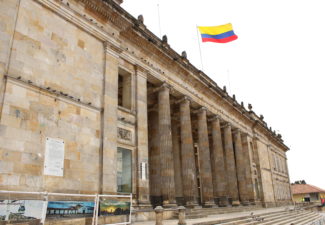
Many Colombians think, wrongly, that voting for Congress has little importance because the presidential election is the decisive one. A person who has all the virtues to be a great president but who does not have solid majorities in the chambers can hardly have a good government.
Read MoreGestures that kill or save lives
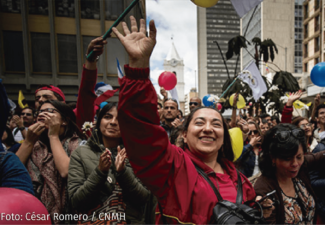
We are entering a turbulent and dangerous electoral period. Our political leaders have an enormous moral and political responsibility, which cannot be avoided.
Read MoreWith tutela, 1,700 male and female peasants ask to be included in the census
“For peasants to count, they have to be counted,” is the slogan of the plaintiffs who have been rejected by the government during the last two years after asking to be identified in the 2018 census.
Read MoreWe call for immediate action to address the judicial crisis
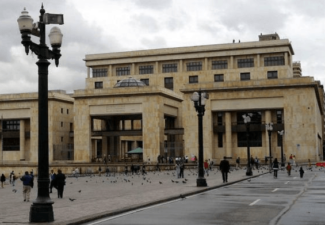
The Center for the Study of the Law, Justice and Society (Dejusticia) and the Excellence in Justice Corporation (CEJ), call on the high courts and the Attorney General to take immediate measures of transparency to face corruption and restore public confidence in the judiciary.
Read MoreThe Agreements for the Substitution of Illicit Crops must have a gender perspective
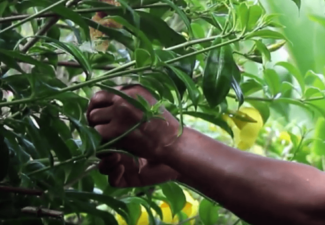
GPaz and Dejusticia presented contributions for the inclusion of the gender approach in the route to the formulation and implementation of Collective Agreements within the framework of the National Comprehensive Substitution Plan.
Read MoreThe national government geographically isolated Chocó

We intervened to support a tutela that requires the government to pave the
Quibdó-Medellín and Quibdó-Pereira roads: a promise that has historically been unfulfilled.
The migratory wall facing refugees

What is it like to migrate to Colombia and the United States? The stories of Johan and Sonia, two of the 65.6 million people who have been forcibly displaced around the world.
Read MoreColombian lawyers reject Constituent Assembly in Venezuela
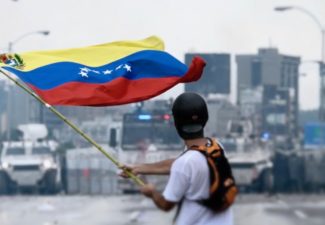
Through a letter, lawyers point out that this initiative, which will take place this Sunday, July 30th, is unconstitutional and essentially an arbitrary decision by Nicolas Maduro’s government.
Read MoreConstitution, Democracy, and Rights: Selected Texts from Juan Jaramillo
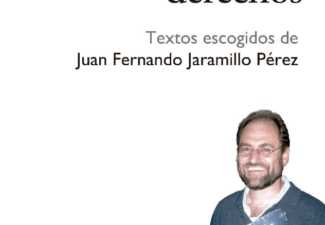
Constitution, Democracy, and Rights is a compilation of some of Juan Fernando Jaramillo’s best constitutional law articles. He was a founding member of Dejusticia who passed away young four years ago.
Read MoreCan a Person Ask Google, Or Any Search Engine, to Erase and Take Down Their Personal Information?

We intervened before the Constitutional Court in a writ of constitutional protection case in which the plaintiff asks that El Tiempo and Google.com to erase and take down from their digital media and web searches all information related to a past criminal case she was implicated in that has expired.
Read MoreVenezuela: Stop Harassing Human Rights Defenders

Dejusticia joins the call of several international organizations asking Venezuela to stop harrassing human rights defenders.
Read MoreAmicus Curiae Presented to the Supreme Court of the Nation Regarding International Standards on the Definition of Grave Human Rights Violations Applicable in the United States of Mexico
Taking into account the ongoing discussion in Mexico regarding the application of classified information in investigations in preliminary inquiry phases and declassifying said information when dealing with grave violations of human rights, stipulated in the Law of Federal Transparency and Access to Public Government Information of 2002, Dejusticia presented an amicus curiae in the case taken by the Supreme Court of Mexico regarding the writ of constitutional protection 661/2014 presented by the Foundation for Justice and Democratic Rule of Law, where we analyze the international standards applicable to the Mexican state in relation with the definition of the category of grave human rights violations.
Read MorePersonal Data in Public Information: Dark in the Private Sphere and Light in the Public Sphere
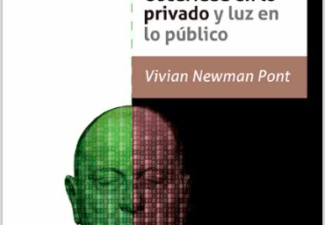
This document explores the response of Colombian law and jurisprudence to the tensions between intimacy and the publicity of data.
Read MoreCommunications Surveillance in Colombia: The Chasm between Technological Capacity and the Legal Framework
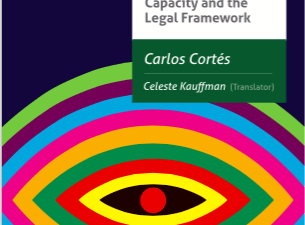
The goal of this book is to examine the Colombian legal and jurisprudential framework regarding communications surveillance in light of today’s technologies.
Read MoreCitizen Intervention in the Revision of the BIll on Petition Rights Statutory Law
Dejusticia and Flip ask the Court to examine the contradictions and disharmony between the Statutory Law of Transparency and Access and the public information already in effect as well as the bill on the right to petition that finds itself under constitutional review.
Read MoreIntervention: Political Speech and Special Constitutional Protection
Dejusticia argued before the Constitutional Court that journalist Luis Agustín González should not be criminally liable for his statements about politician Leonor Serrano.
Read MoreThe Right to Government: The Legal Effects of Institutional Apartheid in Colombia
This book defends the idea that people living in isolated territories have a right to institutional assistance; in other words, they have a right to government. Not just to any government, but one that that protects their dignity and their rights.
Read MoreIntervention: Right to Education of Persons with Disabilities
Dejusticia appeared before the Constitutional Court regarding a constitutional challenge (tutela) by a student who had been granted a loan for students with disabilities, but was then denied loan forgiveness.
Read MoreInstitutions and Drug-trafficking: the Judicial Geography of Drug-Related Crimes in Colombia
This text shows how, in addition to being disproportionately punitive, the way the government implements its drug laws is discriminatory. Drug laws are applied in certain geographic regions more than others, and some crimes are prosecuted more than others.
Read MoreChallenge to the appointment of Mr. Pedro Munar Cadena as magistrate of the High Judicial Council
Dejusticia challenges the election of Dr. Pedro Munar Cadena as judge of the High Judicial Council, as his appointment violated article 126 of the Constitution.
Read MoreChallenge to the election of Dr. Alejandro Ordoñez Maldonado as Inspector General
Dejusticia, the Colombian Commission of Jurists, the Center for Constitutional Studies PLURAL, the Corporation Viva la Ciudadanía and Foro por Colombia challenged the election of Dr. Alejandro Ordoñez as Inspector General before the Supreme Court of Administrative Law (Conseil d´Etat)
Read MoreIntervention: Legislative Proposal on transparency and access to public information
The “More Information, More Rights Alliance,” in which Dejusticia participates, intervened before the Constitutional Court regarding proposed legislation on transparency and access to public information.
Read MoreChallenge to nullify the election of Gregorio Eljach Pacheho as Secretary General of the Senate
Dejusticia, with the Misión de Observación Electoral (MOE), presented a request to nullify the election of Gregorio Eljach Pacheco as Secretary General of the Senate. The request argues that voting should have been public, and that Eljach did not obtain the number of votes required by the Constitution.
Read MoreThe States of the Country: Municipal Institutions and Local Realities in Colombia
This book studies the Colombia’s social reality through local institutions.
Read MoreAltered State: Clientelism, Mafias and Institutional Weakness in Colombia
This book articulates a comprehensive vision of not only the the social and political effects of the paramilitary phenomenon in Colombia, but also of the institutional and legal weaknesses of the Colombian government, which has been captured by mafias and political actors.
Read MoreAnd they refounded the homeland… On how the mafia and politicians reconfigured the Colombian State
This publication discusses the implications of the capture of the Colombian State by illegal armed groups.
Read MoreCourts and Social Change: How the Constitutional Court Changed Forced Displacement in Colombia

What role do the courts play in a democracy? What kind of judicial interventions are required to promote public policies that effectively guarantee rights and encourage social change? This book answers these and other questions.
Read MoreMajorities without Democracy: Power Imbalances and the Rule of Law in Colombia
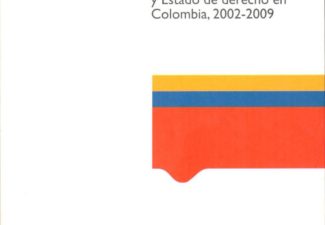
The theme of presidential reelection has been present, with brief interruptions, in the headlines of the national press since 2004. A lot has been said, discussed and analyzed in favor and against reelection during this period. The main point of contention lies in the conception of democracy.
Read More