


Issue-Rule of Law
The Judiciary Branch: Investigated and Accused in Latin America
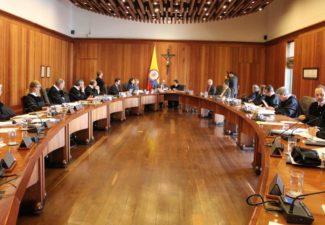
National attorney generals and Latin American high court magistrates are being investigated and accused of having committed crimes. The cases vary and the region must ask: how to ensure that these processes are not used in retaliation for their actions? And at the same time, how to ensure that when it is necessary to investigate and prosecute, procedures function properly?
Read MoreThe walls talk in Cartagena
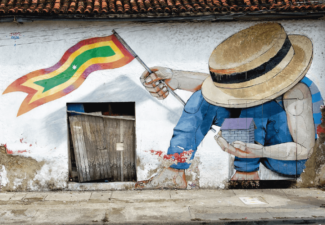
Cartageneros engaged in a worthwhile act in a city where the current leaders are immersed in serious cases of corruption.
Read MoreVictims and press after the war: said and unsaid lessons
In countries transitioning from war to peace, the search and exhumation of bodies create a tension between the victims’ right to privacy and the public interest of reconstructing the collective memory. Given this, how can events related to armed conflict and the transition to peace be narrated without violating the right to privacy of victims?
Read MoreReasonable management for the Special Jurisdiction for Peace

The legitimacy and future of the JEP depend, to a large extent, on the definition of its internal management and organization model. A good organizational design promotes its effectiveness; the internal regulation should establish the central guidelines of these issues and that is why its promulgation is a priority.
Read MoreWhat structure for the Special Jurisdiction for Peace?
The Colombian high courts have had strong offices for each magistrate while the institution in itself is relatively weak. The JEP should not copy this model because given its large size, the risks of incoherence and lack of coordination would increase.
Read MoreA new opportunistic cartel
The Prosecutor’s Office should provide information on negotiations such as those made with former Governor Lyons to assess whether they are effective and prevent another cartel from forming.
Read MoreDeliberation in division
What makes members of divided societies carefully consider the reasons for and against a decision before adopting it?
Read More“Incluidas” and “incluidos?”
Language has a political and symbolic dimension and that is why it is an important space to look for cultural transformations.
Read MoreThe prosecutor and his first year of transparency
Despite the fact that this oversight body has found many breaches of the Transparency Law, it has not imposed a single sanction yet. The sanctions regime has not even been defined.
Read MoreRussian telegrams and Colombian WhatsApp messages
In Colombia, although the intelligence law prohibits telephone tapping since 2013, an wrong interpretation would seem to force providers, such as WhatsApp or Telegram, to provide “any other information that contributes” to the user’s location.
Read MorePrison is not the only sanction in transitional justice mechanisms

César Rodríguez argued that the Comprehensive System of Truth, Justice, Reparation and Guarantees of Non-Repetition is in harmony with the Constitution. Regarding different penalties, he affirmed that international law discusses effective sanctions, not jail.
Read MoreThe first four books of the “Ideas for Peace Building” collection are already available

The series, which will have a total of ten texts, seeks to provide thematic documents that offer diagnoses and proposals on some of the post-agreement challenges.
An organization with collective leadership: our history reviewed in the Leader Network
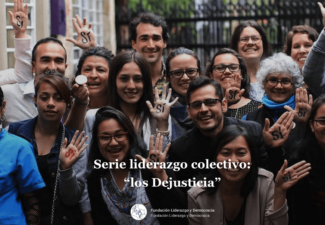
The Leader Network chose Dejusticia to initiate the series of profiles on collective leadership. The profile published in Silla Vacía investigates three fundamental measures of leadership: vision, example and results.
Read MoreCommuniqué on transparency and publicity of decree-laws and process management of the Constitutional Court, in the fast-track
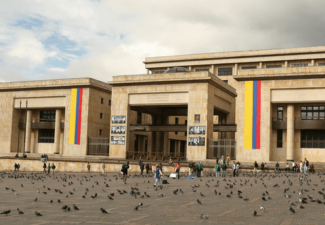
Dejusticia, alongside several civil society organizations, academics and research centers, issued an open letter with proposals to create transparency and dissemination measures regarding the development of norms to implement the peace accord.
Read More“Democracy, justice and society: 10 years of Dejusticia research” is already available.

Edited by Mauricio García and María Adelaida Ceballos, this book collects the essential of the texts on justice produced by more than a dozen researchers during the last decade at Dejusticia.
Read MoreBojayá indigenous people claim their right to vote

Almost 70% of people from Bojayá did not vote on the peace plebiscite. A part of this group was composed by indigenous communities who claim that they were not able to reach the ballot box.
Read MoreWe presented a tutela in defense of the Great Ciénaga of Santa Marta

On November 10th, we presented a tutela action regarding the environmental degradation situation that affects the Great Ciénaga of Santa Marta. The ciénaga is a strategic ecosystem composed by a collection of lakes and wetlands, declared Biosphere Reserve by UNESCO and protected by the RAMSAR Convention.
Read MoreDejusticia publishes document with legal reasons in favor of the sugary drinks tax
Ad portas of a
tax reform, Dejusticia publishes a policy paper on the viability and importance
of the tax on sugary drinks as a public health measure to disincentive
consumption.
Case Against Bolivian Ex-President for His Role in 2003 Massacre Can Proceed
A U.S. Appeals Court rejected the attempt by the defendant to throw out the case.
Read MoreThe Trouble Caused by Seeking to Replace the Higher Council of the Judiciary

Was the remedy worse than the disease? Infographic.
Read MoreIntervention in the writ for constitutional protection (tutela) for violation of the right to public information.
Dejusticia intervened before the Constitutional Court supporting tutela filed by Monica Roa and other women against officials of the Inspector General’s Office for violating their right to information and consequently their sexual and reproductive rights, among others
Read MoreLawsuit against the constitutional reform that eliminates the conflict of interests of congressmen in the processing of legislative acts.
Dejusticia challenged Legislative Act No. 01 of 2011, which establishes that there is no conflict of interests when members of Congress process legislative acts. We argue that by issuing this reform, the Congress altered an essential element of the democratic principle that establishes that Congress must always act in pursuit of general interests and not private interests.
Read MoreIntervention in the challenge the proposed statute of intelligence and counterintelligence
Dejusticia and the Foundation for Press Freedom -FLIP- argues for the application of standards that should be applied to protect rights frequently violated by intelligence activities and, at the same time, ensure their effectiveness.
Read MoreIntervention against reformatory articles of the Family Agricultural Unit in the National Development Plan
Dejusticia supported the claim of unconstitutionality of Articles 60 and 61 of the National Development Plan because they contain measures that promote land concentration and constitute a step backward in guaranteeing the right of agricultural workers to access land.
Read MoreIntervention in the statutory law of political reform
Dejusticia intervened before the Court with regards of the constitutional review of the statutory bill of political reform, specifically in the study of Articles 2, 28 and 47.
Read MoreRequest for annulment of appointment of judges of the National Electoral Council
Dejusticia challenged the appointment of judges of the National Electoral Council by Congress. The challenge presents a unique argument according to which the election is invalid because it was done by secret ballot and not through public voting as provided by the Constitution.
Read MoreCitizen Intervention: protecting participation of minority parties in the General Committee of Congress
Dejusticia challenges the constitutionality of Article 40 of Law No. 5 of 1992 (Congress Regulation) which provides that the General Committee of Congress commissions will be chosen by majority rule.
Read MoreIntervention in the lawsuit against Articles 14 to 17 of the Anti-smoking Act (1335 of 2009).
Dejusticia intervenes to defend the constitutionality of Articles 14-17 of Act 1335 of 2009 (Anti-smoking act), which ban the advertisement of tobacco derivatives.
Read MoreMotion for legal protection due to a decree that restricts freedom of expression and access to information during presidential elections
The Center for the Study in Law, Justice and Society – Dejusticia, the Electoral Observation Mission – MOE, Media for Peace, the Association of Colombian Newspapers – Andiarios, and the Foundation for Press Freedom – FLIP interposed a motion for legal protection against the Interior and Justice Ministry for the issuance of the decree regulating public order during the first and second rounds of presidential elections, considering that some articles violated the freedom of expression and access to information.
On May 24, 2010 the decree 1800 which “sets out regulations for the preservation of public order during the presidential elections” was issued. The decree, which is the same that has been used since the elections of 1994, restricts journalists freedom of expression and information on the day of presidential elections.
These restrictions require the media to convey information relating to public order only when it has been confirmed by official sources. It also forbids the media to publish any information on the election results that is different to the one released by electoral authorities. Additionally, it orders the media to give priority to the messages issued by these authorities in the electoral process.
After doing a legal review of these standards, the organizations find that the Ministry is violating the fundamental rights of journalists since it ignores the principle of non-censorship, makes unreasonable restrictions, and, moreover, is dealt with by a decree when the Constitution is clear in giving regulatory power to statutory laws.
Read MoreIntervention on the constitutionality of the re-election referendum
Intervention in challenge to the constitutionality of the re-election referendum. The intervention requests the Court to declare unconstitutional the law that calls for the aforementioned referendum.
Read MorePaper Norms
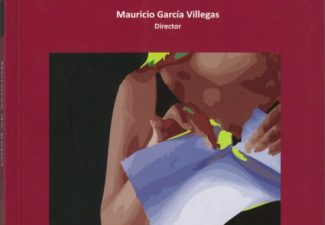
This book is based on research project on the culture of noncompliance conducted in Colombia between 2006 and 2009.
Read MoreJudges Without the State
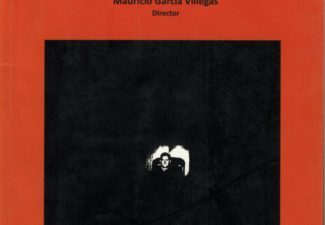
This book is the outcome of a research made in Colombia between 2005 and 2007 on judges working in armed conflict zones in Colombia.
Read MoreThe Free Trade Agreement, Is It Constitutional?
This book presents a systematization of the debates that transpired at the forum, “The Free Trade Agreement, Is It Constitutional?”
Read MoreTutelas Against Sentences

The problem that is discussed in this document is: What can we do to avoid those “train crashes” that do much harm to justice, and therefore to the whole country?
Read MoreReflections on the New Penal Process System. The Challenges for the Colombian Penal Judges
This book compiles six studies whose central idea is that of promoting an accusatory criminal system in Colombia.
Read MoreConstitutional Interpretation
This book looks at the contribution of discussion, comprehension and improvement of the abilities of Colombian judges in the interpretation of the Constitution.
Read MoreJustice for All? The Judicial System, Social Rights and Democracy in Colombia
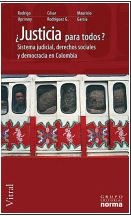
The objective of this book is to offer an explanation of the origin, content and effect of the recent judicial reforms. The authors also undertake the challenge of evaluating the policies of judicial reform that have been developing in Colombia and in Latin America over the last two decades.
Read MoreThe Constitution and Economic Model in Colombia: Towards a Productive Discussion Between Economy and the Law
Constitutional Protection of Rights in Brazil, Spain and Colombia: Constitutional Control of the Sentences

The works collected in this volume, on the Brazilian, Spanish, and Colombian experience, analyze some of the problems derived from the functional reach assigned to their cores.
Read MoreThe Judicial Control of the States of Exception
This article reviews the history of the Colombia Constitution and its exceptions.
Read More