


Issue-Rule of Law
International justice: as fragile as it is necessary

Is international justice effective? We analyze the fragility, lack of budget, and political tensions and global courts.
Read MoreWith judges on the chopping block, who will defend us?

With the global Rule of Law in decline, Latin America has become a political chessboard. Who protects us when judges lose their power?
Read MoreJustice in check, but not yet a checkmate

We analyze global attacks on judicial independence and the resistance of courts against rising authoritarianism.
Read MoreNational sentiment on Santa Rosa Island

The dispute between Peru and Colombia over Santa Rosa Island distracts attention from environmental issues (sedimentation, deforestation). We analyze how the resurgence of nationalism and electoral rhetoric are hindering diplomatic efforts to resolve the conflict in the Amazon River.
Read MoreThe tragedy of the Amazon

The Amazon lacks effective supranational protection. We analyze how the logic of national sovereignty and the weakness of the ACTO prevent a coordinated response to deforestation and extractivism, urging binding solutions and regional funds.
Read MoreNationalism and Other Old Demons

We analyze the resurgence of nationalism, its manifestations from national consciousness to its pathological form, and how populist leaders exacerbate it, supported by digital technology, threatening democracy and human rights.
Read MoreThe Limits of the Nation State in Today’s World

The resurgence of nationalism threatens democracy, international law, and stability. This edition analyzes its manifestations, from xenophobic migration policies to institutional fragility in the Amazon and border conflicts in the Global South.
Read MoreI don’t care if they call me a dictator.

During his six years in office, Bukele has consolidated his power, paving the way to become the dictator he appears to be announcing himself as.
Read MoreBukele: the savior? (II)

Bukele’s immense popularity does not legitimize his assault on the rule of law, as he is destroying the foundations of democracy, just as similar assaults by Viktor Orbán in Hungary, Daniel Ortega in Nicaragua, and Chavismo in Venezuela have not been legitimized.
Read MoreBukele: the savior?

This saga involving Bukele deserves to be known in Colombia because there are certain sectors, especially on the right, that rightly criticize similar processes of destruction of the rule of law by Ortega in Nicaragua or Maduro in Venezuela, but remain silent in the face of this assault on democracy in El Salvador.
Read MorePintadillo con primitivo: women who preserve black tradition in Caquetá

Caquetá is thought of as an indigenous department, but it also has a black population. Many came to work as teachers in the 1980s, when coca was such a lucrative business that few wanted to do anything else and school teaching positions remained unfilled. Today, the Ubuntu Afro-Amazonian Women’s Network Foundation, made up largely of these teachers or their daughters, seeks to resist new threats from within its tradition.
Read MoreAsdown: The freedom to choose a fulfilling life with a disability

According to DANE, there are more than 1.4 million people with intellectual disabilities in Colombia. This group faces the odyssey of fighting against prejudice and myths. However, a hopeful vision leads many families to choose an inclusive society.
Read MoreHow can science and statistics guarantee the right to truth?
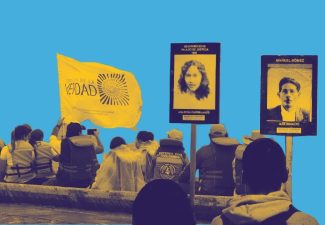
Presentamos un nuevo documento sobre develación de patrones de violencia por medio de métodos estadísticos en comisiones de la verdad. Destacamos cinco lecciones que nos deja esta investigación.
Read MoreResisting authoritarian tendencies in Latin America

Although the fight against authoritarian tendencies cannot be addressed simply with rights and the people who defend them, we believe that these types of strategies, insofar as they articulate different social sectors, contribute to the deepening of democratic practices.
Read MoreData Feast: Enterprises and Personal Data in Latin America
Google, Amazon, Facebook, Apple, and Microsoft now possess an ability to reconfigure the behaviour of individuals, clients, and citizens globally. How Brazil, Chile, Colombia, and Mexico are responding?
Read MoreAccountability of Google and other data-driven business models: data protection in the digital age
In this document we analyze the privacy policies of 30 companies with data-driven business models that collect data in Colombia and identify practices that have not been sufficiently contemplated by the personal data protection regime currently applicable in our country.
Read MoreDisclosing public servants’ private interests: A powerful but unexploited anti-corruption tool
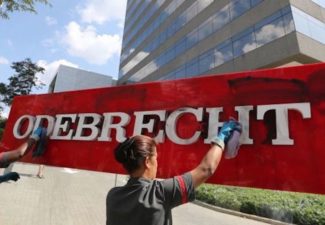
Both the legislation and the case law of other countries have made considerable efforts to exploit the potential of the disclosure of private interests of public servants as an anti-corruption tool. In contrast, Colombia has yet to adopt these reforms and judicial pronouncements.
Read MoreEntre coacción y colaboración: Verdad judicial, actores económicos y conflicto armado en Colombia
While it is clear that many of the economic actors lack responsibility in the conflict and others have been victims of it, some research has shown that some did have a decisive role in the origin, development and perpetuation of the cycles of armed conflict in the country.
Read MoreVacillation towards migrants
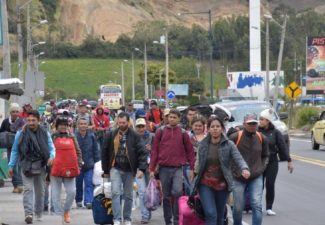
The situation of Venezuelan migrants is too serious and urgent to equivocate on good faith and sway with the changing political circumstances of each government.
Read MorePreventing Corporate Intimidation of Rightsholders

Unfavorable news, a negative opinion of an opinion leader, or even an unfounded rumor can affect companies whose value depends to a large extent on the confidence of their shareholders and the public in their good behavior and the possibilities of obtaining profits by investing in them.
Read MoreIncreasing Accountability

All Colombian society, especially economic actors who had no connection to the conflict, in an effort to go beyond political differences and as a gesture of solidarity towards the victims, should commit themselves to claim and promote victims’ rights without restrictions.
Read MoreTheoretical musings
Perhaps the greatest political challenge that current democracies face is to rescue something of the public and civic virtue that the Greeks discussed, without falling into the different populisms that today offer themselves as saviors of society.
Read MoreA single court?
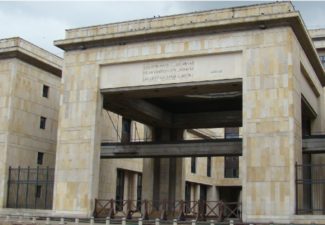
The problem of “a single court,” proposed by Uribismo, is that in the concrete situation of Colombia, it contributes very little to the solution of the problems of our judicial system, and on the contrary, presents many risks.
Read MoreOn corruption in Colombia: conceptual framework, diagnosis and policy proposals
According to the Corruption Perceptions Index by Transparency International for 2016, Colombia obtained a rating of 37/100. How to characterize the phenomenon of corruption in Colombia and what academic and public policy strategies can be adopted to counteract it?
Read MoreThe national government geographically isolated Chocó

We intervened to support a tutela that requires the government to pave the
Quibdó-Medellín and Quibdó-Pereira roads: a promise that has historically been unfulfilled.
Prison is not the only sanction in transitional justice mechanisms

César Rodríguez defended that the Comprehensive System of Truth, Justice, Reparation and Guarantees of Non-Repetition is in line with the Constitution. Regarding penalties, he affirmed that international law discusses effective sanctions, not imprisonment.
Read MoreThe right to freedom of expression: advanced course for judges and legal practitioners in the Americas
This guide covers the main current legal rules under the inter-American order on freedom of expression.
Read MoreInterventions in lawsuits against four aspects of the New Police Code

Dejusticia carried out citizen interventions regarding the constitutionality of Police Code articles that establish police measures for several categories of persons and activities.
Read MoreRequest Under Colombian Freedom of Information Laws

Our request highlights both what has been done and what remains to be done for the creation and implementation of the Legal Commission for Monitoring Intelligence and Counterintelligence Activities.
Read MoreLawsuit to protect the right of access to public intelligence information

Dejusticia filed a lawsuit challenging Decree 857 of 2014, which regulates the Colombian Law of Intelligence and Counterintelligence, for violating some of the necessary requirements that must be fulfilled before the right of access to public information held by intelligence agencies can be restricted.
Read MoreAccess to intelligence and counterintelligence archives in the framework of the post-agreement
In this text, we offer options so that transitional justice mechanisms and society at large can have access to intelligence and counterintelligence archives, which relate to the armed conflict in Colombia.
Read MorePeace territories: the construction of the local state in Colombia

This book offers diagnoses and proposals surrounding one key challenge of peace building: carrying out out a large national state-building project on the periphery of the country.
Read MoreDemocracy, Justice & Society: Ten Years of Research at Dejusticia
This book collects the essential from the texts on justice elaborated during the last decade in the Center for the Study of Law, Justice and Society – Dejusticia.
Read MoreDejusticia Files Suit to Protect the Right to Privacy Under the New Police Code in Colombia

Dejusticia filed a lawsuit before the Constitutional Court, arguing that several articles of Colombian Law 1801 of 2016 (Police Code) violate the right to privacy.
Read MoreExtractivism versus human rights: chronicles of the mined fields in the Global South

Un nuevo acercamiento a los derechos humanos: escritura reflexiva por autores activistas de organizaciones defensoras que considera el potencial, los logros y desafíos de su práctica.
Read MorePolice Code Intervention in defense of informal vendors
Dejusticia conducted an intervention within the constitutionality process of Article 140 of the Police Code (Law 1801 of 2016) that establishes measures to regulate the public space, affecting informal vendors.
Read MoreDejusticia sues the Police Code over protest regulation

Dejusticia sues the Police Code over social protest regulation before the Constitutonal Court for several reasons that make Law 1801 of 2016 unconstitutional.
Read MoreAlternative report to the United Nations Committee Against Forced Displacement
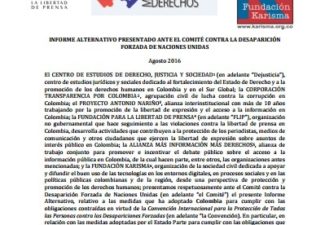
Dejusticia and five allied organizations presented an alternative report to the United Nations Committee Against Forced Displacement before its 11th Session, which took place on October 3-14, 2016.
Read MoreCitizen Intervention Litigating the Unconstitutionality against Legislative Act, Which Reforms Military Tribunals

Our intervention highlighted that although International Humanitarian Law specifically regulates contexts of war, this does not mean that, from the standard of specialty, the reform introduced by the Legislative Act 02 of 2015 exclude International Human Rights Law standards.
Read MoreDejusticia Intervenes in Favor of an Activist that Defended the Sawhoya Community in Paraguay

The International Network for Economic, Social and Cultural Rights (ESCR-Net) and Dejusticia presented an intervention in favor of the lawyer Julia Cabello, executive coordinator of Tierraviva, who was sued by the Minister Gladys Bareiro de Módica.
Read More