


Issue-Transitional Justice
Leaders Assassinated in Colombia: how many are left out of the counts?

This analysis by Dejusticia and the Human Rights Data Analysis Group groups the information compiled by different organizations regarding the homicides of social leaders in the country and concludes, through a statistical method, that the problem has a greater magnitude than what is reported.
Read MoreThis is what we lose when a social leader is attacked
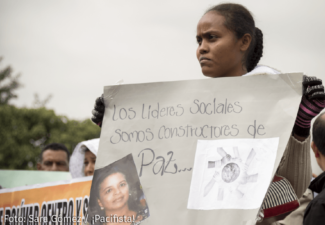
It’s time to stop talking about leaders who are killed or threatened. It is entire communities who are affected when leaders are no longer present. Inevitably, this vulnerability opens the door for armed actors to settle in and take control of the territory.
Read MoreBojayá changed forever the way to see the pain of victims
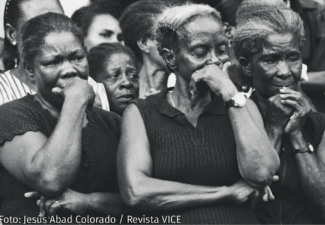
Due to its historical importance, some regional media came to photographically record the exhumation process of the corpses. The community saw this kind of action as a violation to their right to live a dignified mourning, which they were not able to have when the massacre first happened.
Read MoreThe role of economic actors in Colombia’s armed conflict: How much do we know?
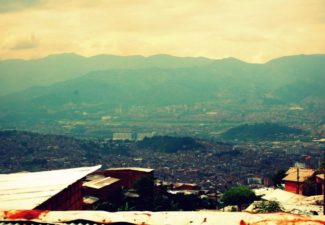
Colombia is undergoing a transitional justice process, in which society wants to know who participated in the internal armed conflict for economic purposes. The recently created Truth Commission must be a space to facilitate this discussion and unveil the role that economic actors played during the war.
Read MoreThe links between economic power and conflict: a major challenge for the Truth Commission

On Thursday, March 1st, we launched the report “Increasing Accountability: The Role of the Truth Commission in the Disclosure of Corporate Responsibility in the Colombian Armed Conflict.” Free entry with prior registration.
Read MoreCiro and us
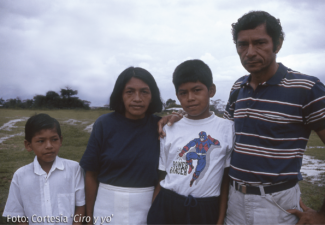
Ciro Galindo, protagonist of the documentary ‘Ciro y yo’, came to remind me where I come from, so I take his story personally. Ultimately, we are children of the same Colombia.
Read MoreWill they remain missing?
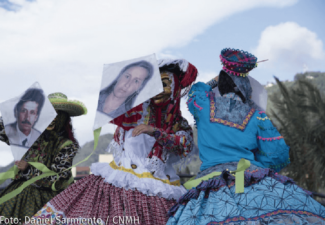
Despite the nobility and importance of its function, almost nobody knows or speaks about the Unit for the Search of Missing Persons, while every day we discuss the Special Jurisdiction for Peace.
Read MoreThey keep killing them
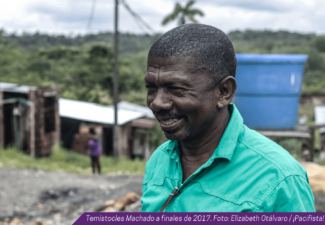
It is time for civil society to finish the task and solve the problem. That is why it is a moral duty to write about the murder of Afro-Colombian leader Temístocles Machado in Buenaventura.
Read MoreReasonable management for the Special Jurisdiction for Peace

The legitimacy and future of the JEP depend, to a large extent, on the definition of its internal management and organization model. A good organizational design promotes its effectiveness; the internal regulation should establish the central guidelines of these issues and that is why its promulgation is a priority.
Read MoreWhat structure for the Special Jurisdiction for Peace?

The Colombian high courts have had strong offices for each magistrate while the institution in itself is relatively weak. The JEP should not copy this model because given its large size, the risks of incoherence and lack of coordination would increase.
Read MoreThe unit of hope
The Missing Persons Search Unit has become a beacon of hope for the more than 60,000 families who carry with them the daily torture of enforced disappearances: the helpless waiting for clues as to the whereabouts of their loved one.
Read More2018 and the consolidation of peace
We must be deeply aware that in 2018 we will renew the representatives of the executive and legislative branches. In that context, we must have the vision to understand that those decisions will define the trajectory of the next decade.
Read MoreRegarding the approval of the legislative act that creates the special circumscriptions of peace
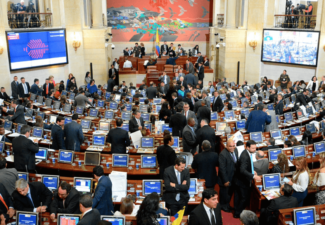
More than 100 organizations, citizens and academics signed a document addressed to the public, the President of the Senate and to the President of the Republic, where they explain why the bill of the legislative act that creates the special circumscriptions of peace was approved in the Senate.
Read MoreGuide to clarify rumors about the Peace Agreement
In light of the inaccurate impressions, misinterpretations and half-truths that are circulating, we consider it necessary to clarify what the Government and the ex-guerrilla of the FARC-EP really agreed on, and how those commitments are being implemented.
Read MoreComments on the statutory bill to implement the Special Jurisdiction for Peace
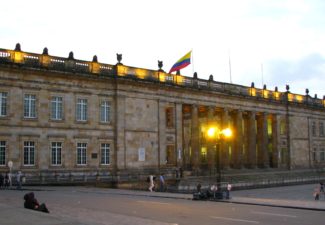
Academics and social organizations, including Dejusticia, analyzed the political convenience and the constitutional justification of the project that is being discussed in Congress.
Read MoreDejusticia and GPAZ’s suggestions so that differentiated criminal treatment does not remain on paper
In the Peace Agreement, the Government committed to give up criminal actions and penalties against small farmers and people living in poverty, involved in illicit crops. To date, no law has been approved for this purpose. Here, we outline our proposals.
Read MoreAdministration of the Special Jurisdiction for Peace: comments on the Draft Statutory Law

On September 11, Rodrigo Uprimny participated in the public hearing convened by the joint commissions of the Senate of the Republic and the House of Representatives on the draft statutory law governing the administration of the Special Jurisdiction for Peace (JEP). This project begins in Congress and will be discussed under a fast-track procedure.
Read MoreWe call for strengthening publicity and transparency in the selection of the Special Jurisdiction for Peace

Dejusticia respectfully and publicly requests that before proceeding with the process, the Selection Committee informs society of some aspects of pre-selection and selection.
Read MoreLos Guáimaros resist being forgotten

August 30th marks the 15th anniversary of the massacre in the village of Los Guáimaros, in Montes de María. Despite the cruelty of those 15 deaths and their impact, their story remains untold and no one knows who did it.
Read MoreDejusticia, ICAR and ECCJ release updated report on Assessments of Existing National Action Planson Business and HR

The International Corporate Accountability Roundtable (ICAR), the European Coalition for Corporate Justice (ECCJ), and the Center for the Study of Law, Justice, and Society (Dejusticia) are pleased to release an updated report on Assessments of Existing National Action Plans (NAPs) on Business and Human Rights.
Read MoreLand restitution and territories: justifications, dilemmas and strategies
The teaching tools presented below aim to offer a database that will allow officials to quickly consult some of the most common challenges in their daily work.
Read MoreThe good faith in land restitution

A rigid application of the principle of good faith within the process of land restitution can disregard or transgress fundamental rights. The document presents the different legal problems that have arisen.
Read MoreJustice Mosaics: How Context Shapes Transitional Justice in Fractured Societies
Two of our researchers contribute a chapter to a book by the International Center for Transitional Justice.
Read MorePeace, everyone’s business! Corporate accountability in transitional justice: lessons for Colombia
The report includes a comparative study of eight countries (Argentina, Brazil, South Africa, Guatemala, East Timor, Sierra Leone and Liberia) that used transitional justice to judge crimes by corporate actors during armed conflicts.
Read MoreTransitional justice and action without harm: a reflection on the land restitution process
This document compiles the reflections made in recent years by the Transitional Justice team of Dejusticia and the Action without Harm team of the National University of Colombia.
Read MoreDejusticia Intervenes in Favor of Popular Vote for Peace Agreement through a Special Popular Consultation
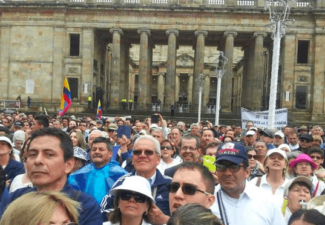
Dejusticia intervened in the process testing the constitutionality of the bill that regulates the plesbiscite putting the final peace accord to a popular vote to end the conflict and build a stable and lasting peace. This synthesizes the arguments of this intervention.
Read MoreIntervention Litigating Unconstitutionality of the Expression “Free of Blame” of the Evidenciary Requirements of Good Faith Which Is Necessary to Access Economic Compensation
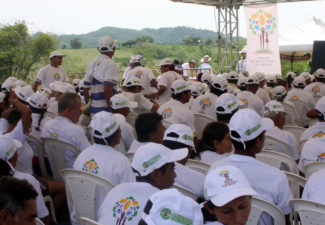
We intervened before the Constitutional Court litigating the unconstitutionality of the formulated expression “free of blame” of the evidenciary standards of good faith, contained in the Law 1448 of 2011 (Victims and Land Restitution Law) that is a requirement to access economic compensation.
Read MoreWhy are Victims of Forced and Illicit Recruitment De-Linked from Post-Demobilization Groups Have the Right to the CODA Certificate to Access Reintegration Programs?

We intervened before the Constitutional Court in a lawsuit arguing the inconstitutionality of Article 190 of the Law 1448 of 2011. This law states that victims of forced and illicit recruitment de-linked from post-demobilization groups and that are legal adults have to obtain a certificate from the Operating Committe for the Surrender of Arms (CODA) in order to gain access to reintegration programs.
Read MoreCan a Criminal Law Judge Suspend a Land Restitution Process?
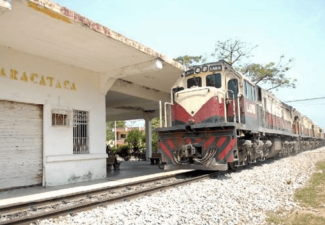
We intervened before the Constitutional Court in a writ of constitutional protection case, in which a criminal law judge ordered, as a precautionary measure, to suspend a land restitution process. The criminal case investigated the alleged procedural fraud in the land restitution process by the plaintiffs. According to the litigants (who act as defendants in the land restitution case), the restitution plaintiffs committed procedural fraud by arguing that the seeling of the land in question constitutes legal displacement.
Read MoreConstitutional Court Accepts Case to Guarantee Medical Attention to Survivors of Sexual Assault

Dejusticia alongside four women’s human rights organizations filed a lawsuit that seeks to ameliorate the serious problems that survivors of sexual assault face in Colombia.
Read MoreExpert Opinion about Administrative Reparations before the Inter-American Human Rights Court
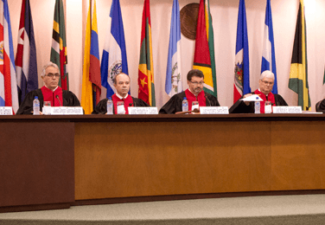
Camilo Sánchez, transitional justice research coordinator, presented an expert opinion about the administrative reparations program and the compliance of the Land Restitution and Victims’ Law to international standards before the Inter-American Court of Human Rights, within the framework of the case “Yarce and others v. Colombia.”
Read MoreTutela UP – Díaz Mansilla Family
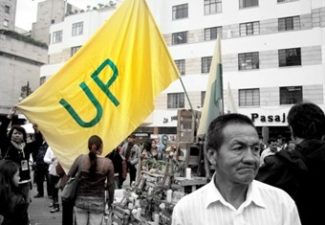
30 years ago Miguel Ángel Díaz was forcefully disappeared in Puerto Boyacá with participation of a DAS agent. He was one of the first victims of the persecution against the Patriotic Union.
Read MoreLand Restitution and Gender Perspectives

In this document the authors explore why the focus on gender is important to the integral restitution of land. It also shows that this focus is both useful and necessary to the full, effective and respectful restitution of human rights of the victims.
Read MoreAccess to Justice: Women, Armed Conflict, and Justice
This document examines the situation of female victims of human rights violations due to the Colombian armed conflict and their ability to effectively access justice.
Read MoreJustice to Achieve Peace: Heinous Crimes, the Right to Negotiated Peace and Justice

This book seeks to contribute to the difficult debate on how to reconcile the imperatives of justice and the rights of the victims, with the internal dynamics of a peace negotiation.
Read MoreIntervention: Political Rights in the Legal Framework for Peace
Dejusticia appeared before the Constitutional Court to request that it dismiss the lawsuit brought against Article 66 and 67 of the Constitution, which form part of what is called the “Legal Framework for Peace.”
Read MoreIntervention Legal Framework for Peace
Dejusticia intervened before the Constitutional Court in a petition challenging certain provisions of the legislative act that established the Legal Framework for Peace, considering that the Legal Framework does not violate the Constitution, but rather restricts certain constitutional principles in favor of transitional justice processes.
Read MoreIn Search of a Transformative and Participatory Concept of Reparations in the Context of Transitional Justice
This article aims to help overcome some of the limitations of the prevailing transitional justice approach.
Read MoreCourts and Social Change: How the Constitutional Court Changed Forced Displacement in Colombia

What role do the courts play in a democracy? What kind of judicial interventions are required to promote public policies that effectively guarantee rights and encourage social change? This book answers these and other questions.
Read More