


Issue-Transitional Justice
Circumscriptions, law and politics
The sentence by the Cundinamarca Tribunal that ordered the president of the Senate to send the legislative act on circumscriptions to President Santos for its promulgation is legally correct.
Read MoreDebts to peace
This year there were several signs of the deep animosity of traditional political power towards victims and social leaders. The eradication of violence from the political spectrum will only occur with the public’s political participation. Not only with the vote, but starting with the vote.
Read MoreCruelty towards the victims
It is sad that Congress did not massively approve the 16 special circumscriptions of peace. It is sad that the resistance of certain political parties to expanding democracy is so great that today we are making these calculations and arguments. What cruelty towards the victims!
Read MoreSexual violence in the Special Jurisdiction for Peace: more penalties do not mean more truth
More important than the symbolic message that Congress intended to give by increasing the penalties for sexual violence against children is that truth and justice do in fact exist.
Read MoreWhat happens with rural reform in Montes de María?
The delays in the construction of Development Programs with a Territorial Approach are shortening the time to guarantee spaces for the effective participation of communities and can endanger this citizen exercise if it overlaps with electoral campaigns.
Read MoreBittersweet sentence
The ruling of the Constitutional Court on the Special Jurisdiction for Peace has ambiguous effects: it could give a stronger floor to the JEP and peace, but for now everyone seems dissatisfied.
Read MoreInabilities in the Special Jurisdiction for Peace
The Senate’s decision to prohibit people who have litigated human rights cases against the State from becoming JEP (Special Jurisdiction for Peace) magistrates is grossly unconstitutional.
Read MoreThe grammar of peace
The Constitutional Court’s decision on the Special Jurisdiction for Peace is an important step to leave the explosive mess in which find ourselves in and to begin to consolidate peace.
Read MoreLegalism, morality and truth
The unequivocal belief in one’s own goodness and the wickedness of the opponent is an obstacle to the construction of a truth as precise as it is inclusive. The historical fact is one, but the experiences and the reasons are multiple. We should start by understanding the interlocutor.
Read MoreSentences and political participation
That the FARC leaders can aspire to be elected before being judged by the JEP is not an arbitrary formula: it allows the former commanders to ensure the cohesion of the guerrilla and its transformation into a political actor.
Read MoreDejusticia refrains from commenting on selection of Special Jurisdiction for Peace (JEP) members
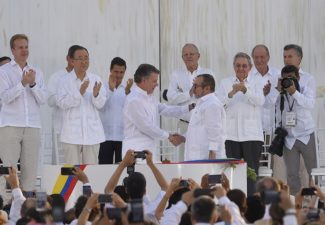
In order to maintain our autonomy and preserve the capacity for independent reflection, we will not comment on the applicants to the Integral System of Truth, Justice, Reparation and Non-Repetition.
Read MoreIt is necessary to consolidate the JEP as soon as possible: press release
Dejusticia, together with other civil society organizations and academics, celebrate the definitive step of the FARC-EP’s abandonment of arms to end the conflict and stress the importance of consolidating the Special Jurisdiction for Peace as the next key step.
Read MorePrison is not the only sanction in transitional justice mechanisms

César Rodríguez argued that the Comprehensive System of Truth, Justice, Reparation and Guarantees of Non-Repetition is in harmony with the Constitution. Regarding different penalties, he affirmed that international law discusses effective sanctions, not jail.
Read MoreDejusticia defended the Decree that allows the Court to suspend ordinary processes terms to focus on the implementation of peace
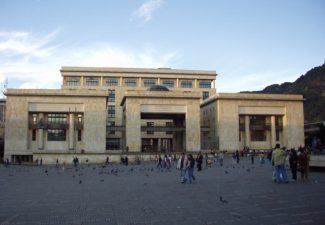
Dejusticia defended the decree that allows the Constitutional Court to suspend ordinary processes to concentrate on the norms that implement the Peace Agreement, but emphasized that this interruption can not be undefined.
Read MoreThe reform that gives the Peace Accord stability and legal certainty is constitutional
Dejusticia defended the constitutionality of the Legislative Act that gives legal certainty to the Final Agreement, and emphasized that its content responds to fundamental rights and international humanitarian law norms.
Read MoreThe 1991 Constitution is open to peace and the profound transformations that it will require
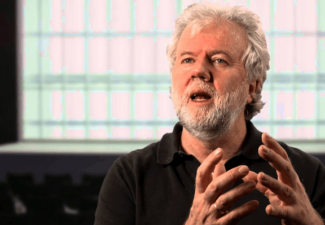
What is the nature, scope and type of control that the Constitutional Court must exercise over the Legislative Acts issued to implement the Final Peace Agreement? This is an intervention by Rodrigo Uprimny before the High Court.
Read MoreSearch Unit for Missing Persons is urgent and crucial

In an intervention, Dejusticia argues that the norm that creates this unit meets the formal and material requirements to be declared constitutional. It also requests further clarity so that all information related to human rights violations is disclosed.
Read MoreThe implementation of transitional justice in Colombia will guide other peace processes around the world
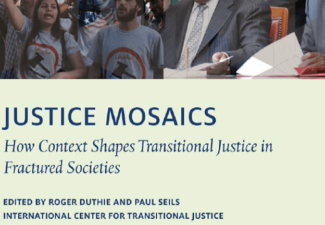
A new book by the International Center for Transitional Justice includes a chapter on Colombia written by two of our researchers.
Read MoreWhy is having a fast-track mechanism important to implement the Peace Accord? Rodrigo Uprimny´s intervention before the Constitutional Court
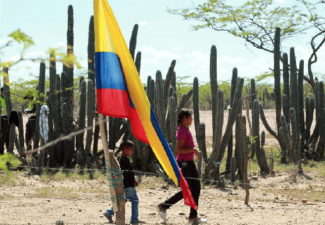
Procedures for implementing the Agreement are indispensable insofar as they aim to ensure the rapid, comprehensive and reliable implementation of the Agreement, and are consistent with the key elements of the 1991 Constitution.
Read MoreThe National Comprehensive Program for the Substitution of Illicit Crops (PNIS) needs more concreteness, a road map and a more global vision for integral rural development

We put forward some recommendations aimed at ensuring the proper implementation of point 4 of the Final Agreement: “Solution to the Problem of Illicit Drugs”, especially in relation to the National Comprehensive Program for the Substitution of Illicit Crops (PNIS).
Read MoreTodo list: proposals for the formulation of public policies on reparations in Colombia

The purpose of this document is to initiate a discussion on mechanisms and policy options on which we could rely for the design and implementation of a restitution massive program. This proposal supports the idea of envisaging ample targets for a land restitution process to be successful. This would enable its coordination with other government measures of land ownership redistribution aimed at the transformation of agrarian relations in the country. Although our proposed program of restitution is not intended as a mechanism designed to achieve other objectives such as land reform or rural income generation, we understand that these three state actions must be intrinsically linked in order to produce transformative effects that allow the optimal development of the restitution process.
Read MoreReparations in Colombia: Dilemmas in a Context of Conflict, Poverty and Exclusion
This publication contributes answers to the challenges based on the need to repair grave violations committed in a context of war, poverty and exclusion.
Read MoreRecommendations
This book focuses on different themes regarding the right to truth, justice and reparation of women victims of the armed conflict in Colombia.
Read MoreSilence is Not Possible Anymore
The right to communication means the collective enunciation of the message. Actually, we are all message producers, due to our will, technologies and politics. The reader will find in “Silence is not possible anymore” the celebration of communication as part of the political imagination.
Read MoreNo Truce: Public Policies for the Reparation for Women Victims of Sexual Violence During Dictatorships

This book is the product of a reflection process of groups that share a common past characterized by armed conflicts and military regimes responsible for massive human rights violations of their citizens.
Read MoreVictims for the Search for Truth and Reparation in Colombia
This book is a summary of diverse conferences that took place at the “Truth and Repair in Colombia: from the victims’ perspective” seminar revolved around the same issue: a search for solutions for repair and reconciliation in Colombia.
Read MoreTransitional Justice without Transition? Truth, Justice and Reparations for Colombia
The studies contained in this book offer empirical, regulatory and conceptual tools that can help understand transitional justice in Colombia.
Read MoreBetween ‘el Perdón’ and ‘el Paredón’: International Standards and Transitional processes in Colombia

This chapter gives a detailed recount of international jurisprudence and the limitations that it imposes, as well as the possibilities it offers to the countries in transition.
Read MoreThe Law of Alternative Criminal and Transitional Justice
p> This text discusses transitional and criminal justice as applied to the demobilization of paramilitaries in the Colombian context.
Read More